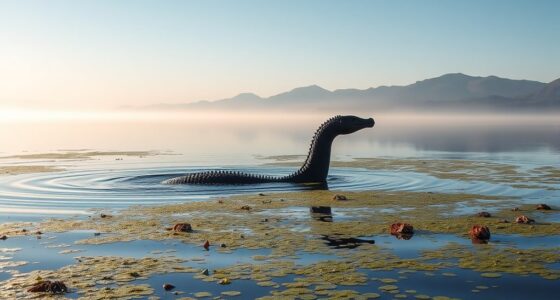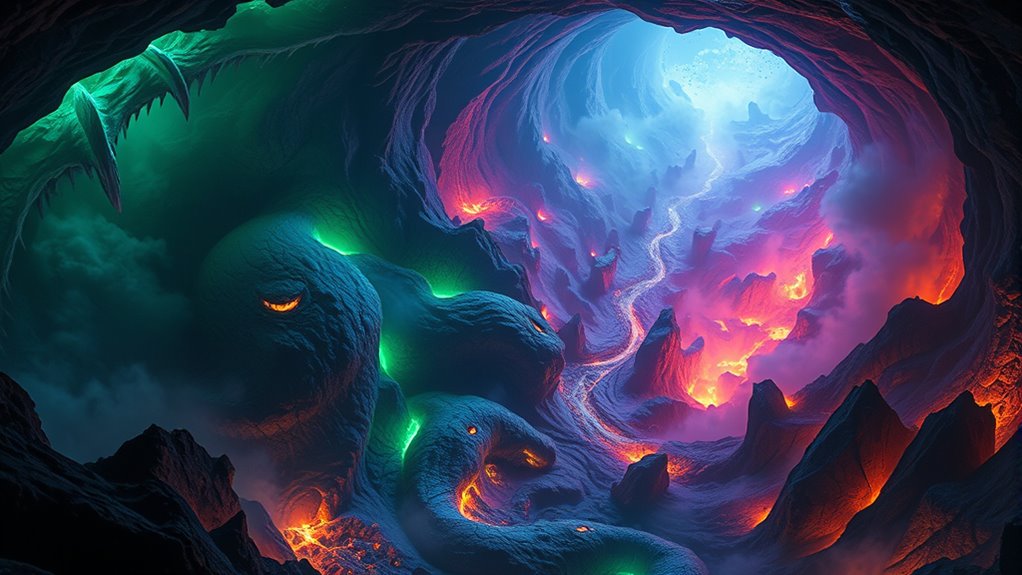

The Hollow Earth Theory claims that inside our planet, there are vast, hidden spaces filled with monsters, ancient civilizations, and mysterious creatures. While these ideas are popular among explorers and myth enthusiasts, science has thoroughly disproved them, showing Earth has a layered, solid structure. Still, tales of underground worlds and monsters persist in folklore and legends, fueling curiosity. If you want to uncover what science says about these mysterious claims, explore further to find out more.
Key Takeaways
- The Hollow Earth Theory posits large, hollow spaces inside Earth, sometimes believed to host mysterious creatures or monsters.
- Legends and myths from ancient civilizations often describe underground worlds inhabited by monsters or supernatural beings.
- Modern proponents sometimes speculate that undiscovered subterranean realms could harbor monsters, but scientific evidence refutes this.
- Folklore, legends, and conspiracy theories fuel the idea of monsters living in hidden or inaccessible parts of the Earth’s interior.
- Mainstream science dismisses the existence of monsters in the Earth’s core, citing seismic and geological data confirming a solid, layered Earth.

Have you ever wondered if the Earth might be more than just solid rock? For centuries, ancient civilizations believed our planet held mysteries beneath its surface, often imagining vast underground worlds filled with gods, monsters, or hidden civilizations. These stories weren’t just myth; they reflected a human curiosity about what lurked beneath our feet. Fast forward to today, and the Hollow Earth Theory continues to capture the imagination of some, despite modern scientific skepticism. It suggests that our planet isn’t a simple sphere of molten rock but instead has large, hollow spaces inside, possibly inhabited by creatures or even advanced civilizations. Some proponents argue that ancient texts and legends support this idea, pointing to stories of subterranean worlds or mysterious beings dwelling deep within the Earth. They believe these tales aren’t mere myths but clues to a hidden reality, one that science has yet to uncover or accept.
However, mainstream science dismisses the Hollow Earth Theory as pseudoscience. Extensive seismic studies, which analyze how waves travel through the Earth, show a layered structure consisting of crust, mantle, and core—nothing remotely resembling a hollow space. Geologists have mapped the interior in detail, confirming that the Earth’s density and seismic activity align with a solid or at least layered composition, not a hollow shell. Still, the allure of a hidden world beneath our feet persists, fueled by stories of unexplained sightings, underground tunnels, and mysterious lights. These tales, often dismissed as folklore or hoaxes, keep the idea alive in popular culture.
You might find it compelling that some explorers and conspiracy theorists believe secret entrances to these underground worlds exist, hidden in remote caves or beneath ancient ruins. They point to anomalies in geological surveys or unexplained artifacts as evidence of a concealed hollow Earth. Critics, however, argue that such claims lack concrete proof and are rooted in imagination or misinterpretation of natural phenomena. Despite the overwhelming scientific consensus, the Hollow Earth Theory taps into deep-seated human curiosity and the desire to uncover secrets that challenge our understanding of the universe. It’s a fascinating blend of ancient stories and modern skepticism, illustrating how myths can persist in the face of scientific evidence. Whether you believe it or not, the idea reminds you of how much we still don’t know about our planet—and how stories from ancient civilizations continue to influence contemporary thought.
Frequently Asked Questions
Are There Any Scientific Expeditions Exploring the Earth’s Core for Monsters?
No, there are no scientific expeditions exploring the Earth’s core for monsters. Deep sea research focuses on oceanic trenches and subterranean habitats, but current technology can’t reach the Earth’s core. Instead, scientists study extreme environments through seismic imaging and drilling. You might find speculative theories interesting, yet real exploration remains limited to the Earth’s crust and shallow subsurface layers, not hidden monsters deep within the planet.
What Evidence Do Proponents Cite to Support the Hollow Earth Theory?
Proponents cite geophysical anomalies, like unusual magnetic field readings and seismic data, as evidence supporting the hollow earth theory. They also point to anecdotal reports of strange sounds, lights, or creatures seen near the Earth’s surface, suggesting hidden worlds inside. These inconsistent clues lead them to believe there’s more than just solid rock beneath our feet, even though mainstream science dismisses these claims.
How Do Myths From Different Cultures Relate to the Hollow Earth Concept?
You notice that myths from different cultures often mention mythical creatures living deep inside the Earth, which aligns with the hollow earth concept. These cultural legends describe underground worlds filled with monsters or spirits, fueling the idea that the Earth isn’t solid. Such stories, though symbolic, suggest that ancient people believed in hidden domains beneath our feet, reinforcing the idea of a hollow Earth and its mysterious, creature-filled core.
Could Advanced Technology Detect Creatures Living Inside the Earth?
Yes, advanced technology like deep sea exploration tools and underground city probes could potentially detect creatures living inside the Earth. You might use seismic sensors, ground-penetrating radar, or sonar to scan for anomalies or unusual activity. These methods could reveal hidden underground structures, vast tunnels, or even living beings, similar to deep-sea creatures or subterranean civilizations, giving you clues about what might exist beneath the surface.
Are There Historical Accounts of Explorers Claiming to See Inside the Earth’s Core?
Ancient legends and mythical creatures often spark curiosity, yet no explorer has truly claimed to see inside the earth’s core. You imagine daring adventurers uncovering hidden worlds, but historic accounts remain fictional or symbolic. While stories of mysterious beings and underground domains persist, scientific evidence shows no explorers have documented direct glimpses into the core. Instead, these tales fuel imagination, blending myth with the mystery of what lies beneath the Earth’s surface.
Conclusion
As you consider the Hollow Earth Theory, remember that over 80% of our planet remains unexplored, fueling curiosity and speculation about hidden worlds below. While science hasn’t confirmed monsters lurking in the core, the idea sparks imagination and debate. Keep in mind, the Earth’s core reaches about 9,000°F—hot enough to melt most metals—making the possibility of a hollow interior seem even more fantastical. Whether fact or fiction, it invites you to explore the mysteries beneath your feet.