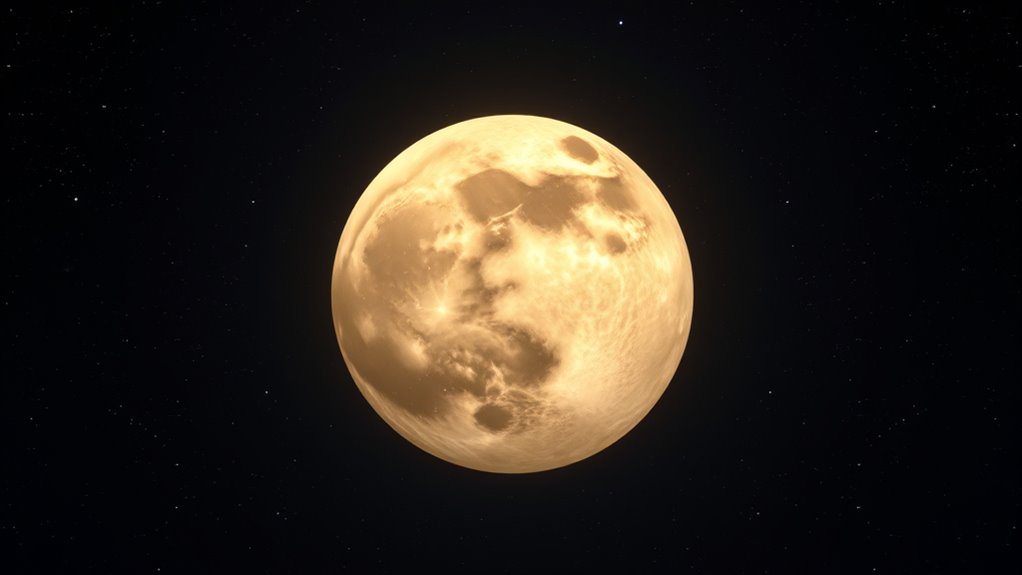

The hollow moon theory suggests that Earth’s natural satellite might have an empty interior, raising questions about whether it hides alien bases or is just a myth. Some unusual lunar anomalies, like deep echoing craters and seismic reverberations, support this idea. Many mainstream scientists remain skeptical, seeing these as misunderstood phenomena or natural features. If you want to explore the evidence and debates further, there’s more to uncover behind this intriguing hypothesis.
Key Takeaways
- The hollow moon theory suggests the Moon has a large internal cavity, possibly housing alien bases or extraterrestrial activity.
- Evidence includes unusual lunar craters, low density measurements, and seismic reverberations inconsistent with a solid body.
- Mainstream science regards the hypothesis as speculative, often dismissing it as myth or pseudoscience.
- Some believe ancient extraterrestrial civilizations may have constructed or hidden structures inside the Moon.
- Ongoing lunar explorations aim to gather data that could support or refute the hollow moon hypothesis.
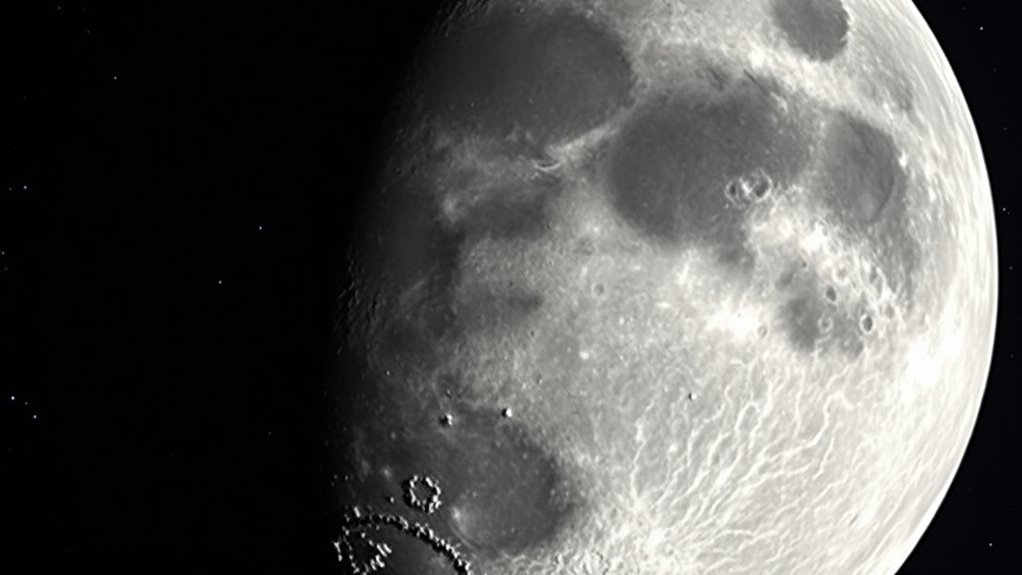
Some researchers believe that the Moon might not be the solid body we assume it to be, proposing instead that it could be hollow. This idea stems from various moon anomalies that challenge traditional lunar models. During lunar exploration, scientists have encountered strange phenomena, such as unusually deep and echoing lunar craters, and the surprisingly low density of the Moon, suggesting it might contain large, empty spaces inside. These anomalies have fueled speculation that the Moon might be more than just a rocky satellite; some argue it could be a hollow shell with an internal cavity. Such a possibility radically alters our understanding of lunar formation and composition. If the Moon is hollow, it could have profound implications for our knowledge of celestial bodies in general, raising questions about whether other moons or planets might also have hollow interiors. Additionally, some theories propose that the Moon’s internal structure could be linked to ancient extraterrestrial activity**, which remains a topic of speculative interest. The idea of a hollow Moon also invites curiosity about its origins. Traditional theories suggest the Moon formed from debris after a giant impact, leading to a solid, rocky body. But if the Moon is hollow, it could mean that its internal structure was shaped by entirely different processes, perhaps involving ancient, extraterrestrial activity. This ties into the broader context of lunar exploration, where missions have uncovered anomalies that challenge established science. For example, some lunar seismic data show unusual reverberations and echoes, which could imply a less dense, potentially hollow interior. These findings have prompted some researchers to contemplate whether the Moon might house hidden structures or even alien bases**, although such ideas remain highly speculative.
Despite the intrigue, mainstream science remains cautious. The hollow Moon theory is often dismissed as a myth because it conflicts with well-established geological and physical principles. Yet, the persistent moon anomalies continue to inspire debate and further exploration. With ongoing lunar missions, we gain clearer data that can either validate or disprove these unconventional ideas. Until then, the concept of a hollow Moon remains a fascinating hypothesis that challenges our understanding of lunar exploration and planetary science. Whether it’s an alien construct or just a misinterpretation of moon anomalies, the notion pushes scientists to ask deeper questions about the Moon’s true nature and our place in the cosmos.
Frequently Asked Questions
Has Any Scientific Mission Confirmed the Moon’s Hollow Structure?
No, no scientific mission has confirmed the moon’s hollow structure. You learn from moon geology studies that its interior is solid, with a dense core, mantle, and crust. Lunar gravity measurements indicate a mass consistent with a rocky body, not a hollow one. Despite intriguing hypotheses, current evidence from seismic data and lunar missions doesn’t support the idea of a hollow moon, keeping it firmly solid in scientific understanding.
What Evidence Supports the Existence of Alien Bases Inside the Moon?
Like whispers from mythical legends, some believe ancient inscriptions hint at alien bases inside the moon. You might see these as mysterious carvings or symbols, fueling speculation about secret extraterrestrial activities. However, there’s no concrete scientific evidence supporting this. While intriguing, these stories remain in the domain of myth, with no verified proof that alien bases exist beneath the lunar surface.
How Do Skeptics Explain Lunar Anomalies Related to the Hollow Moon Theory?
Skeptics explain lunar anomalies, like moonquake myths and crater explanations, as natural phenomena rather than evidence of a hollow moon. They argue that moonquakes result from tidal stresses and internal cooling, while craters form from impacts over millions of years. These explanations align with scientific data, dismissing the hollow moon theory as a myth, and emphasize that observed features are consistent with a solid, geologically active lunar body.
Are There Historical References or Myths Hinting at a Hollow Moon?
Imagine the moon as a silent guardian, whispering secrets through mythical legends and ancient carvings. You’ll find hints of hollow themes in folklore from cultures worldwide—stories of hidden chambers and mysterious caves. These tales evoke a sense of wonder, suggesting that long ago, people sensed something hollow within. Though evidence remains elusive, these myths stir your imagination, inviting you to ponder whether the moon holds more than meets the eye.
Could the Hollow Moon Theory Impact Future Space Exploration Plans?
If the hollow moon theory gains credibility, it could dramatically influence future space exploration plans. You might see increased interest in moon landing missions, especially if scientists explore the moon’s interior for potential space colonization. This theory could inspire new technologies for constructing habitats inside the moon, altering how we approach colonization efforts and expanding humanity’s presence beyond Earth, making space exploration more ambitious and innovative.
Conclusion
As you consider the evidence and mysteries surrounding the hollow moon, one question remains: could there truly be something hidden beneath its surface? Theories of alien bases or ancient secrets linger in the shadows, daring you to explore further. As new discoveries unfold, you’ll find yourself on the edge of a revelation that could change everything you thought you knew. Are you ready to uncover the truth that might be lurking just beneath the surface?