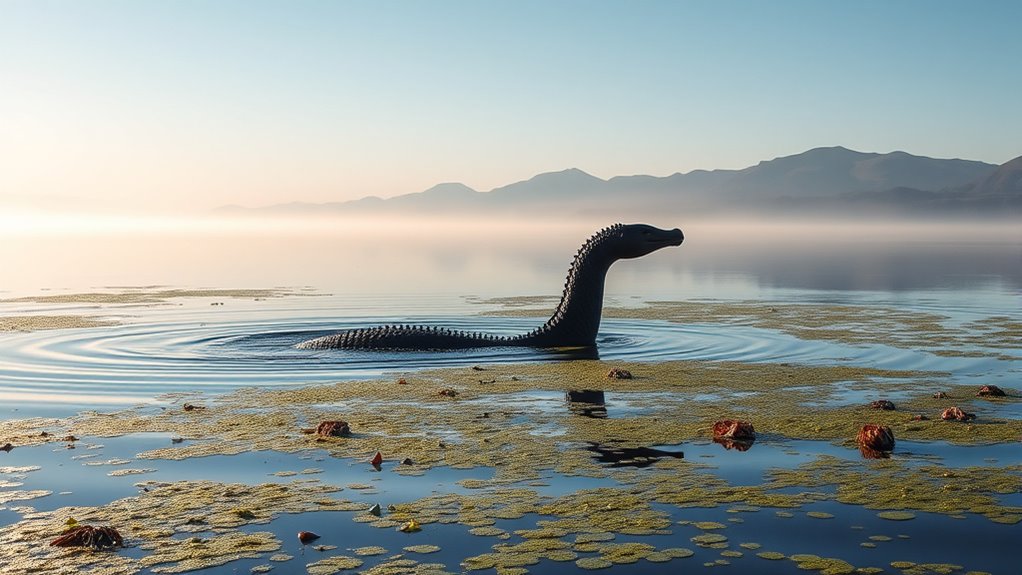

The legend of Nessie captures your imagination and draws many visitors, but human activity around Loch Ness also impacts its fragile ecosystem, especially amid climate change. Increased tourism, boat rides, and shoreline activities can disturb wildlife and pollute the environment, risking habitat degradation. As climate change further threatens the loch’s delicate balance, balancing curiosity with conservation becomes essential. Keep exploring to discover how this mythical legend might relate to broader environmental challenges.
Key Takeaways
- Climate change causes water temperature shifts in Loch Ness, potentially affecting the habitat and survival of aquatic species, including any creatures like Nessie.
- Rising sea levels and increased storm activity can disturb shoreline ecosystems, impacting the environment where sightings of Nessie are reported.
- Melting glaciers and altered rainfall patterns influence Loch Ness’s water levels, which could influence the visibility of any large aquatic creature.
- Climate-induced ecosystem changes may threaten native wildlife, complicating efforts to distinguish mythical creatures from environmental anomalies.
- The ongoing fascination with Nessie underscores the importance of balancing folklore preservation with climate change mitigation to protect Loch Ness’s environment.
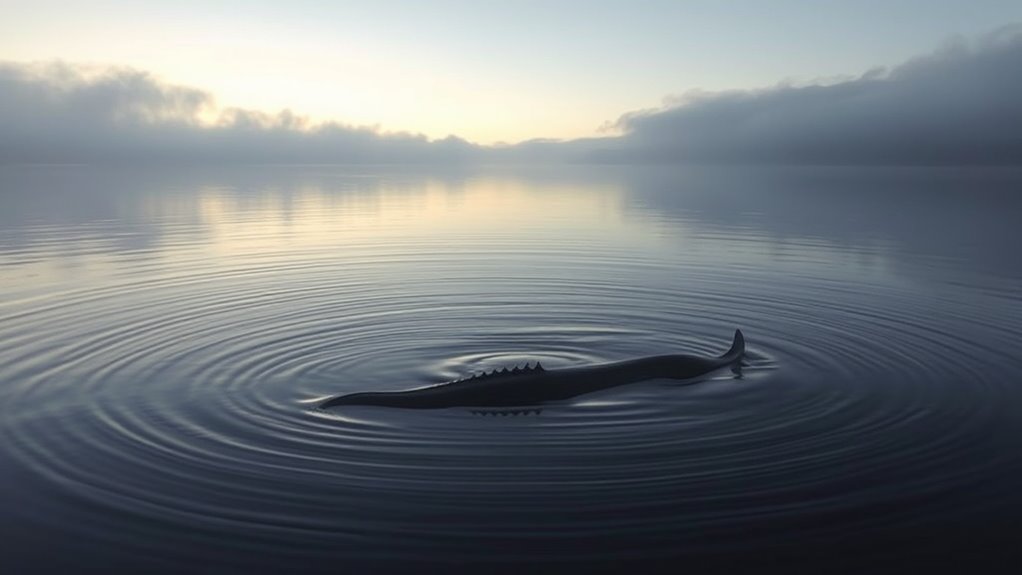
For decades, the legendary Loch Ness Monster has captured imaginations with tales of a mysterious creature lurking beneath Scotland’s waters. Whether you’re a skeptic or a believer, the stories of cryptid sightings have kept Nessie at the forefront of folklore for generations. These sightings often describe a large, serpentine shape breaking the surface, sparking curiosity and fueling countless searches. But beyond the allure of the mystery, there’s a growing concern about how the environment of Loch Ness itself might be affected by the ongoing fascination with Nessie. The influx of tourists and researchers has undeniably increased human activity around the loch, which in turn impacts its delicate ecosystem. Every boat ride, drone flight, or shoreline expedition can disturb the aquatic life and natural habitat. While some argue that these disturbances are minor, the cumulative effect could threaten the very environment that sustains Loch Ness’s unique biodiversity.
Your interest in the Loch Ness Monster isn’t just about uncovering a mythical creature; it also involves understanding the broader environmental impact of the ongoing search. The area attracts thousands of visitors each year, many enthusiastic to catch a glimpse or snap a photograph of Nessie. This influx boosts local economies but also puts pressure on the natural resources. Increased pollution, litter, and noise disturb the local wildlife, including rare fish, waterfowl, and aquatic plants that depend on a pristine environment. The loch’s ecosystem, already sensitive to changes, could suffer long-term consequences if tourism continues unchecked. Oil spills, waste disposal, and disturbance from boats all threaten the habitat, making it harder for native species to thrive.
Moreover, the myth of Nessie influences perceptions and management of the environment. If the creature were ever confirmed or disproven, it could reshape conservation efforts. Right now, the focus is on balancing the legendary allure of the cryptid sightings with responsible environmental stewardship. If you’re passionate about protecting Loch Ness, understanding this balance becomes vital. The ongoing debate about Nessie isn’t just about a mythical monster; it’s about safeguarding a fragile environment that’s intertwined with local culture and global curiosity. Additionally, advancements in home theatre projector technology could offer alternative ways to experience the locale virtually, reducing physical disturbances while still satisfying curiosity. Whether Nessie exists or not, the stories and the environmental concerns they raise remind us of our responsibility to preserve natural habitats amid human fascination and activity.
Frequently Asked Questions
Could Nessie Be an Undiscovered Prehistoric Creature?
You might think Nessie is an undiscovered prehistoric creature, as many believe she represents a prehistoric mystery. In cryptozoological debates, enthusiasts argue she could be a surviving plesiosaur or similar ancient species. While scientific evidence remains scarce, the legend fuels curiosity and exploration. Whether real or not, Nessie continues to symbolize the intrigue of cryptozoology and the possibility that hidden creatures still exist in our world’s mysterious lakes.
How Do Climate Changes Affect Loch Ness’s Ecosystem?
You should know that climate change has caused Loch Ness water temperatures to rise by about 0.3°C over the past century, impacting aquatic biodiversity. Warmer waters can disrupt habitats, threaten native species, and reduce fish populations, which in turn affects the entire ecosystem. This shift could make Loch Ness less hospitable for some species, potentially altering the food chain and ecosystem balance you might find fascinating.
Is There Scientific Proof Linking Nessie Sightings to Climate Shifts?
There’s no scientific evidence linking Nessie sightings to climate shifts. You won’t find a clear climate correlation that explains why people see the monster more or less often. Researchers have studied Loch Ness’s ecosystem and climate data, but these don’t support a direct connection to sightings. So, while climate change impacts the environment, it doesn’t provide scientific proof that it influences Nessie’s appearance or reports.
Are There Ongoing Efforts to Study Nessie’s Habitat?
You’re noticing scientists are actively studying Nessie’s habitat, focusing on water temperature and hydroelectric dams. Picture researchers measuring water levels and analyzing temperature shifts amidst the dam structures, like detectives piecing together clues. These efforts aim to understand how climate change and human activities influence Loch Ness’s ecosystem. By tracking these environmental changes, you get a clearer picture of how Nessie might survive or be affected by ongoing ecological shifts.
Could Climate Change Lead to the Discovery of Nessie?
Climate change could make you more likely to stumble upon Nessie, as shifting water levels and temperatures might reveal new habitats or artifacts linked to mythical encounters. These changes could expose clues rooted in folklore origins, sparking renewed interest and exploration. As the environment transforms, the possibility of discovering Nessie increases, blending scientific curiosity with legends, and making you wonder if nature’s mysteries finally stand a chance of being uncovered.
Conclusion
As you consider the Loch Ness Monster’s legendary status alongside climate change, remember that 90% of the world’s climate data was only collected in the last few decades. Just like Nessie has evaded definitive proof, our environment’s rapid changes often go unnoticed until it’s too late. It’s a reminder that whether it’s a mythical creature or real-world shifts, staying observant and proactive makes all the difference in shaping our future.