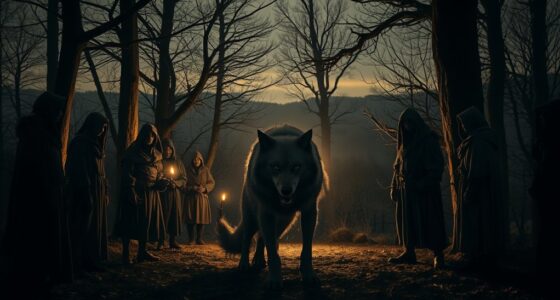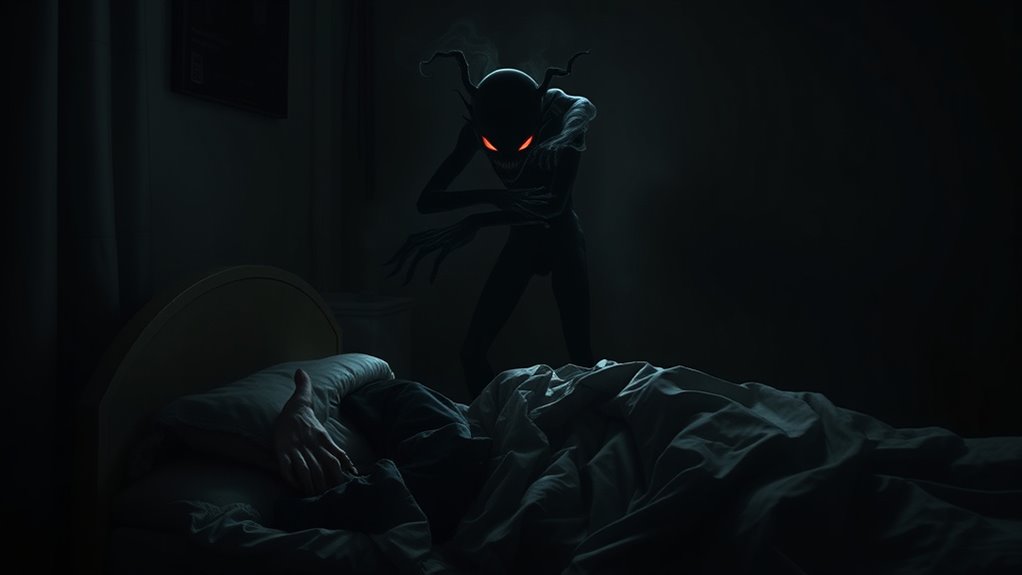

The Aufhocker is a legendary German shapeshifter and sleep demon rooted in rural folklore, feared for haunting shadows and tormenting sleepers. It can transform into frightening forms like shadowy figures, familiars, or loved ones, making it hard to recognize or escape once it appears. This creature embodies fears of darkness, vulnerability, and nightmares, serving as a cautionary symbol in stories that warn about respecting sleep and boundaries. If you keep exploring, you’ll uncover more about its origins and mysterious powers.
Key Takeaways
- The Aufhocker is a German shapeshifter and sleep demon rooted in rural legends, embodying fears of nightmares and vulnerability during sleep.
- It can transform into shadowy figures, familiars, or loved ones, making it difficult to distinguish or escape once it appears.
- The legend reflects societal anxieties about mental health, the unknown, and the importance of respecting boundaries between waking and dreaming worlds.
- Traditionally serving as a moral caution, the Aufhocker symbolizes fears of losing control and being watched in the darkness.
- The myth persists in German culture, symbolizing the collective fear of the dark, the unknown, and the complex relationship with sleep and mental well-being.
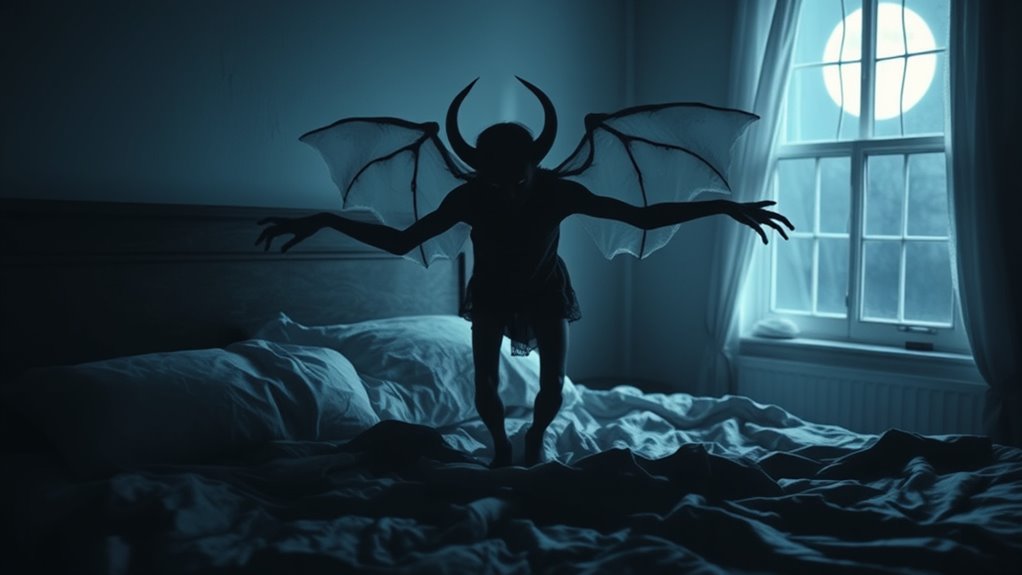
In German folklore, the Aufhocker is feared as a sinister shapeshifter and sleep demon that preys on the vulnerable during the night. Its legendary origins are shrouded in mystery, with tales tracing back centuries to rural communities where fear of the dark was palpable. The folklore suggests that the Aufhocker emerged from ancient fears of malevolent spirits lurking in shadows, embodying the anxieties surrounding sleep and vulnerability. Over time, these stories became woven into local traditions, serving as cautionary tales to keep children and adults alike cautious during the night. The creature’s shapeshifting ability is central to its legend, allowing it to take on various forms—sometimes as a shadowy figure, other times as a familiar or even a loved one—making it difficult to identify or escape from once it begins its torment. Its legendary origins are often linked to supernatural forces or curses, emphasizing its role as an agent of chaos and fear. Additionally, some stories depict the Aufhocker as a psychological projection of inner guilt or anxiety, blurring the line between folklore and mental health fears.
The cultural significance of the Aufhocker extends beyond mere storytelling; it reflects deeper societal anxieties about sleep, mental health, and the unknown. In some regions, people believed that the Aufhocker was a punishment for moral failings or a manifestation of guilt, reinforcing social norms through fear. Others saw it as a protector against worse spirits, with stories warning that if you disrespected the boundaries between the waking world and the dream domain, the Aufhocker might come for you. Its presence in folklore underscores the importance of sleep as a sacred, vulnerable time, and the creature’s role as a guardian of boundaries—whether protecting or punishing—highlighted its complex cultural significance.
Throughout history, stories of the Aufhocker served as a shared cultural touchstone, reinforcing community bonds through collective fears and moral lessons. It’s a symbol of the unknown lurking just beyond perception, a reminder to stay vigilant during the night. The creature’s shapeshifting nature also embodies the uncertainty and ambiguity of dreams, blurring the line between reality and nightmare. Over generations, the Aufhocker has come to symbolize more than just a nightmarish entity; it embodies human fears of losing control, being watched, or succumbing to unseen forces. Its legendary origins and cultural significance continue to influence local tales, festivals, and superstitions, keeping its myth alive in the collective consciousness of German culture.
Frequently Asked Questions
Are There Known Ways to Protect Oneself From the Aufhocker?
To protect yourself from the Aufhocker, you should use protective talismans like iron or specific symbols to ward off evil spirits. Maintaining good sleep hygiene helps prevent vulnerability during sleep, reducing the chances of encountering it. Avoid sleeping in places with negative energy and keep your space clean. These precautions can strengthen your defenses, making it harder for the Aufhocker to affect you.
How Does the Aufhocker Choose Its Victims?
Imagine sleep paralysis as a dark forest, where nocturnal entities like the Aufhocker lurk. It seems they choose victims experiencing vulnerability or fear, often targeting those with unsettled minds or disrupted sleep patterns. You might notice they favor individuals who are isolated or anxious before bed. By understanding this, you can better recognize warning signs and take steps to strengthen your defenses against these mysterious, shapeshifting sleep demons.
Is the Aufhocker Active Only in Specific Regions of Germany?
You should know that the Aufhocker isn’t limited to specific regions of Germany; regional sightings vary, but its cultural origins suggest it’s more widespread than some believe. While certain stories are more popular in particular areas, the myth’s roots and tales of encounters can be found throughout Germany. So, you might encounter local legends or stories wherever you go, making the Aufhocker a truly pervasive figure rooted in regional folklore.
Can the Aufhocker Be Classified as a Modern Urban Legend?
You might see the Aufhocker as a modern urban legend, a mythical creature lurking in the shadows of city streets or rural homes. Its eerie presence, whispered in hushed tones, fits well within urban folklore, blending myth and reality. As stories spread through social media and local tales, it evolves into a contemporary myth, capturing imaginations and fueling fears just like other urban legends, making it a haunting part of modern storytelling.
Are There Historical Records Documenting Encounters With the Aufhocker?
You won’t find many concrete historical sightings of the aufhocker, as it mainly originates from folklore rather than documented records. Its legends come from oral traditions and regional stories that have been passed down through generations. While some believe in encounters, there’s little evidence in official archives. The folklore origins suggest it’s more of a mythological figure meant to explain sleep disturbances or mysterious phenomena, rather than a creature with documented historical sightings.
Conclusion
Now that you know the terrifying truth about the Aufhocker, you realize it’s more than just a shapeshifter—it’s a nightmare lurking in your shadows. One encounter could change your life forever, turning peaceful nights into endless horror. Stay vigilant, because this sleep demon is more cunning than any nightmare you’ve ever imagined. Remember, the Aufhocker’s power is so immense that it could shatter your very soul in an instant—if you let your guard down.