In the Black Forest, legends tell of a mysterious creature that has puzzled locals for centuries. Sightings describe a towering figure blending animal and myth, possibly a giant wolf, bear, or supernatural spirit. These stories, passed down as cautionary tales, reflect the region’s rich history and dark secrets. Despite skepticism, the legend remains alive, influencing modern culture and sparking curiosity about what might truly lurk in the woods. Discover more if you continue exploring.
Key Takeaways
- The Black Forest legend describes a towering, mysterious creature blending animal and myth, often seen between the trees or heard at night.
- Folklore portrays the creature as a guardian spirit, cursed beast, or giant wolf/bear, rooted in centuries-old oral traditions.
- Stories serve as cautionary tales, reflecting regional history and dark secrets, and have evolved through collective imagination over generations.
- Modern skepticism attributes sightings to misidentifications, yet the legend persists due to consistent stories and cultural significance.
- The myth influences local culture, inspiring movies, festivals, and maintaining the Black Forest’s reputation as an enigmatic, mystical place.
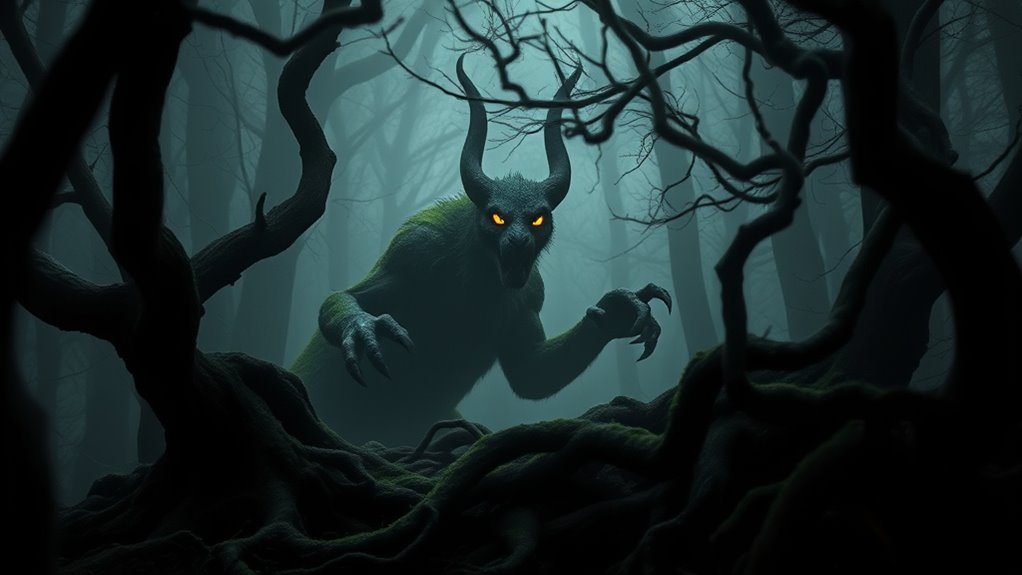
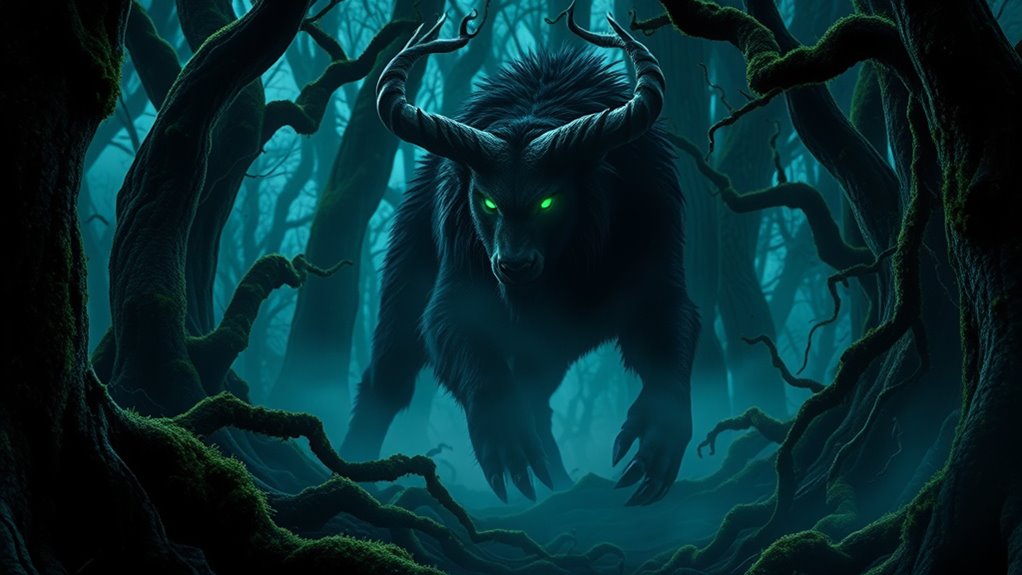
Deep within the dense shadows of the Black Forest, legends whisper of a mysterious creature that has puzzled locals for centuries. You’ve probably heard stories about this elusive beast—an entity shrouded in mystery, its presence felt more often than seen. Over the years, there have been numerous legendary sightings, each adding layers to its myth. Some claim to have glimpsed a towering figure lurking between the trees, while others speak of strange sounds echoing through the night. These encounters fuel the folklore origins of the beast, transforming it from mere legend into a tangible part of local culture.
The stories vary, but many describe a creature with features that defy natural explanation—a blend of animal and myth. Some believe it’s a giant wolf or a bear, yet others suggest it’s a supernatural being, perhaps a guardian spirit or a cursed creature. The folklore origins of this beast date back centuries, rooted in the collective imagination of the region’s inhabitants. Tales were passed down orally, often serving as cautionary stories to keep children away from the deeper, darker parts of the forest. Over time, these stories grew richer, blending fact with fiction, creating a myth that persists to this day.
You might wonder why these stories continue to thrive. It’s because the Black Forest itself is a place of mystery and enchantment, where nature’s beauty masks darker secrets. The legendary sightings are often dismissed by skeptics, but many locals swear by their experiences, insisting that something extraordinary lurks beneath the canopy. These encounters are sometimes dismissed as misidentifications or tricks of the light, yet the consistency of the stories keeps the legend alive. Interestingly, the hotly debated origins of these stories demonstrate how folklore can evolve from cultural perceptions and collective imagination. The folklore origins serve as a reminder of the region’s rich history and the human tendency to craft stories that explain the unknown.
The myth of this beast has even influenced modern culture, inspiring tales, movies, and local festivals. Whether you believe in its existence or see it as a fascinating legend, you can’t deny the impact it has on the cultural fabric of the Black Forest. It invites curiosity and caution alike, reminding you that some mysteries are woven deeply into the history of a place. As you venture into the woods, you might feel the ghost of these stories whisper around you, urging you to look closer, listen carefully, and remember that in the Black Forest, the line between myth and reality remains blurred.
Frequently Asked Questions
Are There Any Recent Sightings of the Black Forest Beast?
There haven’t been any confirmed recent cryptid sightings of the Black Forest beast. While folklore preservation continues through local stories and occasional reports, no solid evidence supports its existence today. You might hear tales from hikers or villagers, but these are often considered part of folklore rather than verified sightings. Keep an open mind, but remember, the legend remains a fascinating piece of German folklore rather than an active cryptid pursuit.
How Has Folklore Influenced Local Black Forest Culture?
You find that folklore deeply influences local Black Forest culture through regional storytelling, which keeps traditions alive and fosters community identity. For example, tales of the Black Forest beast serve as cultural symbols, preserving history and morals. These stories shape festivals, art, and local customs, ensuring that cultural preservation continues. By sharing these legends, you help maintain a vibrant sense of heritage that connects past and present in the Black Forest community.
What Symbolism Is Associated With the Mythical Creature?
The mythical creature symbolizes mystery, protection, and the unknown within Black Forest culture. Its symbolic meaning often represents the boundary between reality and myth, serving as a guardian of traditions. You might see it as a reminder of nature’s power and the importance of respecting ancient legends. Its cultural significance lies in preserving local identity, inspiring stories, and connecting communities through shared folklore and the enduring allure of the forest’s secrets.
Are There Similar Creatures in Other European Mythologies?
You’ll find that many European cryptids share similarities with the Black Forest beast, symbolizing fear, mystery, and nature’s power. Creatures like the Welsh wyvern or the Italian dragone embody similar mythic symbolism. These beings often represent chaos or protection, reflecting deep cultural fears and values. Exploring these mythical creatures reveals how European folklore uses symbolism to connect humans with the unknown, making these legends both warnings and wonders.
How Do Local Residents Today Perceive the Legend?
You might find that local residents today view the legend as a fascinating part of their urban legends and cultural heritage. While some see it as a spooky story to share around campfires, others embrace it as a tourist attraction that draws visitors to the Black Forest. Many residents cherish the myth’s role in preserving local identity, blending folklore with modern tourism to keep the legend alive and relevant.
Conclusion
As you think about the creature lurking in the Black Forest, remember that every legend has a seed of truth. Like the old saying, “The truth is often stranger than fiction,” these stories remind us that mystery and myth are woven into our history. Embrace the wonder and curiosity that come with exploring these legends, for sometimes, the greatest truths are hidden in the tales we tell. Keep your eyes open—you never know what might be just around the corner.