The Krampuslauf is a lively Bavarian tradition where participants wear elaborate, fearsome costumes adorned with fur, horns, and masks to resemble the demonic Krampus. During these processions, ringing bells, clashing drums, and whipping chains create an energetic and chaotic atmosphere. You’ll see locals and tourists chase and mock the beast, celebrating as part of a centuries-old holiday custom. If you want to discover how this tradition blends history, craftsmanship, and community spirit, keep exploring further.
Key Takeaways
- Krampuslauf is a Bavarian festival featuring participants dressed as the demonic Krampus, often beating drums and ringing bells.
- Costumes are elaborate, made from fur, horns, and masks, showcasing traditional Bavarian craftsmanship.
- The event includes lively parades where participants chase and mock Krampus, creating a chaotic, festive atmosphere.
- Bells and drums are used to enhance the excitement and symbolize the warning and punishment themes of the tradition.
- Krampuslauf connects medieval folklore to modern celebrations, emphasizing community, tradition, and cultural identity.
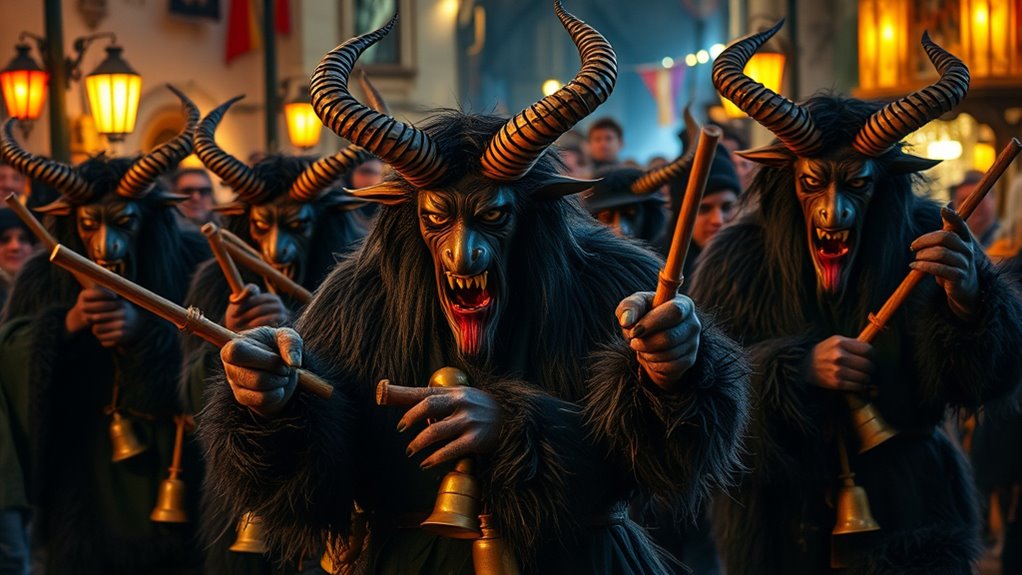
Every winter, Bavarians celebrate a centuries-old tradition called Krampuslauf, where men don frightening costumes of the mythical creature Krampus to chase and entertain crowds. This event roots back to medieval folklore, where stories of Krampus served as warnings to children about behaving properly during the holiday season. Originally, these tales depicted Krampus as a demonic figure associated with Saint Nicholas, punishing naughty kids by whipping them or dragging them away in a dark, supernatural domain. Over time, these stories evolved from grim warnings into lively, spirited celebrations that blend history, myth, and community bonding. Today, the modern celebrations still honor that ancient lore but have transformed into vibrant festivals that attract both locals and tourists alike.
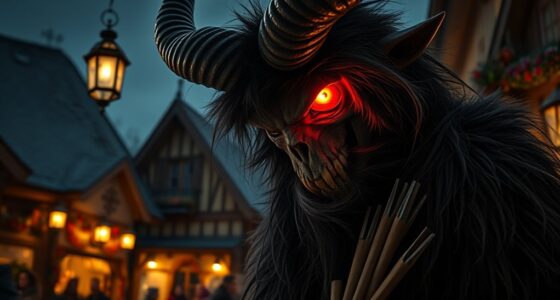
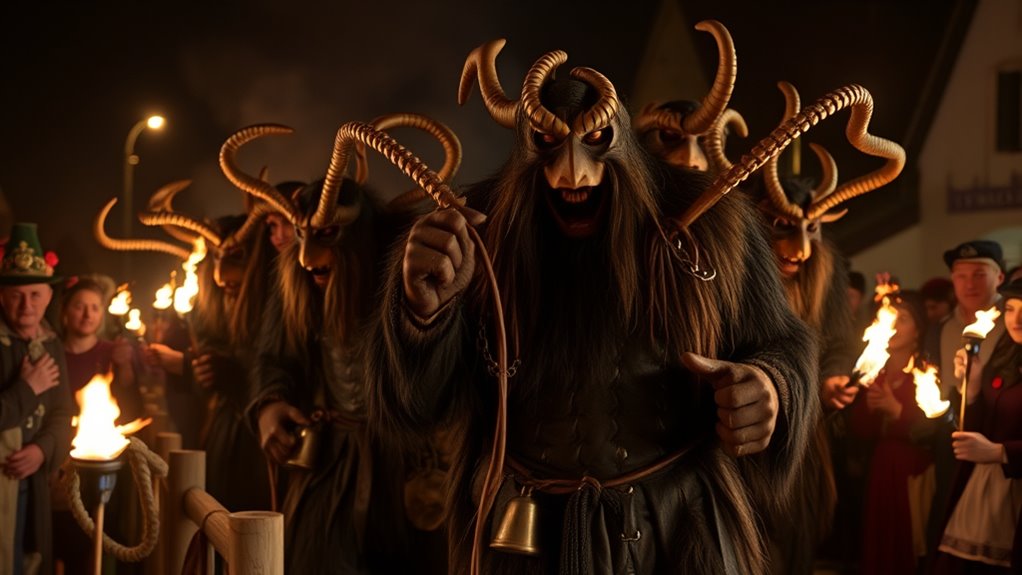
During Krampuslauf, you’ll notice that the costumes are elaborate and terrifying, crafted to evoke the fearsome imagery of the original folklore. Men don costumes made from fur, horns, and masks designed to resemble Krampus’s demonic face—sometimes with chains, bells, and whips to add to the spectacle. These costumes are far from simple; they’re a testament to Bavarian craftsmanship and their deep respect for tradition. As you walk through the streets, the sound of jingling bells and the rhythmic beating of drums fill the air, creating an atmosphere charged with excitement and a touch of chaos. Participants often parade through towns, chasing along with the music, their costumes moving wildly as they mock the beast of legend. The event also often features local craftsmanship, showcasing the skill and artistry involved in creating these detailed costumes.
What makes Krampuslauf particularly compelling is how it connects medieval folklore to today’s celebrations. You’re part of a centuries-old narrative that’s been passed down through generations, yet it continues to thrive in modern times. It’s not just about scaring people—it’s a communal event that reinforces cultural identity, celebrates local craftsmanship, and keeps ancient stories alive. The thrill of the chase and the spectacle of the costumes remind you that these traditions aren’t frozen in the past but are living, breathing parts of Bavarian culture. For many, it’s a way to confront fears, enjoy a spirited night, and honor the myth that has persisted for generations. As you witness the wild dances and hear the echoes of bells ringing, you realize that Krampuslauf remains a powerful link between history and contemporary festivity, shaping a unique and enduring celebration.
Frequently Asked Questions
How Long Has the Krampuslauf Tradition Been Practiced?
You’re curious about how long the Krampuslauf tradition has been practiced. It dates back centuries, with roots in medieval European customs, especially in Bavarian culture. Its historical origins are linked to folklore that blends pagan rituals and Christian influences. The cultural significance lies in its role to scare away evil spirits and celebrate the coming of winter. You’ll find that communities have kept this lively tradition alive for generations.
Are There Any Specific Rules for Participating in the Event?
You might find it surprising, but yes, there are specific rules for participating in the Krampuslauf. You must adhere to costume regulations to ensure authenticity and safety, like avoiding sharp or dangerous accessories. Event safety guidelines also mandate respectful behavior and crowd awareness. Following these rules keeps everyone safe and preserves the tradition’s spirit. So, when you join, respect the guidelines, and enjoy the thrilling experience responsibly.
What Materials Are Used to Craft Krampus Costumes?
You craft Krampus costumes using various mask materials like wood, papier-mâché, or leather to create frightening faces. You also add costume accessories such as fur, chains, and bells to enhance the look. These materials help you attain the traditional, intimidating appearance that’s essential for the event. When making your costume, focus on durable, lightweight options to guarantee comfort and authenticity during the lively procession.
How Do Locals Prepare for the Krampuslauf Each Year?
Did you know over 10,000 people attend Krampuslauf festivals annually? You prepare by engaging in traditional mask making, crafting frightening masks and costumes. Locals also stock up on festival food, sharing hearty Bavarian dishes to celebrate. You rehearse with fellow participants, guaranteeing your costume is ready and your behavior is festive. This collective effort keeps the tradition alive and ensures everyone is prepared for the lively, spirited event.
Are There Similar Traditions in Other Regions of Europe?
Yes, similar traditions exist across Europe, where European folklore features festive costumes and mythical figures. In Italy, you have the Befana, who delivers gifts, while in Catalonia, they celebrate the Caga Tió with decorated logs. These events often involve elaborate costumes, masks, and lively processions, echoing the Bavarian Krampuslauf. You’ll find many regions embracing their unique folklore, creating vibrant, memorable festivals rooted in local history and myth.
Conclusion
As you experience the exhilarating chaos of a Krampuslauf, imagine standing amidst the swirling masks and ringing bells. Picture yourself witnessing a local tradition where, just last year, a small Bavarian village celebrated with fiery enthusiasm, blending fear and festivity. This centuries-old custom isn’t just about scares; it connects communities and preserves history. So next time you hear those bells, remember you’re witnessing a living, breathing tradition that keeps Bavarian culture vibrant and alive.