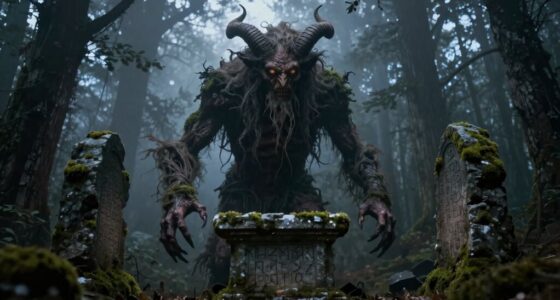
Krampus has deep roots in Austrian and Alpine folklore, serving as a dark counterpart to Saint Nicholas. He dates back centuries and originated from pre-Christian pagan rituals meant to ward off evil spirits during winter. Over time, customs blended with Christian traditions, shaping Krampus as a mischievous, sometimes menacing figure who punishes naughty children. Today, his story reflects both historical customs and modern celebrations, revealing how folklore evolves while maintaining its cultural significance. Keep exploring to discover more about his fascinating history.

Get school and study supplies delivered free — and shop member deals
- Fast, free delivery on millions of items
- Access to Prime Big Deal Days deals on October 6–7
- Prime Video, Amazon Music and more included
Key Takeaways
- Krampus originates from Alpine folklore as a dark counterpart to Saint Nicholas, symbolizing winter chaos and punishing naughty children.
- Its roots trace back to pre-Christian pagan rituals aimed at warding off evil spirits during the winter solstice.
- Over centuries, Krampus became integrated into Christian traditions, evolving into a mischievous or menacing figure in local customs.
- Celebrated on December 5th during Krampusnacht, communities hold parades with elaborate costumes and masks representing the creature.
- Modern festivities and costumes reflect historical origins, maintaining cultural significance and community cohesion in Austrian folklore.
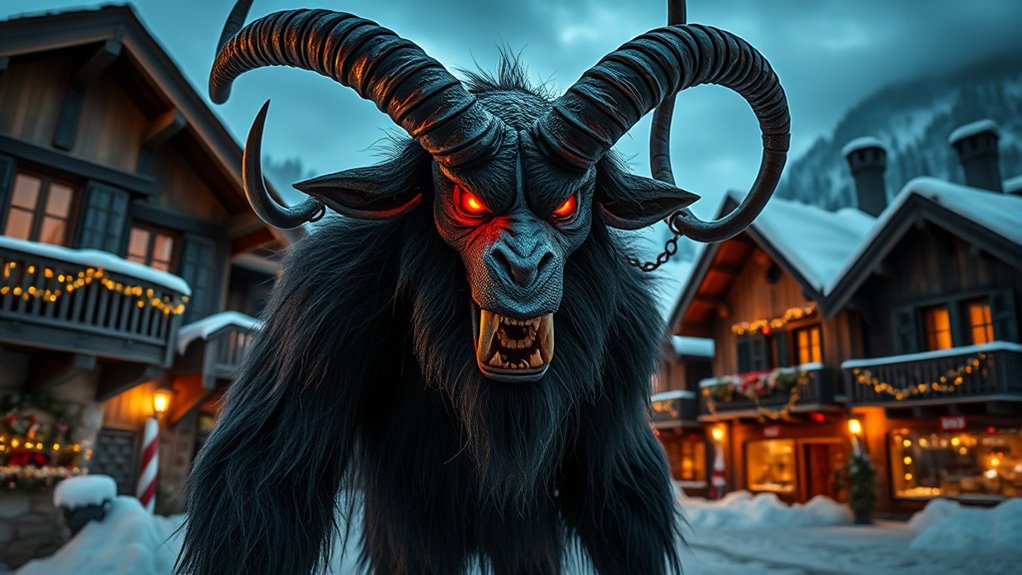
Krampus, a horned creature with a frightening appearance, has long been a part of Austrian folklore, serving as a counterpart to Saint Nicholas. You might already know about Saint Nicholas bringing gifts, but Krampus’s role is quite different. He embodies the darker side of the holiday season, acting as a kind of enforcer for naughty children. This duality is rooted in centuries-old traditions that have been passed down through generations. The origins of Krampus traditions trace back to Alpine folklore, where tales of wild, horned beings have been part of local culture for centuries. These stories likely stem from pre-Christian pagan rituals designed to ward off evil spirits during winter solstice celebrations. Over time, these customs merged with Christian practices, giving rise to the figure of Krampus as a mischievous or even menacing creature who punishes misbehaving children. Additionally, the use of symbolic figures like Krampus helps reinforce social cohesion within communities.
In Alpine folklore origins, Krampus is often depicted with a terrifying appearance—cloven hooves, a long tongue, and chains or bells that jingle as he moves. You’d see him stalking the streets during Krampusnacht, or Krampus Night, typically celebrated on December 5th, the night before Saint Nicholas visits. During this event, townsfolk participate in parades, where people dress as Krampus, donning elaborate masks and costumes. These Krampus traditions aren’t just about scaring children—they serve to reinforce social cohesion and cultural identity. The spectacle of Krampus running wild through towns, sometimes playfully chasing spectators, is rooted in ancient Alpine folklore origins, where such figures symbolized the chaos and disorder of winter, which needed to be kept in check.
The tradition has persisted for centuries, evolving from local customs into a broader cultural phenomenon. Today, Krampus costumes are more elaborate than ever, often handcrafted with intricate details that reflect their sinister origins. You’ll find regional variations, but the core themes remain consistent: Krampus as the dark counterpart to Saint Nicholas. Celebrations continue to be lively, blending historical traditions with modern festivities, making Krampus a symbol of Alpine folklore’s enduring power. As you observe or participate in Krampus traditions, you’re engaging in a centuries-old practice that connects you to the rich history of Alpine folklore origins and the cultural tapestry of Austria. These customs serve as a reminder of the complex ways in which folklore, history, and communal identity intertwine during the holiday season.
As an affiliate, we earn on qualifying purchases.
Frequently Asked Questions
How Did Krampus Become Part of Modern Christmas Celebrations?
Krampus became part of modern Christmas celebrations through a mix of cultural influences and evolving traditions. You might see him in parades and festivities, where modern adaptations highlight his role as a foil to Santa Claus. These celebrations, inspired by European folklore, have spread internationally, making Krampus a popular symbol of holiday mischief. His inclusion reflects how cultural influences shape contemporary festivities, blending old legends with new traditions to create a unique holiday experience.
Are There Regional Variations of Krampus in Austria?
Yes, there are regional variations of Krampus in Austria. You’ll notice differences in regional customs, especially during Krampusnacht celebrations. Costume differences stand out, with some areas favoring more elaborate, horned masks, while others opt for simpler designs. These variations reflect local traditions and folklore, making each region’s Krampus unique. Exploring these differences gives you a richer understanding of Austrian culture and how they celebrate this intriguing holiday figure.
What Materials Are Traditionally Used to Craft Krampus Masks?
You’ll find that traditional Krampus masks are crafted from materials like carved wood, papier-mâché, and sometimes leather. These crafting materials help create the mask’s striking features, emphasizing its fierce, devilish look. The mask symbolism is vital, as it embodies the wild, primal spirit of Krampus, meant to scare and remind people of the festive season’s darker side. Handcrafted details give each mask a unique and authentic feel.
How Do Austrian Communities Celebrate Krampusnacht Today?
You join lively Krampusnacht celebrations, where community parades swirl like a festive storm. You see masks crafted through age-old traditions, each a work of art that transforms locals into fearsome yet playful creatures. As drums beat and bells ring, you walk alongside these masked figures, reveling in the shared spirit of mischief and tradition. It’s a night where history and community intertwine, creating memories as vivid as the masks themselves.
Is There Any Connection Between Krampus and Other European Folklore Creatures?
You’ll find that Krampus shares folklore parallels with other European mythical hybrids like Black Peter or Perchten, who also serve as spooky figures during winter celebrations. These creatures often combine human and animal traits, symbolizing chaos or winter’s darkness. While each has unique traits, their common role as fearsome guides or enforcers during seasonal festivities links them across cultures, highlighting shared themes in European folklore.
As an affiliate, we earn on qualifying purchases.
Conclusion
As you step into the enchanting world of Austrian folklore, Krampus stands as a wild, shadowy guardian of tradition. He’s the dark heartbeat of Christmas, weaving fear and joy into a vibrant tapestry of history. Embrace his story like a fiery lantern in winter’s night, illuminating centuries of cultural magic. In every clawed step and clattering chain, you hear the echoes of ancestors celebrating their legends—alive, fierce, and unforgettable.
As an affiliate, we earn on qualifying purchases.
As an affiliate, we earn on qualifying purchases.
Halloween Picks
halloween
As an affiliate, we earn on qualifying purchases.