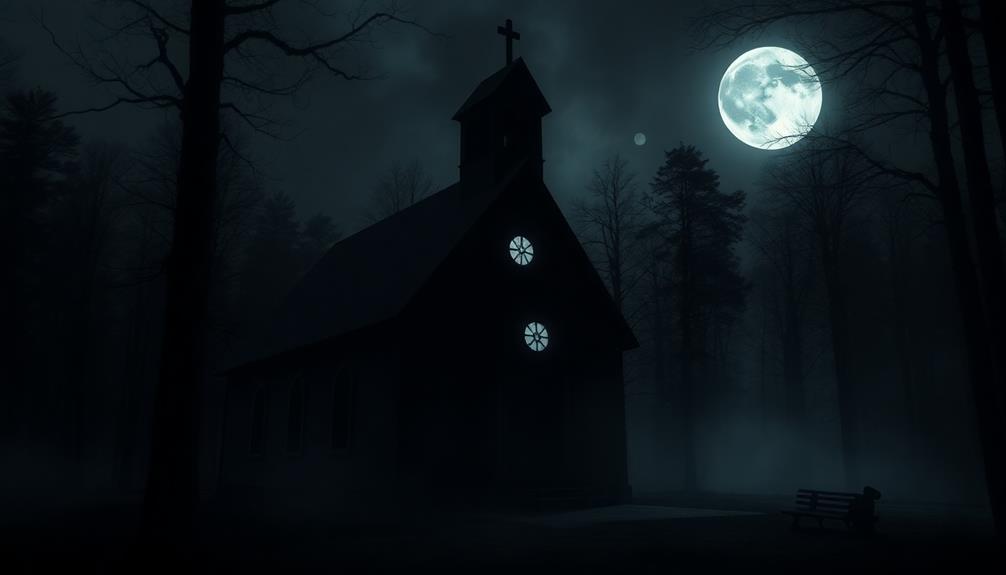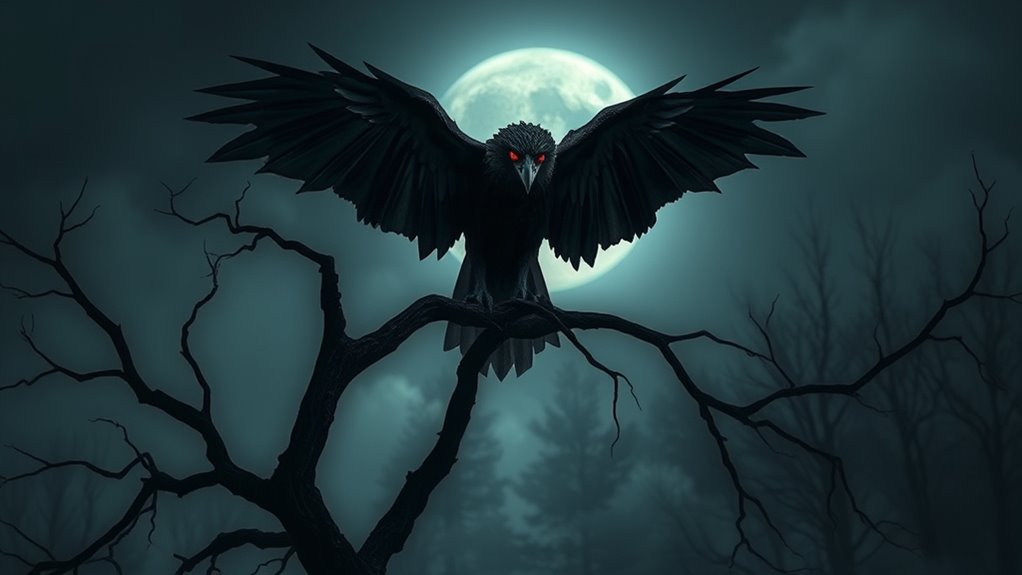

The Nachtkrapp is a dark legend from German folklore, resembling a large raven or crow that appears at night. It serves as a warning figure, symbolizing death, danger, and the mysteries of darkness. Often seen during fearful or significant moments, it reminds you of the boundaries between life and death. As a guardian of night’s secrets, the Nachtkrapp embodies fears of the unknown—if you continue, you’ll uncover more about this eerie creature and its significance.
Key Takeaways
- The Nachtkrapp is a German folklore creature resembling a large raven or crow, serving as a nighttime warning figure.
- It symbolizes death, transition, and the mysteries of the dark, embodying fears associated with the night.
- Traditionally, it acts as a harbinger of misfortune or a guardian during significant life or death moments.
- The Nachtkrapp emphasizes respecting natural cycles and warns against venturing into unseen dangers at night.
- Its presence reinforces themes of transformation, mystery, and the boundary between life and death in German mythology.
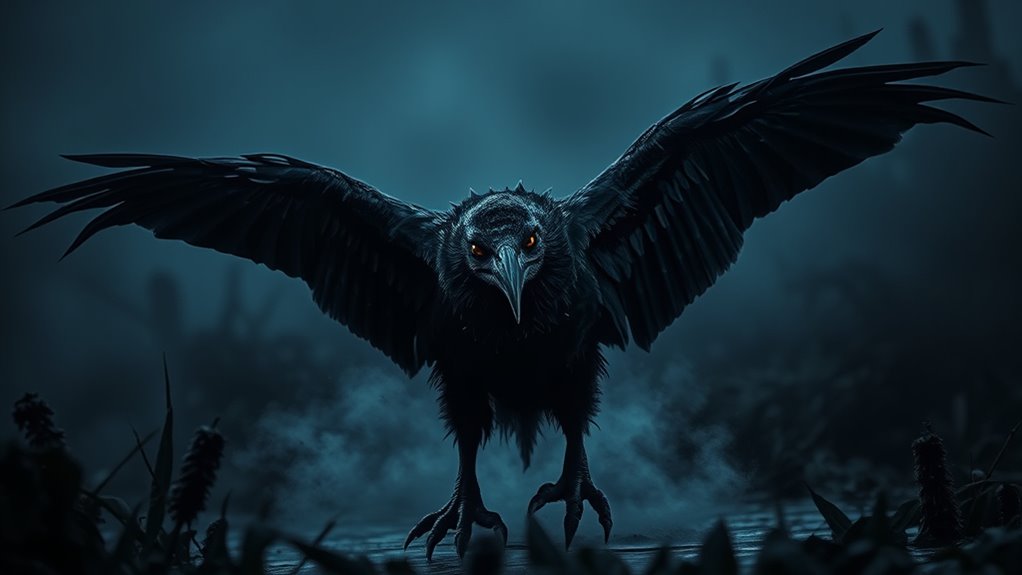
Have you ever heard of the Nachtkrapp, the mysterious creature from folklore that haunts the night? This eerie figure belongs to the rich tapestry of nighttime folklore, where legends often serve as warnings or moral lessons. The Nachtkrapp, with its raven-like appearance, embodies the dark symbolism associated with death, mystery, and the unknown. As a creature of shadowy tales, it’s often seen as a harbinger of bad luck or misfortune, making it a powerful symbol within the cultural landscape that surrounds it.
In these stories, the Nachtkrapp acts as a creature symbolism rooted in human fears of the dark and the unseen. Its silhouette, reminiscent of a large raven or crow, is often linked to death and the afterlife in many mythologies. Ravens and crows are frequently seen as messengers between worlds, and the Nachtkrapp amplifies this association, standing as a guardian or warning figure in folklore. It’s believed to appear during the night, especially in times of trouble or when someone is about to face a significant life event. Its presence in nighttime folklore emphasizes the creature’s role as a symbol of passage, danger, or the boundary between life and death.
The creature’s symbolism extends beyond mere death imagery. It also embodies the mystery and unknown aspects of the night itself—those dark spaces where shadows hide secrets and fears. The Nachtkrapp’s haunting cries and ominous appearance serve to remind people of the limits of human understanding and control, reinforcing the idea that some mysteries are best left unexplored. Its role in folklore often involves warning children and adults alike to stay safe and be cautious about venturing into the dark, where unseen dangers lurk. Additionally, the symbolism of the creature can be connected to the concept of diverse designs available, which enhance visual storytelling in cultural representations.
Moreover, the creature’s symbolism ties into the broader cultural meaning of night as a time of uncertainty and transformation. In many stories, the Nachtkrapp appears as a symbol of change—sometimes a messenger bringing news of death, other times a guardian watching over the transition from day to night. Its presence in stories emphasizes the importance of respecting the natural cycles and acknowledging the fears associated with darkness. As a figure that embodies the unknown, the Nachtkrapp reminds us that the night is not just a time of rest but also a domain filled with symbolism that reflects our deepest fears and mysteries.
Frequently Asked Questions
Are There Modern Sightings of the Nachtkrapp?
You might have heard urban legends or folklore sightings suggesting the Nachtkrapp still appears today. While no verified modern sightings exist, stories persist in local communities, fueling fears and curiosity. People share tales of strange shadows or eerie calls, keeping the legend alive. Though evidence is lacking, the Nachtkrapp remains a haunting figure in folklore, reminding you how myth and mystery continue to inspire imaginations and keep legends like these thriving.
How Does the Nachtkrapp Compare to Other European Bogeymen?
Imagine you hear stories comparing the Nachtkrapp to other European bogeymen, like the Irish Banshee or the Slavic Baba Yaga. As a mythical creature, it embodies cultural symbolism of fear and warning, but its raven-like appearance sets it apart. Unlike others, the Nachtkrapp is often linked to nocturnal dangers and death, making it uniquely haunting within the folklore landscape. You’ll find it more ominous and mysterious compared to its counterparts.
Is There Any Scientific Basis for the Nachtkrapp Legend?
There’s no scientific basis for the Nachtkrapp legend, as biological plausibility is lacking. Its origins stem from folklore, designed to scare children or explain mysterious nighttime noises. The story likely evolved from cultural fears of darkness and predators like ravens. While intriguing, it’s more a product of storytelling than any real biological threat, serving to reinforce social norms and cautionary lessons in traditional communities.
What Are Some Regional Variations of the Nachtkrapp Story?
Back in the days of medieval legends, you’ll find Nachtkrapp stories vary across regions. In southern Germany, it’s seen as a bird warning of death, while in northern folklore, it’s more of a haunting spirit. Some tales depict it as a messenger, others as a sinister creature. These regional myths reflect local fears and beliefs, creating fascinating folklore variations that keep the Nachtkrapp legend alive today.
Has the Nachtkrapp Influenced German Popular Culture?
The Nachtkrapp has definitely influenced German popular culture, especially in folk tales and children’s stories. You’ll find the creature appearing in books, cartoons, and even Halloween decorations, where it’s depicted as a mysterious, sometimes spooky figure. Its presence helps maintain traditional storytelling, inspiring new generations and keeping the legend alive. This cultural impact shows how folklore like the Nachtkrapp continues to shape German creative expressions today.
Conclusion
As you explore the Nachtkrapp, it’s fascinating to see how this eerie figure still captures imaginations. Did you know that, in some regions, over 60% of parents warn children about it to encourage good behavior? This statistic shows just how powerful stories like the Nachtkrapp are in shaping cultural fears and morals. Whether as a warning or a myth, its presence reminds you of the deep-rooted ways folklore influences our lives, even today.