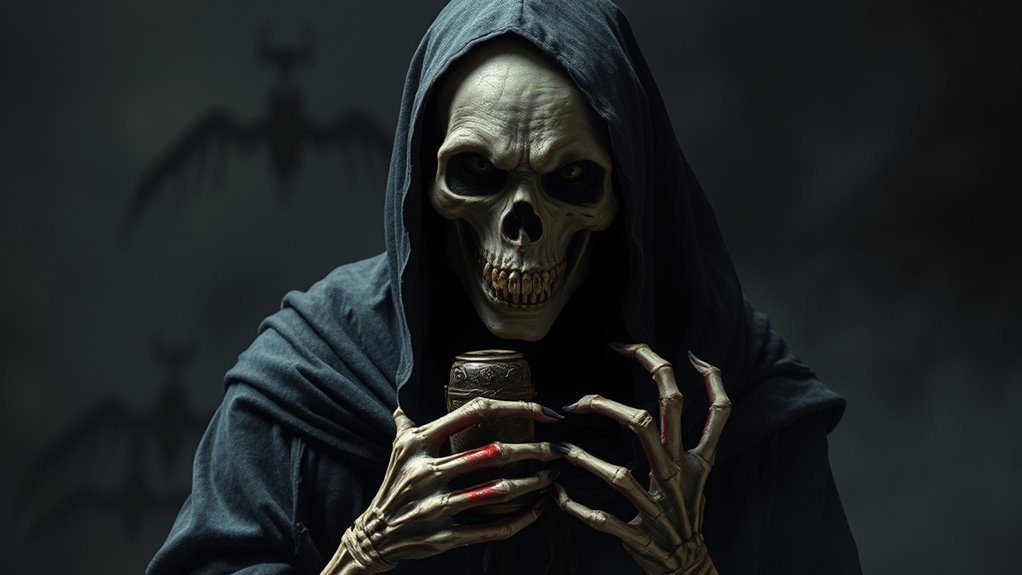

The German Nachzehrer is a unique vampire myth rooted in regional folklore that warns against improper burial practices. Instead of biting, it spreads death and disease by reanimating a corpse or restless spirit when burial rites are neglected. Folk stories emphasize the importance of proper rites, such as sealing the grave, to prevent this undead threat. If you want to uncover the deeper roots and regional differences, there’s more to explore about this intriguing myth.
Key Takeaways
- The Nachzehrer is a regional German vampire myth linked to improper burial rites and disease spread during plagues.
- Unlike traditional vampires, it causes death through spreading illness rather than biting victims.
- Proper burial rituals, such as sealing the grave and placing a stone under the tongue, prevent its reanimation.
- The myth emphasizes community adherence to funeral customs to avoid undead threats and disease outbreaks.
- Variations across regions reflect local customs, but all highlight the importance of respecting death and preventing plagues.

The German Nachzehrer is a unique vampire myth rooted in regional folklore, known for its distinctive ways of causing death and disease. Unlike other vampires, the Nachzehrer’s methods are closely tied to local burial rites and beliefs about death. In many areas, folklore variations depict the Nachzehrer as a restless spirit or a corpse that somehow reanimates, often linked to improper or incomplete burial procedures. You might find stories suggesting that if a body is not buried correctly or if certain rituals are overlooked, the corpse could become a Nachzehrer, awakening to spread illness and death among the living.
In these traditions, the way a body is prepared for burial plays a pivotal role. Folk beliefs warn against leaving the body exposed or not performing specific rites, such as placing a stone under the tongue or ensuring the grave is properly sealed. These rituals are thought to prevent the dead from rising as Nachzehrer. If a corpse is buried with signs of disease or if the community neglects certain customs, the body might be believed to turn into a Nachzehrer, feeding on the living or causing plagues by emerging from the grave. The folklore variations across regions reflect different practices and superstitions, but the core idea remains that improper handling of the dead can lead to a dangerous undead entity.
You should also be aware that in some stories, the Nachzehrer causes death not by biting but by consuming the vitality of the living through other means, such as spreading disease through contaminated soil or objects. This myth reinforced community warnings to follow burial customs meticulously, as neglect could have deadly consequences. The concept of the Nachzehrer emphasizes the importance of respecting the dead and performing proper funeral rites, which were believed to safeguard the community from outbreaks of illness or sudden death.
Understanding these folklore variations helps you see how deeply intertwined the myth is with local customs and fears surrounding death. Across different regions, the stories adapt to local practices, but the underlying message remains consistent: the proper treatment of the dead is essential to prevent a Nachzehrer from rising and wreaking havoc. These tales serve as cautionary stories, urging people to adhere strictly to burial rites and respect for the deceased, reinforcing social cohesion and safety. So, as you explore the myth of the Nachzehrer, remember that it’s not just about supernatural horror; it’s also a reflection of community values and the importance placed on proper death rituals. Additionally, community elders often believed that proper burial rituals could prevent such undead threats and maintain social order.
Frequently Asked Questions
How Did the Nachzehrer Originate Historically?
You see, the nachzehrer originated from medieval superstitions where people believed that the dead could rise and spread disease. During times of plague, they symbolized the undead’s role in transmitting illness, linking death to infection. These fears led communities to create stories about revenants like the nachzehrer, serving as warnings against improper burials and highlighting the plague’s devastating impact on society.
Are Nachzehrer Linked to Specific Regions in Germany?
Imagine shadowed villages where regional folklore breathes life into myths; in Germany, the Nachzehrer links closely to specific regions like Franconia and Bavaria. Cultural variations shape its stories, making it a local symbol of death and disease. You’ll find these legends more prominent in rural areas, where traditions thrive, and the fear of the undead reflects historical struggles with plagues. This regional connection deepens the myth’s roots in local history and beliefs.
What Modern Beliefs Are Associated With the Nachzehrer?
You might notice that modern superstition still links the nachzehrer to fears of death and disease, symbolizing how cultural symbolism endures. People believe that a nachzehrer can cause illness even after death, reflecting lingering fears of plague and pestilence. Some see the creature as a warning about the importance of proper burial rites, emphasizing how modern beliefs preserve the cultural symbolism of safeguarding health and spiritual well-being from supernatural threats.
How Does the Nachzehrer Differ From Other Vampire Legends?
You’ll notice that the Nachzehrer differs from other vampires because of its link to superstitions surrounding burial practices. Unlike traditional vampires, it’s believed to rise from the grave due to improper burial rituals, symbolizing fears of the dead’s unrest. In folklore and popular culture, this legend highlights concerns about death and the afterlife, making the Nachzehrer a unique figure rooted in specific superstitions rather than the seductive or predatory traits common to other vampire myths.
Can the Nachzehrer Be Identified During Life?
You can’t identify a Nachzehrer during life based on supernatural traits alone, as folk beliefs suggest they appear normal until their death. However, some signs, like unusual health issues or specific physical traits, might hint at their true nature. Folk beliefs often associate strange behaviors or symptoms with potential Nachzehrer, but there’s no definitive way to spot them while alive—it’s only after death that their vampire identity becomes evident.
Conclusion
As you close this chapter, remember the Nachzehrer’s shadow still lingers like an unspoken fear, a silent guardian of secrets buried beneath the earth. Its haunting presence symbolizes the thin line between life and death, reminding you that some wounds, like old legends, never fully heal. In confronting these stories, you glimpse the eternal dance of darkness and light, where every myth is a mirror reflecting your own fears and hopes, waiting to be awakened anew.