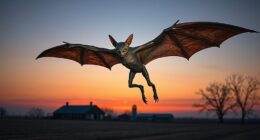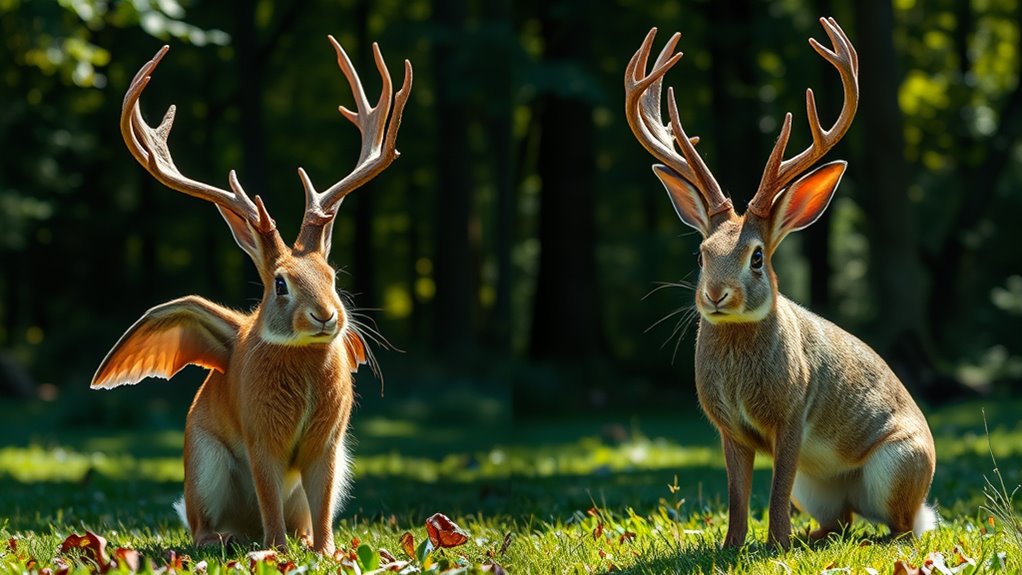
The Wolpertinger and Jackalope are famous regional hoaxes, blending animal parts to create mythical creatures. The Wolpertinger originates from Bavarian folklore and mixes features like rabbits, deer, and insects, symbolizing humor and resourcefulness. The Jackalope comes from North American tales, combining rabbits with antelope horns, representing cleverness and frontier resilience. Both serve as playful cultural symbols, reflecting local traditions and storytelling. If you continue exploring, you’ll discover how these hybrids connect communities through myth and folklore.
Key Takeaways
- Both creatures are mythical hybrids blending features of rabbits with antlers or other animal parts, serving as playful regional symbols.
- Wolpertinger originates from Bavarian folklore, emphasizing humor and craftsmanship; Jackalope stems from North American frontier tales, symbolizing resilience.
- The legends often involve taxidermy or handcrafted representations, reflecting traditional craftsmanship and cultural storytelling.
- Wolpertinger is linked to rural Bavarian culture, while Jackalope symbolizes frontier ingenuity and humor in American folklore.
- Despite their regional differences, both serve as humorous hoaxes that reinforce local identity and cultural values.
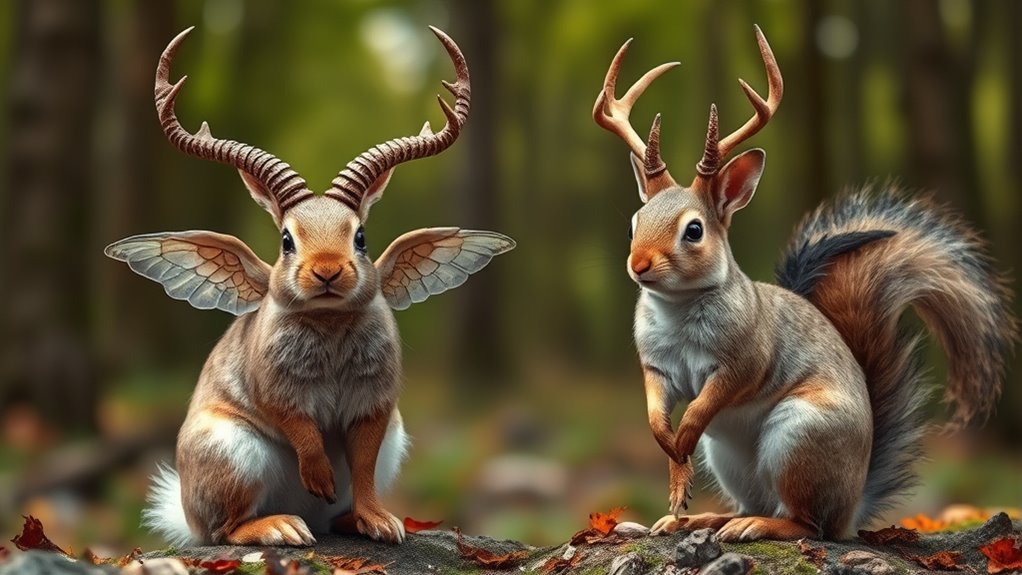
The Wolpertinger and Jackalope are two legendary creatures that captivate imaginations with their bizarre hybrid appearances. These creatures aren’t just random figments of folklore; they have deep roots in cultural stories and symbolism that add layers of meaning to their strange forms. Their mythical origins trace back to different regions— the Wolpertinger hails from Bavarian traditions, while the Jackalope is rooted in North American frontier tales. You might wonder why these creatures, with their mismatched features, caught people’s attention enough to become part of local lore. The answer lies in their symbolic significance and the way they embody cultural values, humor, and sometimes even social critique.
Legends like the Wolpertinger and Jackalope symbolize cultural values through their bizarre, hybrid forms.
The Wolpertinger’s origins are steeped in German folklore and Bavarian tradition. Its mythical origins are believed to be a humorous or satirical response to hunting culture, symbolizing the whimsical and sometimes absurd nature of rural legends. The creature’s hybrid form—combining parts of various animals like rabbits, deer, birds, and insects—serves as a playful reflection of local storytelling, where the bizarre becomes a symbol of the countryside’s rich, imaginative spirit. Its cultural symbolism often emphasizes the importance of wit, resourcefulness, and a sense of humor in Bavarian communities. The Wolpertinger’s myth serves as a reminder that stories and legends can be playful expressions of local identity, blending the natural world with human creativity. Additionally, the use of natural materials and handcrafted details in depictions of these creatures highlights their connection to traditional craftsmanship and folklore artistry.
On the other hand, the Jackalope’s mythical origins are primarily American, originating in the late 19th century as part of frontier folklore. It’s said that the Jackalope, a rabbit with antelope or antler-like horns, symbolizes the wild, unpredictable spirit of the American West. Its cultural symbolism often points to cleverness and resilience, traits valued by explorers and settlers. The creature became a symbol of the frontier’s rugged independence and humor, embodying the idea that life on the frontier is unpredictable and full of surprises. The Jackalope’s legend was also used as a marketing tool, with “authentic” taxidermy specimens and tall tales spreading its myth further, reinforcing its role as a cultural icon that celebrates ingenuity and humor.
Both creatures, with their mythical origins and cultural symbolism, serve as more than just hoaxes or novelty stories. They reflect the communities that embraced them, embodying qualities like humor, resilience, and creative storytelling. Their bizarre appearances aren’t accidental—they’re deliberate symbols that connect people to their cultural roots and shared histories. Whether in Bavarian forests or American plains, the Wolpertinger and Jackalope continue to intrigue, reminding us how myths can shape identities and entertain through their strange, hybrid forms.
Frequently Asked Questions
Are There Any Real Sightings of Wolpertingers or Jackalopes?
You won’t find credible cryptid sightings of wolpertingers or jackalopes, as they are rooted in folkloric origins rather than real evidence. Stories about these hybrid creatures have circulated for years, but no verified reports support their existence. Most sightings are playful hoaxes or local legends, so while they capture imaginations, they remain part of folklore rather than documented wildlife.
How Do Local Cultures Influence These Mythical Creatures’ Stories?
Like threads in a tapestry, local cultures shape these creatures’ stories through cultural symbolism and storytelling traditions. You notice that in Bavarian regions, the Wolpertinger embodies folklore and humor, while in American West, the Jackalope symbolizes cleverness and resilience. These stories evolve locally, reflecting community values and beliefs, making each creature uniquely tied to its culture and enhancing their mythical allure.
Have Any Scientific Studies Ever Attempted to Verify These Creatures?
You might be surprised to learn that scientific validation efforts for creatures like the Wolpertinger and Jackalope are scarce. In cryptozoology debates, researchers rarely find concrete evidence, and most efforts remain inconclusive. While some enthusiasts attempt to verify these creatures through folklore studies, mainstream science generally dismisses them as hoaxes or misidentifications. So, no significant scientific studies have confirmed their existence yet.
What Role Do These Myths Play in Local Tourism and Economy?
In medieval times, myths fueled local folklore, and today, they still boost tourism promotion. You’ll find these creatures, like the Wolpertinger and Jackalope, attract visitors interested in quirky stories. Local festivals, souvenirs, and themed attractions celebrate these legends, stimulating the economy. By embracing these mythical symbols, communities turn folklore into a charming, profitable experience, keeping traditions alive while drawing tourists enthusiastic for a taste of whimsical history.
Are There Modern Pop Culture References to These Hybrid Hoaxes?
You’ll find that modern pop culture references and adaptations of these hybrid hoaxes pop up in movies, TV shows, and books, often adding a quirky or mythical element. For example, animated series or fantasy films sometimes feature creatures inspired by the Wolpertinger or Jackalope, giving them a fresh twist. These modern adaptations keep the legends alive, sparking curiosity and humor among audiences while blending myth with contemporary storytelling.
Conclusion
As you close this chapter, remember these creatures symbolize our curious desire for wonder and the mystery of the unknown. The Wolpertinger and Jackalope, though fictional, remind us that imagination fuels discovery. They stand as symbols of hope, daring you to believe in the extraordinary beyond the ordinary. Embrace their myth, and let it inspire you to seek magic in everyday life—where stories become bridges to endless possibilities.