
Marco Polo’s descriptions of unicorn-like creatures blend myth, cultural symbolism, and misidentified animals encountered during his travels. His accounts reflect medieval fascination with mythical beasts influenced by bestiaries and travelers’ reports. Often, he described real animals like the Indian rhinoceros or oryx, mistaken for unicorns due to their horns. By exploring these stories further, you’ll uncover how myths shaped perceptions and what real creatures might have inspired them.
Key Takeaways
- Polo’s descriptions blend real animals with myth, often influenced by medieval bestiaries and limited zoological knowledge.
- His vivid imagery may conflate actual creatures like rhinoceroses or oryx with legendary unicorn traits.
- Cultural symbolism of unicorns during Polo’s era emphasized purity, divine authority, and moral virtue.
- East Asian unicorns are depicted as gentle and benevolent, contrasting with Middle Eastern portrayals of mystical power.
- Analyzing linguistic ambiguity and cultural influences helps decode whether Polo observed real animals or mythical beings.
The Origins of Polo’s Unicorn Descriptions
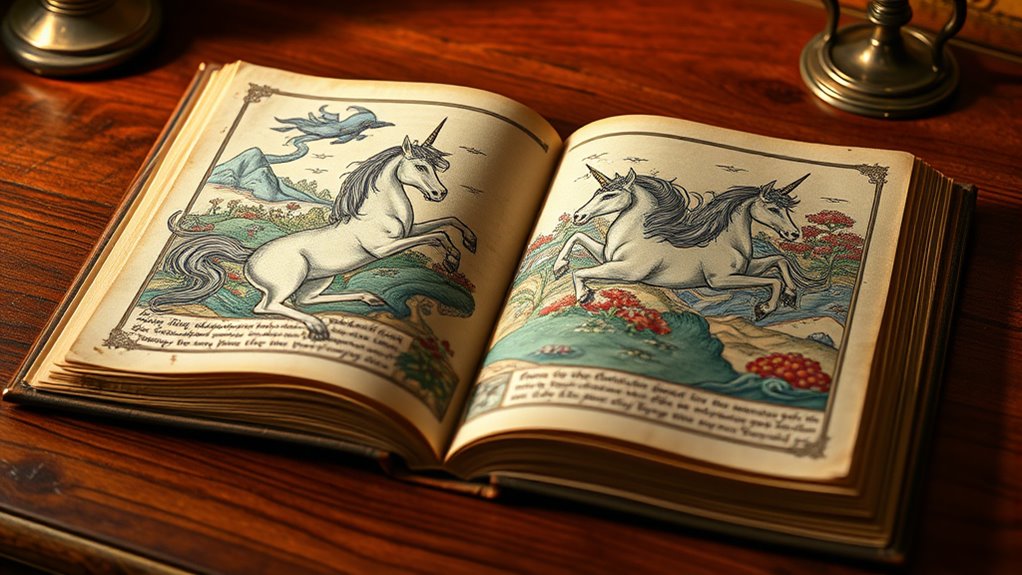
The origins of Polo’s unicorn descriptions likely stem from the ancient European fascination with mythical creatures and the limited knowledge of distant lands. Medieval bestiaries played a significant role in shaping these ideas, blending myth with reality. These illustrated manuscripts often depicted unicorns as real animals, based on travelers’ reports and misunderstood descriptions. As a result, the line between myth versus reality blurred, fueling stories of these elusive creatures. When Polo described unicorns, he was influenced by these literary traditions, which often exaggerated or misunderstood what explorers encountered. His accounts reflect the common medieval mindset, where fantastical creatures symbolized the unknown. Consequently, Polo’s unicorn descriptions are rooted in a mixture of myth, cultural imagination, and the limited understanding of distant regions.
Analyzing the Texts: What Did Polo Really See?
When you examine Polo’s descriptions, pay attention to how he uses language to paint what he saw. Consider how cultural beliefs and myths might influence his account, shaping his words and images. By doing so, you can better understand whether he described real creatures or interpreted unfamiliar animals through his cultural lens.
Interpreting Descriptive Language
Interpreting Marco Polo’s descriptions requires careful consideration of the language he used to portray unfamiliar creatures. His vivid descriptive imagery often blurs the line between reality and myth, making linguistic ambiguity a key challenge. You must look beyond the surface words and analyze how he depicted these beings, considering possible metaphors or symbolic meanings. For example, Polo’s descriptions might combine real animals with fanciful traits, creating a layered narrative. To deepen your understanding, consider:
- How descriptive imagery influences perception
- The potential for metaphorical language
- Cultural influences on his descriptions
- The limitations of medieval zoological knowledge
Cultural Contexts and Myths
To understand what Marco Polo truly saw, you need to contemplate the cultural beliefs and mythologies that shaped his descriptions. Medieval symbolism influenced how Europeans interpreted unfamiliar creatures, often blending myth origins with real animals. Polo’s accounts of unicorns might mirror this tradition, where the creature symbolized purity and strength within medieval symbolism. His descriptions could be rooted in myth origins that transformed distant animals into legendary beings, shaped by stories passed down through generations. These cultural contexts led Polo to describe animals that, from his perspective, represented the extraordinary and the mystical. By recognizing these influences, you can see that Polo’s unicorns may not have been literal animals but rather reflections of myth and symbolism integrated into his worldview.
Comparing East Asian and Middle Eastern Accounts of Unicorns
Have you ever wondered how different cultures have portrayed the legendary unicorn? East Asian accounts often depict unicorns as gentle, benevolent creatures symbolizing purity, wisdom, and good fortune, rooted in mythological symbolism. In contrast, Middle Eastern stories sometimes emphasize their mystical power and rarity, aligning with medieval symbolism of divine protection and virtue.
Consider these differences:
- East Asian unicorns are linked to harmony and spiritual enlightenment.
- Middle Eastern unicorns often symbolize divine authority and purity.
- Mythological symbolism influences their portrayal as protectors or omens.
- Both cultures see unicorns as rare, powerful beings but assign different symbolic meanings.
This comparison reveals how cultural contexts shape the myth, highlighting varied interpretations of unicorns across civilizations.
The Symbolism and Cultural Significance of Unicorns in Polo’s Era

During Polo’s era, unicorns symbolized more than just mythical creatures; they embodied ideals of purity, divine authority, and virtuous power that resonated deeply within the cultural landscape. In medieval symbolism, unicorns represented innocence and spiritual perfection, often linked to divine purity. They served as mythological allegories for purity of soul and moral integrity, reflecting society’s values. These creatures also signified sovereignty and divine right, reinforcing the divine authority of rulers who were seen as custodians of moral virtue. By understanding these associations, you see how unicorns transcended mere legend, becoming powerful symbols embedded in the cultural fabric. Their symbolism reinforced the moral and spiritual ideals central to the worldview of Polo’s era, making them enduring icons of virtue and divine legitimacy.
Possible Real Creatures Behind the Mythical Beast

Many scholars believe that the myth of the unicorn may have been inspired by real creatures encountered by travelers and traders along ancient trade routes. In ancient zoology, animals like the Indian rhinoceros, or the oryx antelope, could have sparked the imagination, leading to mythical symbolism. These creatures’ distinctive features—such as a single horn or unique coloring—might have been misinterpreted or exaggerated over time. You might consider that:
Real animals like the Indian rhinoceros and oryx may have inspired unicorn legends through their distinctive features.
- The Indian rhinoceros’s prominent horn fueled unicorn legends.
- The oryx’s long, straight horns resembled a unicorn’s horn.
- Mysterious sightings of exotic animals contributed to mythical stories.
- Traders’ descriptions often blended fact with imagination, shaping legends.
These possibilities suggest that real, exotic animals helped forge the enduring image of the unicorn in cultural history.
The Legacy of Polo’s Unicorns in Modern Mythology

The myths surrounding unicorns have persisted for centuries, shaping how cultures interpret these legendary creatures. Their legacy continues through modern mythology, where they symbolize purity and innocence, rooted in medieval symbolism. Over time, the myth evolution transformed unicorns from real creatures into mystical symbols, often representing virtue and rarity. Polo’s descriptions contributed to this myth, blending fact and fantasy. Today, unicorns appear in books, movies, and branding, maintaining their enchanting appeal. They remind us of the power of storytelling in shaping cultural symbols. This enduring fascination highlights how ancient myths adapt, inspiring new generations. The table below summarizes key aspects of unicorns’ myth evolution and medieval symbolism:
| Aspect | Significance |
|---|---|
| Myth evolution | From real animals to fantasy icons |
| Medieval symbolism | Embodying purity and virtue |
| Cultural impact | Continues in modern pop culture |
| Historical influence | Shaped perceptions across eras |
Frequently Asked Questions
Were Polo’S Unicorns Inspired by Real Animals or Myth?
You wonder whether Polo’s unicorns were based on real animals or myth. These creatures often symbolize purity and strength in various cultures, serving as powerful cultural symbols. While some believe Polo’s unicorns were inspired by real animals like rhinoceroses, most scholars agree they are mythical creatures rooted in cultural symbolism. They embody the blend of myth and reality, reflecting the fascination with mythical creatures across different civilizations.
How Did Polo’S Descriptions Influence European Perceptions of Asia?
You see the way Marco Polo’s vivid descriptions shaped medieval imagination, fueling exotic perceptions of Asia. His tales of wondrous cities, strange customs, and fantastical creatures painted a picture that fueled curiosity and wonder. These stories influenced Europe’s view of Asia as a land of mystery and marvels, inspiring trade, exploration, and myth-making. His accounts, whether accurate or embellished, created a lasting impression that colored European perceptions for generations.
Did Polo’S Accounts Vary Across Different Regions He Visited?
You notice that Polo’s accounts did vary across regions, reflecting regional dialects and cultural differences. He describes different customs, landscapes, and peoples, sometimes emphasizing unique local traits. These variations show he adapted his narrative to his audience, highlighting regional distinctions. By doing so, his travelogues offer a diverse perspective, capturing the richness of each area he visited and illustrating how regional dialects and cultural differences shape perceptions.
Are There Any Archaeological Findings Supporting Polo’S Unicorn Reports?
Many modern minds marvel at mythical creatures like unicorns, but archaeological advances haven’t uncovered ancient artifacts confirming Polo’s unicorn reports. You might think these tales are true, yet evidence remains elusive. While some speculate about symbolic sculptures or fossilized remains, no concrete discoveries support Polo’s descriptions. You’ll find that archaeological findings continue to challenge the authenticity of these mythical creature claims, keeping the mystery alive.
How Have Modern Interpretations of Polo’S Unicorns Changed Over Time?
You might notice that modern interpretations of Polo’s unicorns have evolved markedly. Scholars now see the unicorns more as symbols of mystique or cultural symbolism rather than literal creatures. The symbolism evolution reflects changing perspectives, shifting from literal to metaphorical understandings. Today’s scholarship often questions earlier assumptions, emphasizing how cultural context and allegory shape interpretations, transforming the unicorns from exotic animals to powerful symbols in storytelling and art.
Conclusion
Just as Polo’s unicorns serve as windows into distant worlds, they remind you that legends often mirror truths hidden beneath the surface. Like explorers charting uncharted waters, your curiosity can uncover the real stories behind myths. Embrace the mystery, knowing that each legend is a compass guiding you toward understanding cultures and histories. Sometimes, what seems mythical is simply a map to a deeper truth waiting to be discovered.