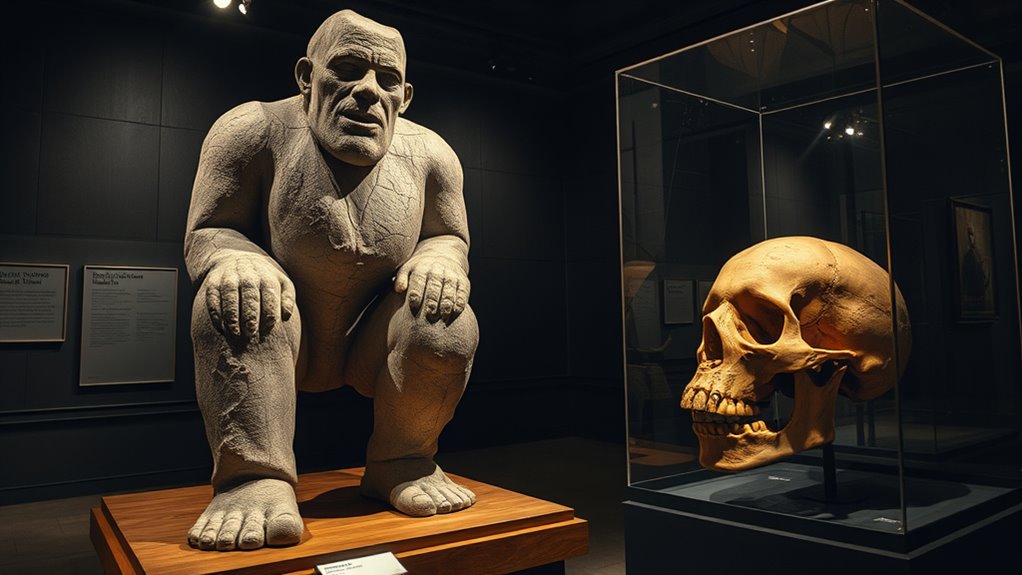

Throughout history, hoaxes like the Cardiff Giant and Piltdown Man show how clever deception can fool many, only to be uncovered through scientific analysis. The Cardiff Giant appeared as a petrified man but was later revealed as a gypsum statue using material tests. Similarly, the Piltdown Man, once thought to be a fossil human ancestor, was exposed as a forgery with chemical and physical investigations. If you keep exploring, you’ll discover even more fascinating ways scientists uncover the truth behind legendary creature hoaxes.
Key Takeaways
- The Cardiff Giant was a gypsum statue mistaken for a petrified man, later revealed as a hoax through material analysis.
- The Piltdown Man fraud involved a fabricated fossil, uncovered via chemical and physical testing, exposing it as a hoax.
- Hoaxes often exploit natural phenomena and use models or manipulated images to deceive the public.
- Scientific methods like digital analysis and physical tests are essential in detecting and debunking such hoaxes.
- Critical evaluation of sources and evidence helps distinguish genuine discoveries from fabricated monster claims.
Monster hoaxes have fascinated and fooled people for decades, often sparked by sensational claims and blurry photos. These tales of mysterious creatures, from Bigfoot to the Loch Ness Monster, capture your imagination and keep you guessing. But behind the mystery lies a pattern of deception, where hoax detection techniques play a pivotal role in separating fact from fiction. When you examine cryptid sightings, you notice a recurring theme: many are based on shaky evidence, dubious photographs, or misinterpreted natural phenomena. Recognizing these clues helps you understand how hoaxes are crafted and how to spot them.
Many cryptid sightings rely on shaky evidence and misinterpreted natural phenomena.
For instance, some hoaxes rely on simple tricks like using models, costumes, or manipulated images to create convincing illusions. In the early 20th century, the Cardiff Giant fooled many by appearing as a large petrified man buried underground. Although it was initially believed to be a genuine fossil, later investigations proved it was a carved gypsum statue planted as a prank. This example illustrates how hoax detection techniques—such as analyzing the material, examining the context, and scrutinizing the evidence—are essential tools. When you approach reports of cryptid sightings, you learn to ask critical questions: Could the image be Photoshopped? Is the creature’s shape consistent with known animals or objects? Could natural features be misinterpreted as something extraordinary?
Technology has advanced hoax detection markedly. Today, you can use digital analysis to identify image manipulation or inconsistencies in photographs. For example, blurry photos or videos often hide details that could reveal a hoax. By analyzing shadows, reflections, or the scale of objects, you can determine whether a sighting is genuine or fabricated. In the case of the Piltdown Man, a famous fraud in paleoanthropology, scientists used chemical and physical tests to reveal that the supposed fossil fragments were deliberately altered. This illustrates how scientific methods and skepticism are essential in uncovering hoaxes, whether they involve ancient artifacts or supposed cryptid encounters. Additionally, vetted sources provide reliable information that helps debunk false claims and hoaxes more effectively.
When examining claims of monster sightings, it’s essential to rely on hoax detection techniques to separate the real from the fake. Many stories persist because of misidentifications, but with careful analysis, you can often expose the deception. Recognizing the telltale signs—such as inconsistent details, suspicious sources, or photographic anomalies—helps protect you from being fooled. Ultimately, understanding these methods not only reveals the truth behind legendary creatures but also sharpens your ability to critically evaluate extraordinary claims. In the world of monster hoaxes, your skepticism, combined with scientific scrutiny, is your best tool to uncover the truth.
Top picks for "monster hoax uncover"
Open Amazon search results for this keyword.
As an affiliate, we earn on qualifying purchases.
Frequently Asked Questions
How Did the Cardiff Giant Influence Modern Forensics?
The Cardiff Giant influenced modern forensics by highlighting the importance of scientific analysis, even in unlikely cases. You see, it pushed investigators to adopt advanced forensic techniques like DNA analysis to verify authenticity. This hoax showed how critical scientific scrutiny is, encouraging forensics to rely on empirical evidence rather than assumptions. Today, these methods help guarantee accurate identification and authentication, making you better equipped to uncover truth in complex investigations.
Were Any Hoaxes Ever Used to Justify Legal Actions?
Yes, hoaxes have been used to justify legal actions, often leading to historical legal controversies. You might see how false evidence or fabricated claims influenced court decisions, raising ethical implications about honesty and justice. These hoaxes sometimes sway verdicts or motivate wrongful convictions. Recognizing these cases helps you understand the importance of thorough evidence verification, ensuring legal processes remain fair and ethical, preventing deception from undermining justice.
How Do Hoaxers Create Convincing Fake Fossils Today?
You see, modern hoaxers create convincing fake fossils through advanced fossil fabrication and forgery techniques. They use realistic materials like resin, plaster, and carefully selected minerals to mimic authentic bone or fossil textures. They also age these fakes convincingly with staining or chemical treatments. Skilled forgers study genuine fossils closely, replicating details and imperfections, making their forgeries difficult to detect without expert analysis or specialized equipment.
What Role Did Media Play in Spreading These Hoaxes?
Media played a vital role in spreading these hoaxes by fueling media sensationalism and exploiting public gullibility. You see, sensational headlines grabbed attention, making hoaxes seem more credible. The media’s enthusiasm to sell stories often overlooked fact-checking, which allowed false fossils to circulate widely. As a result, the public believed in these hoaxes, demonstrating how powerful media influence can be in shaping perceptions and spreading misinformation quickly.
Are There Ongoing Investigations Into Unresolved Hoaxes?
Yes, ongoing investigations into unresolved hoaxes continue today. You might find forensic techniques like radiocarbon dating and DNA analysis are vital in verifying authenticity. These methods help uncover the truth and prevent future deception. Legal implications also play a role, as hoaxes can lead to fraud charges or lawsuits. Staying vigilant with modern science ensures that you’re better equipped to identify and address these mysteries, safeguarding historical integrity and public trust.
Conclusion
Just like the Cardiff Giant, which once fooled thousands into believing in a buried giant, hoaxes remind you to question what you see. Imagine digging in the dirt and uncovering a carefully crafted fake—it’s a reminder that not everything is as it appears. These deceptions, from giant frauds to Piltdown Man’s false bones, serve as cautionary tales, urging you to dig deeper and trust evidence over sensational stories. Stay curious, and don’t be fooled by surface appearances.