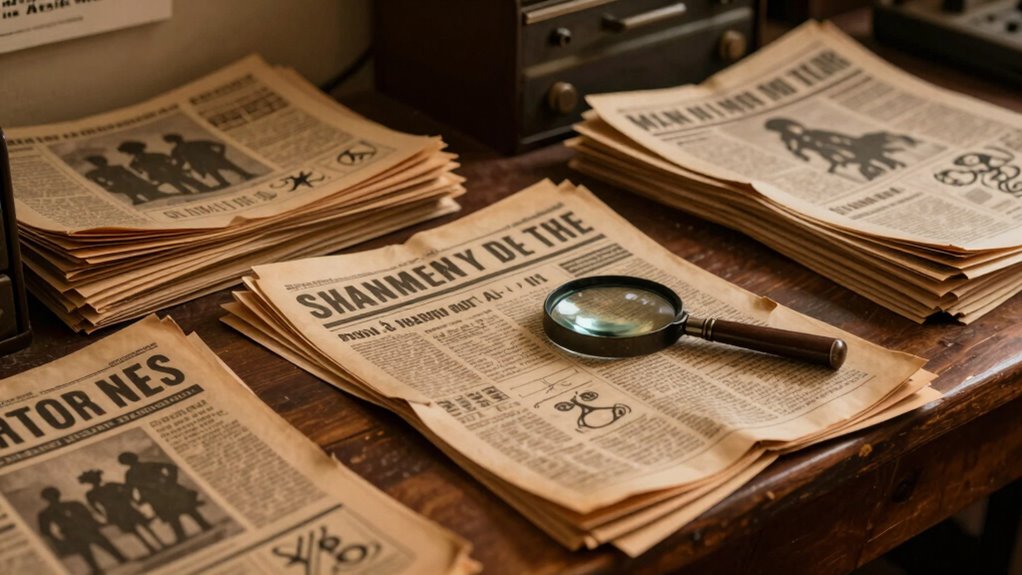

In the 19th century, newspapers fueled intrigue by turning crime reports into sensational spectacles. You’d see dramatic headlines and vivid language crafted to evoke curiosity, fear, or outrage. They highlighted shocking details to attract attention and kept stories ongoing to sustain public interest. This approach blurred fact and fiction, shaping opinions and creating a culture of suspicion. If you want to understand how media transformed crime stories into enthralling narratives, keep exploring these fascinating tactics.

Prime made for students and young adults
- Fast, free delivery for dorm and study essentials
- Prime Video and Amazon Music included
- Member-only deals
Key Takeaways
- Newspapers used sensational headlines and vivid language to attract readers and heighten curiosity about mysteries.
- They emphasized shocking details, turning investigations into ongoing public dramas for increased engagement.
- Sensationalism blurred fact and fiction, spreading rumors and shaping public perceptions of guilt and innocence.
- Media exaggerated or sensationalized details, prioritizing entertainment over factual accuracy in crime reports.
- Continuous coverage kept unresolved mysteries in the public eye, fueling fascination and societal intrigue.
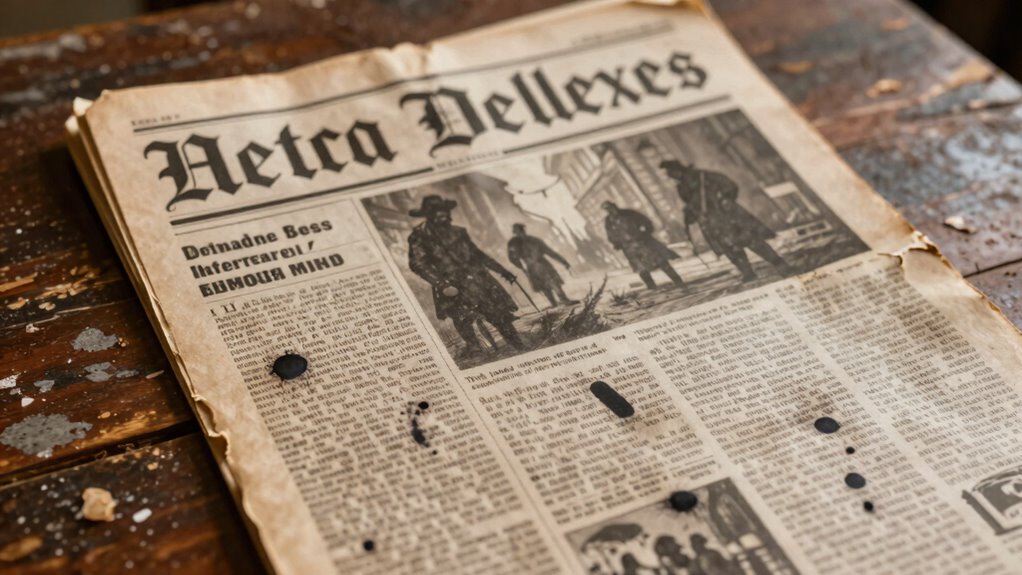
In the 19th century, newspapers became the primary source for reporting mysterious and unsolved crimes, capturing public fascination with intrigue and suspense. You’d find that sensational headlines played a crucial role in grabbing your attention and shaping the narrative around these crimes. The headlines were often crafted to evoke curiosity, fear, or outrage, making it impossible for you to look away. They heightened the drama surrounding each case, transforming everyday criminal investigations into public spectacles. Instead of simply reporting facts, newspapers amplified the stories, emphasizing the most shocking details to stir your emotions and keep you hooked.
In the 19th century, sensational headlines turned crimes into public spectacles, captivating readers with shocking stories and amplified drama.
As you read these reports, it’s clear that journalists of the time understood the power of sensationalism. They used vivid language, dramatic descriptions, and bold headlines to draw you into the story. This approach didn’t just inform; it entertained. The stories often blurred the lines between fact and fiction, stirring rumors and speculation that spread rapidly through the community. You might have found yourself debating the guilt or innocence of suspects based on the headlines, which often sensationalized even minor details to make the case seem more sensational. These headlines created a sense of urgency and importance, turning criminal investigations into public events.
Newspapers in this era didn’t just report the facts—they shaped how you perceived the crimes. They highlighted the most lurid aspects of each case, sometimes exaggerating or sensationalizing details to boost circulation. This approach turned ordinary criminal investigations into ongoing dramas, where each new piece of information was eagerly consumed. The media’s emphasis on sensational headlines meant that the public’s perception of justice was often influenced more by the headlines than the actual evidence. As a result, the stories fed into the era’s fascination with mystery, often leaving you speculating long after the paper was folded.
The coverage of these crimes helped build a culture of curiosity and suspicion. You, as a reader, became part of a larger spectacle where the media’s portrayal of mysteries shaped societal attitudes toward crime and justice. Newspapers, by emphasizing sensational headlines, didn’t just inform—they created a narrative that kept you engaged and eager for the next update. This combination of engaging storytelling and the public’s obsession with crime transformed the way mysteries were experienced, making newspapers the driving force behind 19th-century intrigue. Ultimately, they amplified the stories’ impact, ensuring that these unresolved crimes stayed in the public eye for years to come. The sensationalism employed by newspapers played a crucial role in constructing these captivating narratives that kept the public entranced.
As an affiliate, we earn on qualifying purchases.
Frequently Asked Questions
How Did Newspaper Circulation Influence Public Perception of Mysteries?
Your newspaper circulation played a big role in shaping how you saw mysteries, often fueling public skepticism. As stories spread widely, media bias could exaggerate or sensationalize events, making mysteries seem more dramatic or dubious. This widespread coverage influenced your perception, causing you to question the authenticity of reports and view mysteries with a mix of intrigue and doubt, depending on how sensationalized or credible the stories appeared.
Were There Regional Differences in Reporting Mystery Stories?
You’ll notice that regional differences in mystery reporting often reflect local biases and cultural influences, shaping how stories unfold. Newspapers in different areas emphasized certain elements—like sensationalism in urban centers or folklore in rural regions—painting a vivid picture tailored to their audience’s tastes. These regional biases influenced what mysteries gained prominence, making each area’s reports uniquely colored by local customs and perspectives, almost like viewing a story through different lenses.
Did Newspapers Collaborate With Police or Detectives on Stories?
You’ll find that newspapers often collaborated with police and detectives on mystery stories, balancing press confidentiality with investigative partnerships. While they shared details to keep the public informed, they also protected sensitive information, ensuring investigations weren’t compromised. This partnership helped newspapers craft compelling reports, but they carefully managed their relationship with authorities to maintain trust and avoid jeopardizing ongoing investigations.
How Accurate Were 19th-Century Mystery Reports Compared to Actual Events?
Like a mirror with cracks, 19th-century mystery reports often distorted actual events. You’d find fictional embellishments woven into stories, blurring truth and fiction. While newspapers aimed for accuracy, journalistic ethics weren’t always strict, leading to sensationalized accounts. As a result, reports were sometimes only partially reliable, making it tough for you to discern fact from fiction. The stories often reflected public fascination more than true details.
What Role Did Sensationalism Play in Mystery Reporting?
Sensationalism played a big role in mystery reporting by using tabloid tactics and exaggerated storytelling to grab your attention. Newspapers often prioritized dramatic details over facts, making stories seem more shocking or mysterious than they really were. This approach increased readership but sometimes distorted the truth, blurring the line between fact and fiction. As a result, mystery reports became more entertaining but less reliable, fueling public fascination and speculation.
As an affiliate, we earn on qualifying purchases.
Conclusion
You see, newspapers of the 19th century acted like magnifying glasses, turning small mysteries into sensational stories that captivated the public’s imagination. By amplifying reports, they didn’t just inform—they ignited curiosity and suspense, shaping how society viewed crime and intrigue. Just as a spark can ignite a fire, these newspapers fueled a cultural obsession with the mysterious, leaving a legacy of storytelling that still influences us today.
As an affiliate, we earn on qualifying purchases.
As an affiliate, we earn on qualifying purchases.
Fall Picks
fall essentials
As an affiliate, we earn on qualifying purchases.