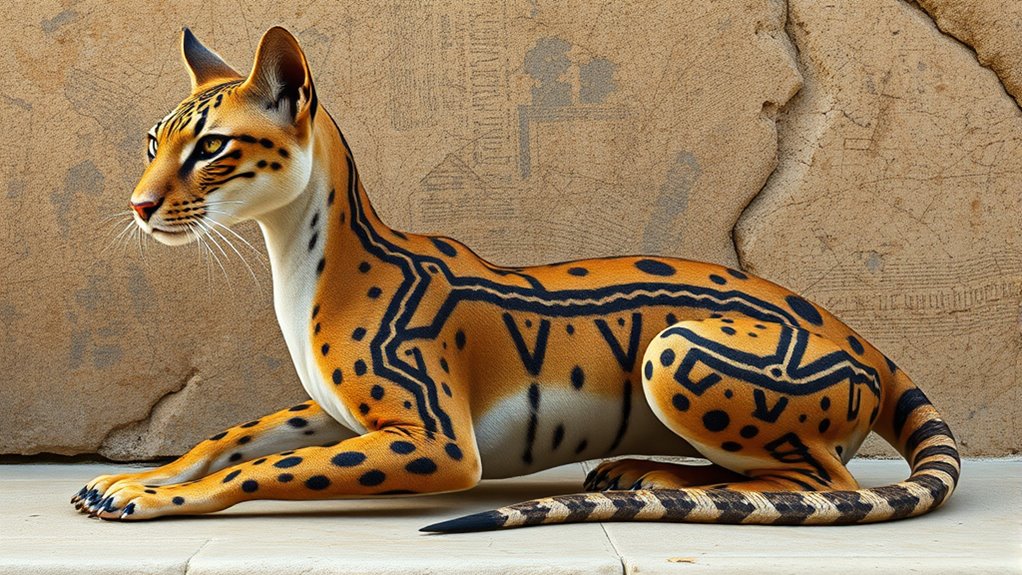

The serpopard is a mythical creature from ancient Egyptian art that blends a leopard’s body with a long, serpent-like neck. It symbolizes chaos, protection, and divine power, often appearing in intricate carvings and jewelry. This hybrid embodies the balance of primal instinct and divine order, serving as a guardian of cosmic harmony. To discover how this fascinating creature influenced both ancient symbols and modern fantasy, keep exploring its rich history and symbolism.
Key Takeaways
- The serpopard is a mythical Egyptian creature with a leopard body and serpent-like elongated neck symbolizing chaos and divine protection.
- It frequently appears in ancient Egyptian art, jewelry, and carvings, representing cosmic harmony and spiritual power.
- The serpent’s long neck signifies divine connection, often serving as a guardian or symbol of divine authority in Egyptian culture.
- Modern fantasy art draws inspiration from the serpopard, blending feline and serpent features to evoke mystery, power, and mythic wonder.
- The serpopard exemplifies Egypt’s mastery of visual storytelling, with its symbolism reflecting complex spiritual and political ideas still influential today.
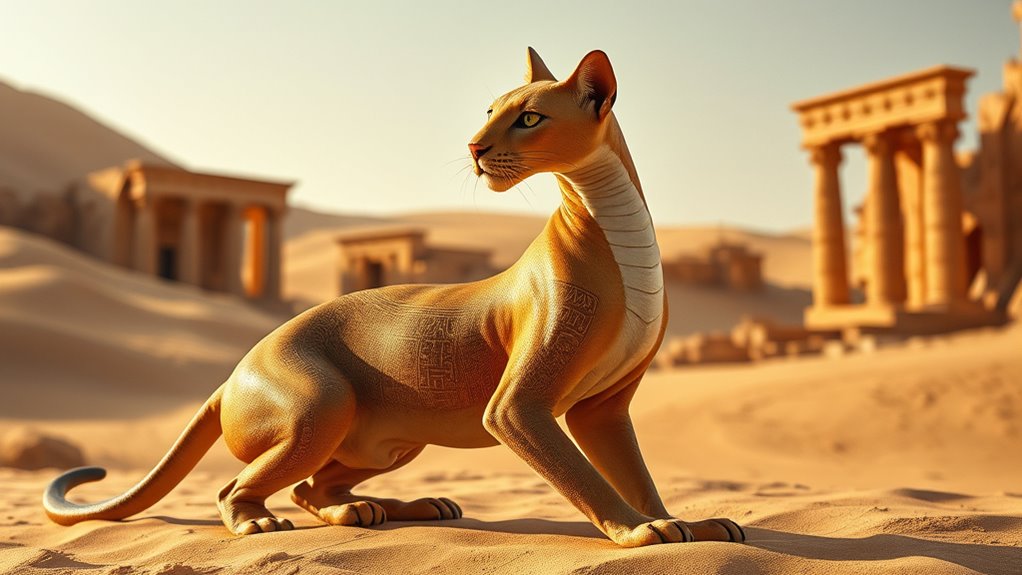
Have you ever wondered about the mysterious creatures that populated ancient Egyptian mythology? One such fascinating being is the serpopard, a mythical creature with the body of a leopard and the elongated neck of a serpent. These creatures often appear in ancient Egyptian art and serve as powerful symbols of chaos, protection, and divine authority. When you look at their depictions, you’ll notice how they embody symbolism in ancient art, representing both the primal and the divine. Their intertwined forms often appear in intricate carvings and jewelry, conveying complex ideas about the balance between order and chaos. The serpentine necks suggest a connection to the divine domain, emphasizing their role as guardians or symbols of cosmic harmony. As you explore these ancient images, it becomes clear that the serpopard wasn’t just a creature of myth but a visual language that communicated spiritual and political messages.
The influence of the serpopard extends far beyond ancient Egypt. You can see its impact on modern fantasy, where hybrid creatures symbolize mystery, power, and the blending of different worlds. Today’s artists and writers often draw inspiration from these ancient motifs, creating mythical beings that evoke the same sense of wonder and symbolism. For instance, the serpent’s long neck mirrors the fantastical creatures in contemporary stories—part dragon, part beast—highlighting the enduring appeal of hybrid animals. These influences help modern fantasy evoke a sense of timelessness while paying homage to the ancient Egyptians’ rich symbolism in art. You may even notice how some fantasy artwork features serpents intertwined with big cats, echoing the iconic images of the serpopard, which serve to evoke themes of balance, chaos, and divine power. The mythological significance embedded in these creatures continues to resonate, reminding us of ancient Egypt’s mastery of visual storytelling and its lasting influence on the fantasy genre.
Frequently Asked Questions
What Symbols Did the Serpopard Represent in Egyptian Mythology?
You might find that the serpopard symbolism in Egyptian myth meanings represents chaos and the unity of opposing forces. Its intertwined body signifies the merging of chaos and order, illustrating harmony amid conflict. As a mythological creature, the serpopard embodies strength and protection, often associated with royal power. This creature’s symbolism highlights ancient Egypt’s view of balance, emphasizing how chaos can be transformed into stability through divine or royal authority.
Are There Any Known Physical Depictions of the Serpopard?
You can find ancient depictions and artistic representations of the serpopard in Egyptian artifacts. These images typically show the creature with a long, serpent-like neck and a leopard’s body, often intertwined with other symbols. While no real-life photographs exist, these ancient depictions give you a visual sense of how the Egyptians imagined this mythical creature, blending feline and serpent features in their art.
How Did the Serpopard Influence Egyptian Art and Architecture?
You see the Serpopard symbolism prominently in Egyptian art, where it influences artistic representations of power and protection. Its intertwined form often decorates pottery, jewelry, and reliefs, emphasizing unity and strength. Architects incorporate Serpopard motifs into temple carvings and furniture designs, reflecting its role as a protective symbol. This creature’s unique imagery reinforces its significance in Egyptian culture, blending myth with daily life through detailed, symbolic artwork.
Was the Serpopard Associated With Any Specific Egyptian Gods or Rituals?
You’ll find that the serpopard symbolism is linked to protection and chaos control in Egyptian mythology. It’s associated with gods like Horus, emphasizing its ritual significance in safeguarding sacred spaces. During rituals, images of the serpopard appeared to symbolize unity and strength, helping to channel divine power. Its presence in art and ritual underscored its importance as a guardian figure, blending myth with spiritual practice in ancient Egyptian culture.
Have Any Modern Interpretations or Recreations of the Serpopard Been Attempted?
Modern reinterpretations and contemporary recreations of the serpopard captivate your imagination by blending ancient mystique with modern artistry. Artists and enthusiasts reimagine this mythical creature through sculptures, digital art, and tattoos, blending history with innovation. While you may not find it in mainstream art, dedicated collectors and museums showcase these reinterpretations, keeping the serpopard alive in contemporary culture, bridging past legends with present creativity.
Conclusion
As you envision the serpopard, the mythical creature with a tangled neck, you realize it’s both a symbol of chaos and harmony in ancient Egypt. Its intertwined form, a paradox of strength and delicacy, reminds you that myths often blend opposites to create meaning. Just like the serpopard’s tangled neck, life’s mysteries are woven from contrasting threads—confusing yet beautiful, chaotic yet purposeful. In myth, as in life, opposites often define each other.