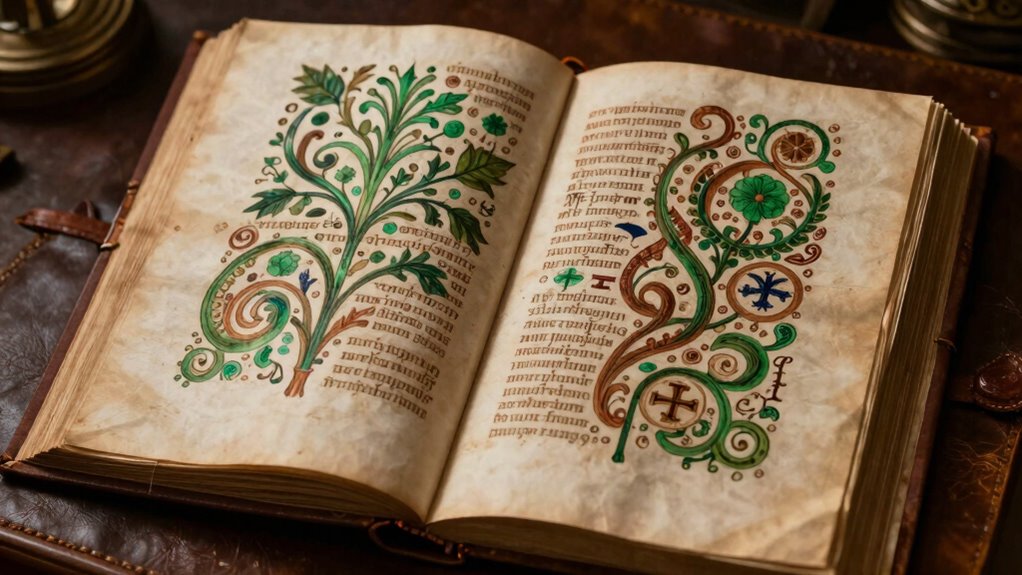

The Voynich Manuscript is a true monster of interpretation that keeps you guessing with its cryptic symbols, mysterious illustrations, and unknown origins. It confounds experts, resisting all decoding efforts despite advances in cryptography and technology. Its dense symbolism and strange language form an almost insurmountable barrier, transforming it into a profound historical puzzle. If you keep exploring, you’ll discover how this enigmatic artifact continues to challenge our understanding and inspire new ways to approach its secrets.

Get school and study supplies delivered free — and shop member deals
- Fast, free delivery on millions of items
- Access to Prime Big Deal Days deals on October 6–7
- Prime Video, Amazon Music and more included
Key Takeaways
- The Voynich Manuscript embodies a complex, cryptic symbol system that challenges diverse interpretative frameworks, making it a “monster” of analysis.
- Its undeciphered language and mysterious imagery resist all existing cryptographic and linguistic methods, deepening its interpretive enigma.
- Ongoing technological and interdisciplinary efforts continuously reveal new questions, emphasizing its role as a relentless interpretive monster.
- The manuscript’s ambiguous symbolism and uncertain origins exemplify the limits of current knowledge and analytical tools.
- Its enduring mystery inspires a fascination with cryptic beauty, transforming it into a symbol of infinite interpretive complexity.
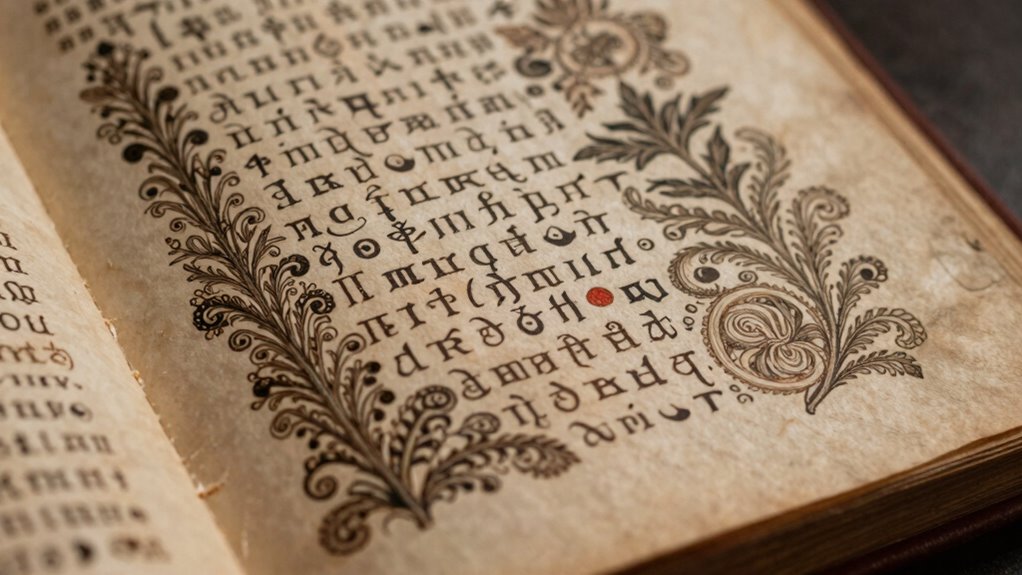
Have you ever wondered why the Voynich Manuscript continues to confound scholars and cryptographers alike? It’s because this mysterious document isn’t just a puzzle; it’s a monster of interpretation, a complex maze of cryptic symbolism that resists all attempts at understanding. The manuscript’s strange illustrations, unfamiliar language, and seemingly nonsensical structure have fueled countless theories, yet no one has cracked its code. Its pages seem to whisper secrets from a bygone era, but the meaning remains elusive, transforming it into a profound historical enigma. You may find yourself captivated by its allure, but the deeper you dig, the more tangled the mystery becomes.
The core challenge lies in deciphering the cryptic symbolism woven throughout the manuscript. Every illustration, whether of strange plants, celestial diagrams, or enigmatic figures, appears to carry hidden messages. These symbols don’t match any known language or code, leaving you with endless questions. Is it a coded medical treatise, a mystical alchemical script, or an elaborate hoax? The ambiguity fuels speculation but offers no definitive answers. The cryptic symbolism is so dense that it acts like a barrier, preventing you from uncovering its true purpose or origin. Instead of clarity, you’re left with layers of meaning that seem to shift and evolve under scrutiny, creating a daunting interpretive monster. Modern techniques like cryptography and pattern recognition have been employed in an attempt to unravel these layers, yet the core mystery endures. Additionally, researchers continue to develop computational analysis tools that push the boundaries of traditional decipherment methods. These advancements underscore the evolving nature of analytical technology in the face of such cryptic mysteries.
This manuscript’s status as a historical enigma amplifies its allure and difficulty. You’re dealing with a document that may date back to the 15th or 16th century, yet no one knows who authored it, why it was created, or for whom it was intended. Its age alone makes it a priceless artifact, but also a puzzle wrapped in mystery. Each attempt to understand it uncovers more questions than answers, turning the manuscript into an interpretive monster that devours your assumptions and expectations. It’s a living relic that challenges your understanding of history, language, and symbolism, forcing you to confront the limits of your knowledge. Additionally, the baffling nature of the manuscript continues to inspire new technological approaches in an effort to decode its secrets. This ongoing pursuit of decoding efforts highlights how modern technology is continuously pushed to its limits in the face of such cryptic mysteries. In doing so, it also emphasizes the importance of interdisciplinary collaboration between linguists, cryptographers, and historians in tackling such enigmatic artifacts.
In the end, the Voynich Manuscript remains a formidable monster of interpretation, an unyielding enigma that defies resolution. It invites you to explore its cryptic symbolism, but warns you that some mysteries are designed not to be solved — only appreciated for their cryptic beauty and the endless curiosity they inspire.
As an affiliate, we earn on qualifying purchases.
Frequently Asked Questions
Has Anyone Ever Deciphered the Manuscript’s True Language?
No one has definitively deciphered the Voynich Manuscript’s true language yet. You’d face complex linguistic puzzles and relentless code-breaking challenges, which have stumped experts for centuries. Despite numerous attempts, no conclusive breakthrough has emerged, leaving its language and meaning a mystery. Researchers continue to analyze its patterns, hoping someday to uncover its secrets, but for now, the manuscript remains an intriguing enigma in the world of cryptography and linguistic puzzles.
What Are the Most Popular Theories About Its Origin?
You’ll find that popular theories about its origin often point to a mix of historical context and artistic symbolism. Some believe it’s a medieval forgery, created for alchemical or mystical purposes, while others think it’s a lost scientific or botanical text from the Renaissance. Many scholars see the artwork’s symbolism as reflective of medieval beliefs, making its true origin a puzzle woven into history and art, fueling ongoing debates.
Could the Manuscript Be a Hoax or Forgery?
Sure, the idea that the Voynich Manuscript is a clever hoax seems tempting, especially amid authenticity debates and its strange historical context. Yet, its mysterious language and unique illustrations defy simple forgery. You might think it’s just a prank, but the meticulous craftsmanship suggests genuine effort. So, while skeptics call it a forgery, the evidence keeps you guessing—perhaps the real mystery is why someone went to such lengths.
How Has the Manuscript Influenced Modern Cryptography?
You see, the manuscript has profoundly influenced modern cryptography by inspiring new cipher techniques and fueling the evolution of cryptography itself. Its mysterious symbols challenge you to develop more sophisticated decoding methods, pushing cryptographers to refine their skills. As a result, the manuscript acts as both a historical puzzle and a catalyst, encouraging you to innovate and deepen your understanding of encryption, ultimately shaping the way you approach secure communication today.
Are There Similar Mysterious Manuscripts From the Same Period?
Yes, there are similar mysterious manuscripts from the same period, often crafted on medieval parchment with cryptic illustrations. You might encounter texts like the Rohonc Codex or the Grolier Codex, which also feature undeciphered scripts and enigmatic artwork. These documents intrigue researchers because their cryptic illustrations and obscure writings challenge modern understanding, much like the Voynich Manuscript, sparking ongoing debates about their origins and meanings.
As an affiliate, we earn on qualifying purchases.
Conclusion
You see, the Voynich Manuscript embodies the challenges of interpretation—it’s a puzzle that resists easy understanding. Like the case of the Beale Ciphers, where countless attempts to decode failed, the manuscript reminds you that some mysteries may forever evade clarity. Embracing this uncertainty pushes you to question assumptions and accept ambiguity, turning the manuscript into a mirror of human curiosity and the limits of knowledge. Sometimes, the enigma itself becomes the true story.
As an affiliate, we earn on qualifying purchases.
As an affiliate, we earn on qualifying purchases.
Halloween Picks
halloween
As an affiliate, we earn on qualifying purchases.