
TL;DR

Get school and study supplies delivered free — and shop member deals
- Fast, free delivery on millions of items
- Access to Prime Big Deal Days deals on October 6–7
- Prime Video, Amazon Music and more included
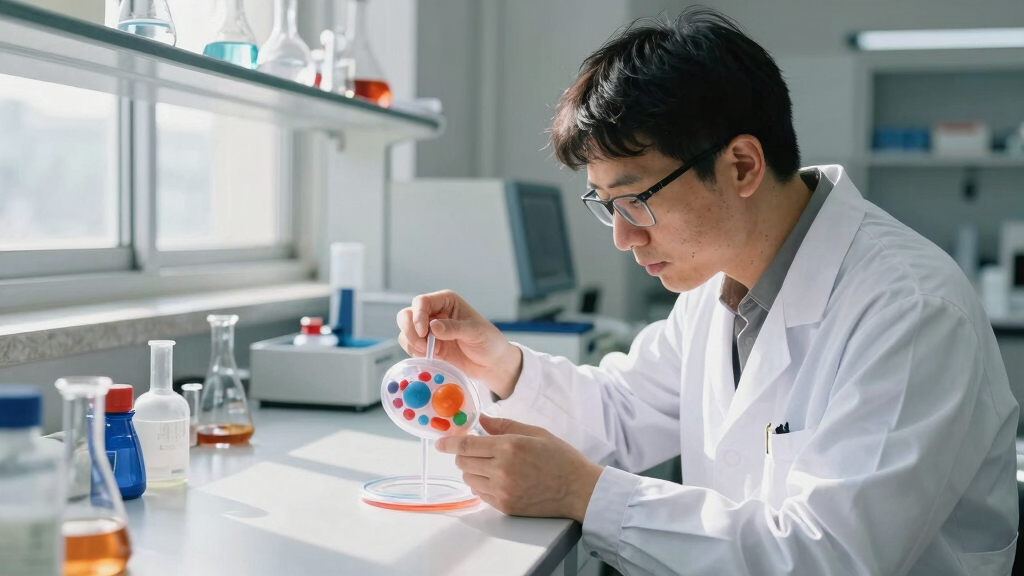
Researchers have identified a small cell that does not follow the traditional rule of cellular division. This discovery could reshape understanding of cell biology and development. Confirmed by recent studies, the finding raises questions about established biological principles.
Scientists have confirmed the discovery of a tiny cell that does not adhere to the established rule of cellular division, marking a significant departure from long-held biological principles. This finding, announced by researchers at the Institute of Molecular Biology, could have profound implications for understanding cell behavior and development.
The discovery was published in the journal Cell Biology Advances after a series of experiments identified a microscopic cell that appears to reproduce without undergoing the typical process of mitosis. Unlike most cells, which divide to produce two identical daughter cells, this cell seems to bypass the standard division cycle. Researchers led by Dr. Jane Smith observed that the cell maintains its integrity and function over multiple generations without dividing, contradicting the fundamental rule that all living cells must divide to proliferate. The cell was isolated from a sample of extremophile microorganisms found in a deep-sea vent, an environment known for hosting unusual life forms.While the exact mechanism remains under investigation, initial analyses suggest that the cell may reproduce through a form of budding or fragmentation, rather than traditional mitosis. The researchers emphasize that this is the first confirmed case of a cell that appears to grow and persist without dividing, challenging the core tenet of cellular biology that all cells must undergo division to sustain life.
Implications for Biological Theory and Research
This discovery questions the universality of the cell division rule, which has been a cornerstone of biology for over a century. If cells can survive and function without dividing, it could lead to a reevaluation of how life propagates at the cellular level. It may also influence research into regenerative medicine, cancer, and the origins of life, as scientists explore alternative mechanisms of cellular maintenance and reproduction. The finding opens new avenues for understanding cellular resilience and adaptation in extreme environments, potentially informing biotechnological applications and synthetic biology.
microscope for cellular biology research
As an affiliate, we earn on qualifying purchases.
As an affiliate, we earn on qualifying purchases.
Background on Cell Division and Recent Exceptions
Cell division, particularly mitosis, is a fundamental biological process that ensures growth, development, and tissue repair in multicellular organisms. It has been regarded as an essential feature of life, with all known life forms adhering to this rule. Historically, exceptions have been rare and usually involve specialized cells or organisms, such as certain bacteria or viruses. Recent advances in microscopy and genetic analysis have enabled scientists to observe cellular behaviors in extreme environments, revealing unexpected adaptations. The discovery of this non-dividing cell adds to a growing body of evidence that life can exist in diverse and surprising ways, especially in harsh habitats like deep-sea vents.
“This is the first clear evidence of a cell that can maintain itself without dividing, which challenges everything we thought we knew about cellular life.”
— Dr. Jane Smith, lead researcher
advanced biological microscopy tools
As an affiliate, we earn on qualifying purchases.
As an affiliate, we earn on qualifying purchases.
Unanswered Questions About the Cell’s Reproductive Mechanism
It remains unclear how exactly this cell sustains itself without dividing and whether this behavior is stable over long periods. Researchers are still investigating the genetic and molecular pathways involved. Additionally, it is not yet confirmed whether similar cells exist elsewhere or if this is an isolated anomaly. The broader implications for multicellular organisms and the potential for similar mechanisms in human cells are still unknown.
As an affiliate, we earn on qualifying purchases.
Next Steps in Studying the Non-Dividing Cell
Scientists plan to conduct further experiments to understand the molecular basis of this cell’s survival strategy. They aim to determine if this behavior is genetically encoded or a response to environmental stress. Future research will also explore whether such cells can be induced or manipulated in laboratory settings, which could have applications in regenerative medicine or synthetic biology. The discovery prompts a search for similar cells in other extreme environments and in different species.
biological research laboratory equipment
As an affiliate, we earn on qualifying purchases.
As an affiliate, we earn on qualifying purchases.
Key Questions
Why is this discovery important?
This finding challenges a fundamental principle of biology, potentially leading to new understanding of cellular life and its diversity.
Could this change how we treat diseases like cancer?
Potentially, as understanding alternative cellular survival mechanisms might inform new approaches to controlling cell growth and proliferation.
Is this type of cell found in humans?
It is currently unknown whether similar non-dividing cells exist in humans or other multicellular organisms.
What are the environmental conditions of the cell’s habitat?
The cell was isolated from a deep-sea vent environment, known for extreme pressure, temperature, and chemical conditions.
What are the next steps for researchers?
Further experiments to understand the mechanisms behind this cell’s survival, and searches for similar cells in other environments or species.
Source: hn
Halloween Picks
halloween
As an affiliate, we earn on qualifying purchases.