
TL;DR

Prime made for students and young adults
- Fast, free delivery for dorm and study essentials
- Prime Video and Amazon Music included
- Member-only deals
Educational science kits for kids make learning hands-on and fun, helping children grasp science concepts early. They’re growing in popularity, with trends like eco-friendly materials and digital integration shaping the market.
Choose age-appropriate kits with non-toxic, durable materials for safe, engaging experiments.
Match your child’s interests—space, biology, engineering—to find the most inspiring kits.
Look for recent trends like eco-friendly components and digital integration to enhance learning.
Compare features and prices using tables to pick the best value for your child’s curiosity.
Supervise and follow safety instructions to keep science fun and accident-free.
Why Your Kid Will Love Hands-On Science Kits
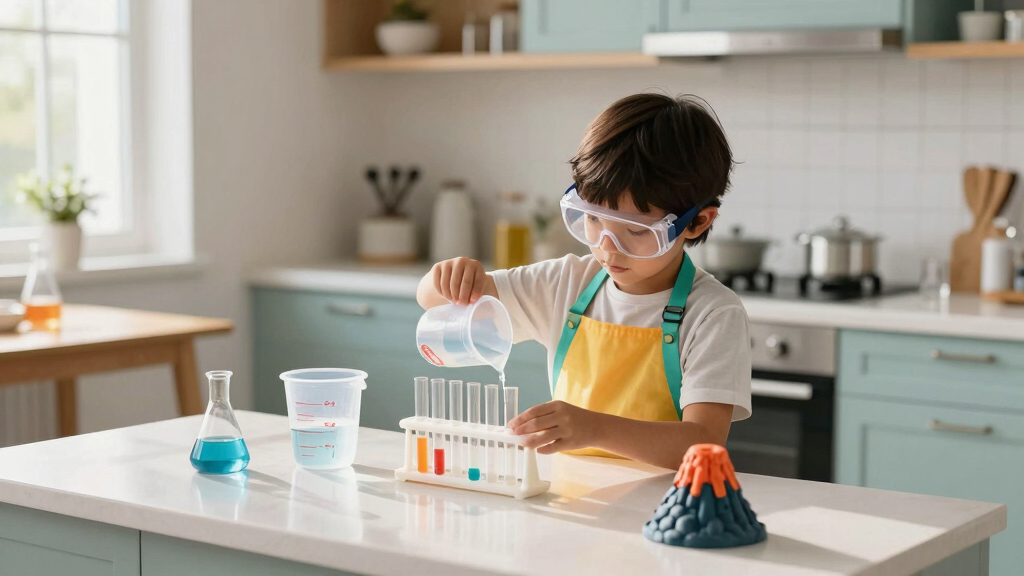
Kids love to explore with their hands. Educational science kits tap into that natural curiosity, turning it into learning. Picture a 7-year-old building a simple circuit or growing crystals. The rich textures, bright colors, and surprising reactions keep them hooked. These kits don’t just teach—they entertain, inspire, and empower.
For example, a kit with glow-in-the-dark slime or a mini volcano eruption becomes a memorable moment. Kids remember what they see and do far better than passive listening. It’s a recipe for turning reluctant learners into passionate explorers.
As an affiliate, we earn on qualifying purchases.
How to Pick the Perfect Science Kit for Your Child
Choosing the right science kit depends on your child’s age, interests, and safety needs. Here’s a quick step-by-step guide:
- Check the age recommendation on the box—little hands need simple tools, while older kids can handle more complex experiments.
- Match the kit’s theme with your child’s curiosity—space, biology, chemistry, or engineering.
- Look for non-toxic materials and clear instructions to keep safety at the forefront.
- Read reviews and ratings—see what other parents or teachers say about durability and engagement.
- Consider future growth—some brands offer subscription kits that evolve with your child’s skills.
For instance, a 5-year-old might enjoy a basic magnet kit, while a 10-year-old might prefer a robotics or coding set. Picking the right kit sparks enthusiasm and builds confidence.
As an affiliate, we earn on qualifying purchases.
Compare Top 3 Science Kits — Which One Fits Your Kid Best?
| Feature | National Geographic Kids | Thames & Kosmos | KiwiCo |
|---|---|---|---|
| Age Range | 6-14 | 8-16 | 3-16 |
| Focus Areas | Biology, Earth Science | Physics, Chemistry | Engineering, Art & Science |
| Materials | Non-toxic, durable | Sustainable, recyclable | High-quality, safe |
| Price Range | $25-$40 | $30-$50 | $20-$60 |
This table helps you weigh options based on your child’s age, interests, and budget. For example, if your kid loves space and animals, National Geographic offers themed kits. For budding engineers, KiwiCo’s STEM projects are a hit.
eco-friendly kids science experiment kits
As an affiliate, we earn on qualifying purchases.
As an affiliate, we earn on qualifying purchases.
Recent Trends That Make Science Kits Even More Exciting
Science kits are evolving fast. Here’s what’s new and trending:
- STEM Integration: Kits now blend science with coding, robotics, and environmental tech. This integration matters because it reflects the interconnected nature of modern technology and science. It encourages children to see the relationships between different disciplines, fostering a holistic understanding. However, a tradeoff is that some kits may become more complex, potentially overwhelming younger children. The key is finding a balance that challenges without discouraging.
- Eco-Friendly Materials: Brands are switching to biodegradable plastics and recycled components, which is crucial for teaching sustainability. Using eco-friendly materials not only reduces environmental impact but also instills eco-conscious values early on. The challenge is ensuring these materials are durable enough for repeated use, as some eco-friendly options may compromise longevity.
- Digital Add-Ons: Augmented reality apps and online tutorials turn physical experiments into immersive experiences. This trend enhances engagement by providing visual and interactive context, making abstract concepts more tangible. However, reliance on digital tools can sometimes detract from hands-on learning if not integrated thoughtfully. The goal is to complement physical experiments, not replace them.
- Themed Kits on Current Issues: Climate change, renewable energy, and space exploration connect science to real-world problems, making lessons relevant and inspiring. These themes foster critical thinking about societal challenges, motivating kids to become problem-solvers. The tradeoff is that some kits might oversimplify complex issues, so it’s important to pair them with guided discussions to deepen understanding.
- Subscription Models: Ongoing experiments keep children engaged for months, gradually increasing in complexity and scope. This approach supports sustained learning and skill development. The potential downside is that subscriptions can be costly, and some children might lose interest if the content doesn’t match their evolving interests. Curating a subscription that aligns with their curiosity is essential.
digital integration science kits for kids
As an affiliate, we earn on qualifying purchases.
As an affiliate, we earn on qualifying purchases.
What Makes a Science Kit Truly Safe and Quality-Driven?
Safety and quality are non-negotiable. Reputable kits use non-toxic, child-safe materials and clear instructions. For example, a chemistry set with no sharp edges or hazardous chemicals keeps young scientists out of harm’s way. Look for certifications or reviews confirming safety standards. High-quality kits also use durable components that withstand eager hands and spills, making them last longer and provide better value.
A good rule: always supervise experiments, especially with younger children, and follow the provided guidelines. That way, science remains a fun, safe adventure.
How Digital Tools Boost the Power of Physical Science Kits
Digital tools turn simple experiments into interactive adventures. Apps can guide children step-by-step, visualize complex concepts, or even simulate experiments that are too dangerous or costly to do physically. For example, an AR app might show a 3D model of the solar system when a child scans their kit, deepening understanding. Combining physical kits with digital content creates a richer, more engaging learning experience—making science feel alive and connected to modern tech.
Frequently Asked Questions
Are science kits safe for young children?
Yes. Reputable kits use non-toxic, child-safe materials and come with clear safety instructions. Always supervise younger kids during experiments to ensure safety and maximize learning.What age is suitable for starting science kits?
Science kits are available from age 3 and up. Always check the recommended age on the packaging—kits for preschoolers focus on basic exploration, while older children can handle more complex projects.How do I choose the right science kit for my child?
Consider your child’s age, interests, and safety needs. Read reviews, compare features, and pick a kit that matches their curiosity and skill level—this keeps science fun and rewarding.Can science kits be used at home and in classrooms?
Absolutely. They are versatile tools that work well for homeschooling, classroom activities, or as extra fun for after-school exploration. They help make science accessible anywhere.Are there eco-friendly or sustainable science kits?
Yes. Many brands now offer kits with biodegradable plastics, recycled materials, and eco-conscious packaging—teaching kids about sustainability while they learn and play.Conclusion
A good science kit isn’t just a toy; it’s a doorway to discovering the world. It sparks curiosity that lasts a lifetime. When you pick the right one, you’re giving your child a toolkit for understanding everything from stars to circuits—one experiment at a time. So, why wait? Open that box and let the adventures begin.Halloween Picks
halloween
As an affiliate, we earn on qualifying purchases.