
TL;DR

Prime made for students and young adults
- Fast, free delivery for dorm and study essentials
- Prime Video and Amazon Music included
- Member-only deals
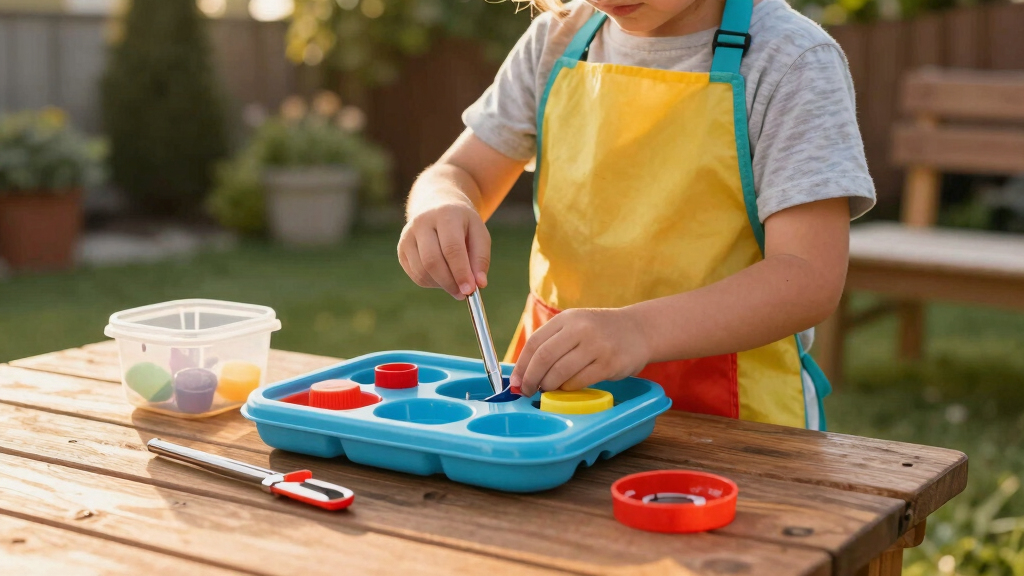
Educational science kits for kids combine fun and learning, helping children grasp scientific concepts through hands-on experiments. They boost curiosity, develop skills, and now include tech and eco-friendly options, making science accessible and exciting.
Imagine a box that transforms your living room into a mini science lab. Bright colors, strange chemicals, tiny tools—each kit is a portal to discovery. These kits aren’t just toys; they’re gateways to understanding the world around us.
Whether you’re a parent, teacher, or curious kid yourself, you’ll learn how these kits ignite curiosity, align with learning goals, and adapt to every age and interest. Let’s explore what makes a science kit great—and how to pick the perfect one for your young scientist.
Choose science kits with safety features, non-toxic materials, and age-appropriate activities.
Match your child’s interests and curiosity to the right topic—biology, physics, chemistry, or engineering.
Look for kits with reusable parts and eco-friendly materials to teach sustainability early.
Incorporate technology like AR or companion apps for deeper engagement and understanding.
Regular use—weekly or bi-weekly—keeps curiosity alive without overwhelming your child.
What makes a science kit safe and perfect for kids?
Safety is the foundation of any good science kit. Think non-toxic ingredients, child-proof containers, and clear safety instructions. For example, Thames & Kosmos offers kits with BPA-free plastics and rounded safety edges. Always check age labels—a kit for 8-year-olds might not be suitable for 3-year-olds, even if it looks fun.
Reputable brands test their materials rigorously, adhering to safety standards like ASTM or EN71. This means no sharp parts, toxic fumes, or choking hazards—crucial for little hands exploring with excitement.
Prioritizing safety doesn’t mean limiting exploration; instead, it ensures children can experiment freely without unnecessary risks. This balance fosters confidence and independence, encouraging kids to learn through discovery while parents can rest assured they’re protected.
As an affiliate, we earn on qualifying purchases.
How to choose the right science kit for your child’s age and interests
- Identify your child’s interests—space, animals, chemistry, or engineering? Matching a kit to their passions makes learning more engaging and meaningful, encouraging sustained curiosity.
- Check age recommendations—kits are designed with developmental stages in mind. Choosing age-appropriate projects reduces frustration and prevents safety issues, creating a positive learning experience.
- Consider the complexity—simple experiments for young kids build foundational understanding, while more detailed projects challenge older children and develop critical thinking skills. This progression supports cognitive growth and keeps science exciting as they mature.
- Review the educational content—does it clearly explain scientific principles? Well-designed kits not only demonstrate how to do experiments but also contextualize the ‘why’ behind each step, deepening comprehension and fostering a scientific mindset.
- Assess safety features and material quality—reliable brands use durable, non-toxic parts that withstand repeated use, ensuring longevity and continued safe exploration. Investing in quality materials often means fewer replacements and a better overall experience.
For example, a 6-year-old fascinated by bugs might enjoy a biology kit with live insect habitats, which can teach responsibility and observation skills, while an 8-year-old interested in rockets might benefit from a physics-based launcher set that introduces concepts like force and trajectory in a hands-on way.
children's STEM educational science kits
As an affiliate, we earn on qualifying purchases.
As an affiliate, we earn on qualifying purchases.
Compare top science kits: Which one is best for your kid?
| Feature | National Geographic Kids | Thames & Kosmos | KiwiCo | Learning Resources |
|---|---|---|---|---|
| Age Range | 8+ | 10+ | 4-16 | 5+ |
| Topics Covered | Biology, Earth Science | Physics, Chemistry | STEM (varied) | Science & Nature |
| Reusability | High | High | Moderate | High |
| Price Range | $30-$50 | $40-$70 | $20-$60 | $25-$45 |
Choosing the right kit depends on your child’s age, curiosity, and your budget. KiwiCo’s monthly boxes are designed to grow with your child, gradually introducing more complex concepts, which helps sustain interest over time. National Geographic kits excel at storytelling, making abstract scientific ideas more relatable and memorable. Considering these factors ensures your investment nurtures a love for science that lasts.
eco-friendly science kits for kids
As an affiliate, we earn on qualifying purchases.
As an affiliate, we earn on qualifying purchases.
Why integrating tech makes science kits even cooler
Technology transforms traditional experiments into immersive learning experiences. Augmented reality (AR) apps can overlay digital images—like stars or fossils—on real-world objects, making abstract concepts tangible and exciting. Sensor-based experiments, such as measuring light or temperature, provide real-time feedback, allowing kids to see the immediate impact of their actions, reinforcing cause-and-effect relationships. This integration helps bridge the gap between physical experiments and digital understanding, catering to kids who are digital natives.
For instance, some kits include companion apps that guide experiments step-by-step, with animated videos, interactive quizzes, and progress tracking. This hybrid approach not only boosts engagement but also caters to varied learning styles, making science more accessible and less intimidating. Kids can explore complex topics with visual and interactive aids, deepening their understanding and fostering a sense of achievement.
Recent studies indicate that kits with embedded technology increase sustained engagement by nearly 35%, as they combine tactile learning with digital interactivity. This synergy enhances motivation, comprehension, and retention, making science a dynamic adventure rather than a static activity.
kids safety science kits with non-toxic materials
As an affiliate, we earn on qualifying purchases.
As an affiliate, we earn on qualifying purchases.
How eco-friendly science kits are changing the game
Eco-friendly science kits are more than just a trend—they reflect a growing awareness of environmental responsibility. Using biodegradable plastics, recycled paper, and natural dyes reduces the ecological footprint of manufacturing and disposal. These materials often require less energy to produce and decompose more quickly, minimizing waste and pollution. For children, this introduces early lessons about sustainability, resource conservation, and the importance of caring for the planet—values that can influence lifelong habits.
For example, KiwiCo’s Eco line emphasizes sustainable sourcing and uses plant-based or recycled materials, embedding environmental themes directly into the learning experience. Such kits often include activities that teach about ecosystems, renewable energy, or recycling, making the lessons about sustainability tangible and memorable. This approach helps children understand that science isn’t separate from real-world issues but is a tool to address them.
Choosing eco-friendly kits supports green habits from a young age and aligns with many parents’ desire to raise environmentally conscious children. Additionally, these kits tend to be more durable and versatile, allowing for multiple experiments, which maximizes value and reinforces eco-conscious thinking.
What skills do kids develop with science kits?
Science kits foster more than factual knowledge; they cultivate essential skills such as critical thinking, problem-solving, and perseverance. When children design and conduct experiments, they learn to formulate hypotheses, analyze results, and troubleshoot issues, mirroring real scientific processes. For example, building a volcano model requires understanding chemical reactions, measuring accurately, and adjusting procedures based on outcomes—skills that are transferable to many areas of learning and future careers.
Furthermore, engaging in hands-on experiments helps children develop a deeper understanding of scientific concepts because they are actively involved in the learning process. This active participation encourages them to ask questions, seek explanations, and connect ideas, which leads to better retention and comprehension. These skills are foundational for scientific literacy and critical thinking, essential in a world increasingly driven by innovation and technology. Additionally, working through challenges during experiments teaches resilience and patience—traits that benefit lifelong learning and problem-solving in everyday life.
Research shows that children engaged in hands-on science activities retain information better and develop a more profound appreciation for scientific inquiry, which can inspire lifelong curiosity and a passion for learning across disciplines.
Frequently Asked Questions
Are science kits safe for young children?
Yes, reputable science kits are designed with safety as a top priority. They use non-toxic, child-safe materials, and include clear instructions for safe handling. Always supervise younger children and check age labels before purchasing.
What age is best for starting science kits?
Most kits are categorized by age, from around 3 years old for simple sensory or basic experiments, up to 16+ for advanced projects. Choose a kit that matches your child’s developmental level and curiosity.
How do I pick the best science kit for my kid?
Consider their interests, safety, age appropriateness, and whether the kit includes enough variety to keep them engaged. Reading reviews and checking educational content can also help you make the right choice.
Can science kits support homeschooling or classroom learning?
Absolutely. Many kits are designed for individual use but also work well in group settings, making them ideal for homeschoolers and teachers seeking hands-on, curriculum-aligned activities.
Are eco-friendly science kits available?
Yes, numerous brands now offer sustainable options with biodegradable materials, natural dyes, and minimal plastic, helping kids learn about science and environmental responsibility simultaneously.
Conclusion
Investing in the right science kit is like planting a seed for a future scientist. It’s more than just fun; it’s a foundation for curiosity, problem-solving, and even environmental awareness. Your child’s love for discovery can start with a simple box and grow into a lifelong passion.
So, pick one that sparks their imagination, keeps safety front and center, and offers new surprises each time. After all, the best experiments are the ones that turn everyday moments into magical discoveries.
Halloween Picks
halloween
As an affiliate, we earn on qualifying purchases.