
TL;DR

Prime made for students and young adults
- Fast, free delivery for dorm and study essentials
- Prime Video and Amazon Music included
- Member-only deals
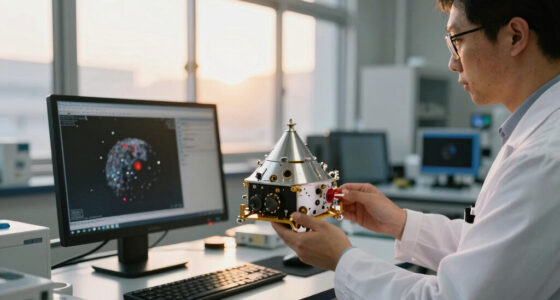
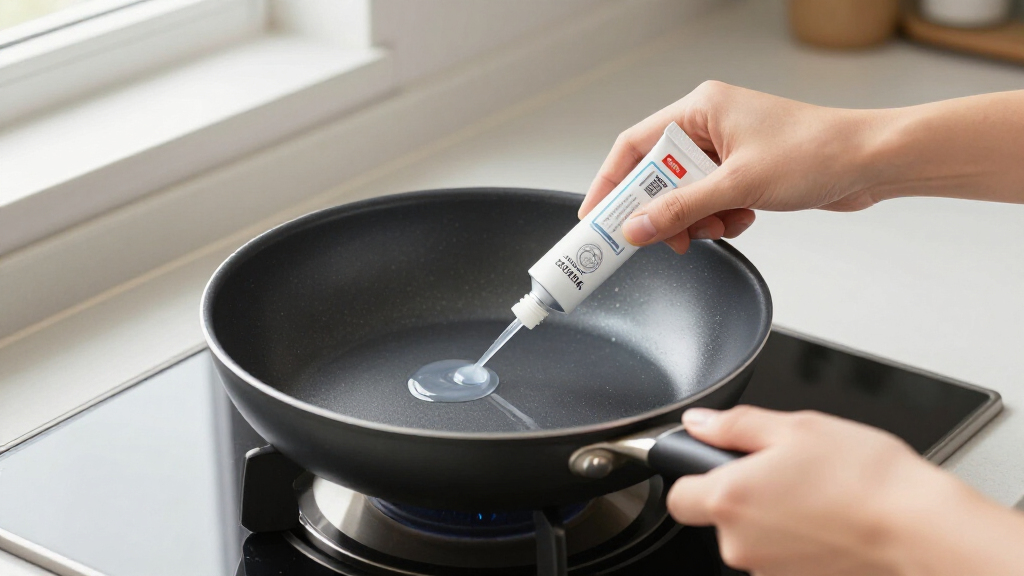
Researchers have developed a new glue that adheres strongly to nonstick surfaces and can be wiped clean with ethanol. This innovation could simplify repairs and maintenance across multiple industries.
Researchers have introduced a new adhesive that can bond effectively to nonstick surfaces such as Teflon and ceramic coatings, and is easily wiped clean with ethanol. This development could impact industries ranging from household repairs to manufacturing, offering a reversible and cleanable bonding solution.
The adhesive was developed by a team at a leading materials research institute. According to their published findings, it forms a strong bond with nonstick coatings, which traditionally resist adhesion. The key feature is that the bond can be broken and the surface cleaned simply by applying ethanol, without damaging the underlying material or leaving residue. The researchers demonstrated that the glue maintains its bonding strength during use but can be readily removed with ethanol, facilitating easy maintenance and reapplication. The development was announced in a scientific publication and has undergone initial laboratory testing. The team claims that this adhesive could replace traditional glues, especially in scenarios where nonstick surfaces are preferred but temporary or reversible bonding is needed. The adhesive’s chemical formulation is still under review, and commercial production is not yet underway.Implications for Household and Industrial Use
This innovation offers a significant shift in how repairs and assembly are managed, especially where nonstick surfaces are involved. It could reduce waste by enabling easy removal and reapplication of adhesives, and improve safety by eliminating the need for harsh chemicals or mechanical removal methods. Industries such as electronics, appliance manufacturing, and even medical devices could benefit from this reversible bonding technology, reducing costs and environmental impact.
As an affiliate, we earn on qualifying purchases.
Advances in Reversible Adhesive Technologies
Traditional adhesives struggle to bond with nonstick surfaces like Teflon or ceramic coatings, which are designed to resist sticking. Existing solutions often involve mechanical fasteners or irreversible chemical bonds, complicating repairs or rework. Recent years have seen research into reversible adhesives, but few have combined strong bonding with easy removal. The new adhesive builds on prior efforts by integrating a chemical formulation that interacts favorably with nonstick coatings while maintaining reversibility through ethanol application.
“Our adhesive forms a durable bond with nonstick surfaces, yet can be completely wiped away with ethanol, making repairs and maintenance much simpler.”
— Dr. Emily Chen, lead researcher
reversible glue for nonstick surfaces
As an affiliate, we earn on qualifying purchases.
As an affiliate, we earn on qualifying purchases.
Unanswered Questions About Long-Term Performance
It is not yet clear how the adhesive performs over extended periods or under extreme conditions such as high heat, moisture, or mechanical stress. The durability of the bond after repeated ethanol cleaning cycles remains to be tested, and commercial viability is still under review. Further research is needed to confirm whether the adhesive can be scaled up for widespread use and whether it interacts safely with various materials.
As an affiliate, we earn on qualifying purchases.
Next Steps Include Field Testing and Commercial Development
The research team plans to conduct extensive field testing to evaluate the adhesive’s performance in real-world applications. They are also exploring partnerships with manufacturers to develop commercial formulations. Regulatory approvals and safety assessments will follow before the adhesive can be marketed for consumer or industrial use. Expect updates on durability tests and potential product launches within the next 12-18 months.
As an affiliate, we earn on qualifying purchases.
Key Questions
Can this adhesive be used on all nonstick surfaces?
Initial tests show strong bonding on common nonstick coatings like Teflon and ceramic. Further testing is needed to confirm compatibility with all types of nonstick surfaces.
Is the ethanol cleaning process safe for all materials?
Laboratory tests indicate that ethanol effectively removes the adhesive without damaging typical substrates, but long-term safety across diverse materials requires further study.
How many times can the adhesive be reapplied and removed?
This aspect is still under investigation. Early results suggest multiple cycles are possible, but durability over many uses remains to be confirmed.
When will this adhesive be available commercially?
The researchers plan to move into product development and testing phases over the next year, with potential market availability within 12-18 months.
Does the adhesive contain any hazardous chemicals?
The chemical formulation is currently under review, and safety assessments are ongoing. No hazardous chemicals are claimed at this stage.
Source: hn
Halloween Picks
halloween
As an affiliate, we earn on qualifying purchases.