
TL;DR

Get school and study supplies delivered free — and shop member deals
- Fast, free delivery on millions of items
- Access to Prime Big Deal Days deals on October 6–7
- Prime Video, Amazon Music and more included
The Goes-19 weather satellite has entered Safe Hold mode, temporarily pausing its operations. This development impacts weather monitoring and forecasting capabilities. Details on the cause are still emerging.
The Goes-19 weather satellite has entered Safe Hold mode, according to officials at NOAA. This status change temporarily suspends its data transmission and operations, raising concerns about ongoing weather monitoring efforts. The event is significant because Goes-19 plays a critical role in real-time weather observation and forecasting for the United States and surrounding regions.
NOAA confirmed that Goes-19 entered Safe Hold mode on March 24, 2024. The agency stated that the satellite’s onboard systems automatically triggered the mode due to an unspecified anomaly. NOAA spokesperson Sarah Jenkins said, “Our team is actively investigating the cause of the Safe Hold activation and assessing the impact on data collection.” The satellite, launched in 2022, is part of the GOES-R series, designed to provide high-resolution imagery and environmental data.
Initial assessments suggest that the satellite’s communications system remains operational, but its data transmission capabilities are temporarily offline. NOAA has not yet specified how long the satellite will remain in Safe Hold or when it might resume normal operations. The agency is coordinating with contractors and international partners to diagnose and resolve the issue.
Implications for Weather Monitoring and Forecasting
The entry of Goes-19 into Safe Hold mode raises concerns about potential gaps in weather data, especially during severe weather events. As a key component of the United States’ space-based weather observation infrastructure, any disruption can affect forecast accuracy and emergency response planning. NOAA officials emphasized that backup systems and other satellites will mitigate some impacts, but the situation underscores the importance of satellite health and redundancy.
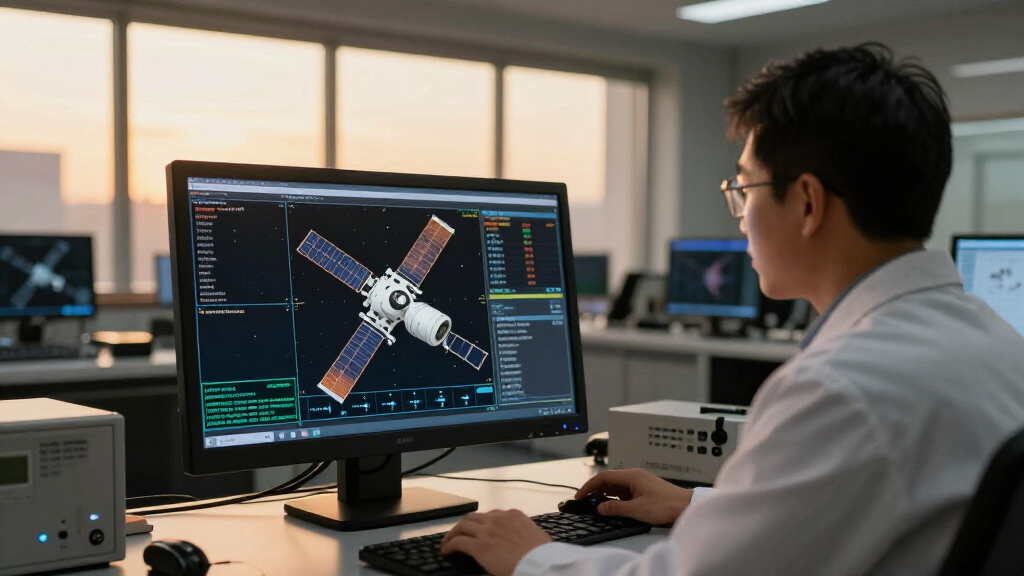
satellite data transmission monitor
As an affiliate, we earn on qualifying purchases.
As an affiliate, we earn on qualifying purchases.
Goes-19’s Role in Modern Weather Observation
Goes-19 is part of the Geostationary Operational Environmental Satellite (GOES) series, launched in 2022 to replace older satellites and enhance weather monitoring capabilities. It provides real-time imagery, atmospheric measurements, and environmental data crucial for tracking storms, hurricanes, and other severe weather phenomena. Prior to this incident, Goes-19 had been operating normally, contributing significantly to weather prediction accuracy.
The satellite’s Safe Hold mode is a protective status that is typically triggered by system anomalies to prevent further damage while diagnostics are performed. Similar incidents have occurred in the past but are usually resolved within days. The current situation remains under investigation, with no definitive cause publicly disclosed.
“Our team is actively investigating the cause of the Safe Hold activation and assessing the impact on data collection.”
— NOAA spokesperson Sarah Jenkins
As an affiliate, we earn on qualifying purchases.
Unconfirmed Causes and Duration of Safe Hold Status
It is not yet clear what specifically caused Goes-19 to enter Safe Hold mode. NOAA has not disclosed detailed diagnostics or whether the anomaly is hardware or software-related. The expected duration of the Safe Hold status remains unknown, and recovery timelines are still being determined.
As an affiliate, we earn on qualifying purchases.
Next Steps in Satellite Diagnostics and Restoration
NOAA and its partners are conducting detailed diagnostics to identify the root cause. Once diagnosed, they will implement corrective measures to restore normal operations. NOAA has indicated that updates will be provided as more information becomes available, with contingency plans in place to minimize impacts on weather monitoring.
As an affiliate, we earn on qualifying purchases.
Key Questions
What is Safe Hold mode on a satellite?
Safe Hold mode is a protective status that satellites enter automatically when an anomaly is detected. It temporarily suspends normal operations to prevent further damage and allows technicians to diagnose the issue.
How does this affect weather forecasting?
The disruption could lead to temporary gaps in real-time weather data, potentially impacting forecast accuracy. NOAA has backup satellites and systems to mitigate these effects.
Has there been any damage to the satellite?
There is no confirmed damage reported. The satellite is in Safe Hold mode as a precaution, and investigations are ongoing to determine the cause.
When might Goes-19 resume normal operations?
NOAA has not provided an estimated timeline. The recovery depends on diagnosing and fixing the underlying issue, which could take days to weeks.
Could this incident impact other satellites or systems?
Currently, there is no indication that other satellites are affected. The incident appears isolated to Goes-19, but ongoing assessments will clarify this.
Source: hn
Fall Picks
fall essentials
As an affiliate, we earn on qualifying purchases.