
TL;DR

Prime made for students and young adults
- Fast, free delivery for dorm and study essentials
- Prime Video and Amazon Music included
- Member-only deals
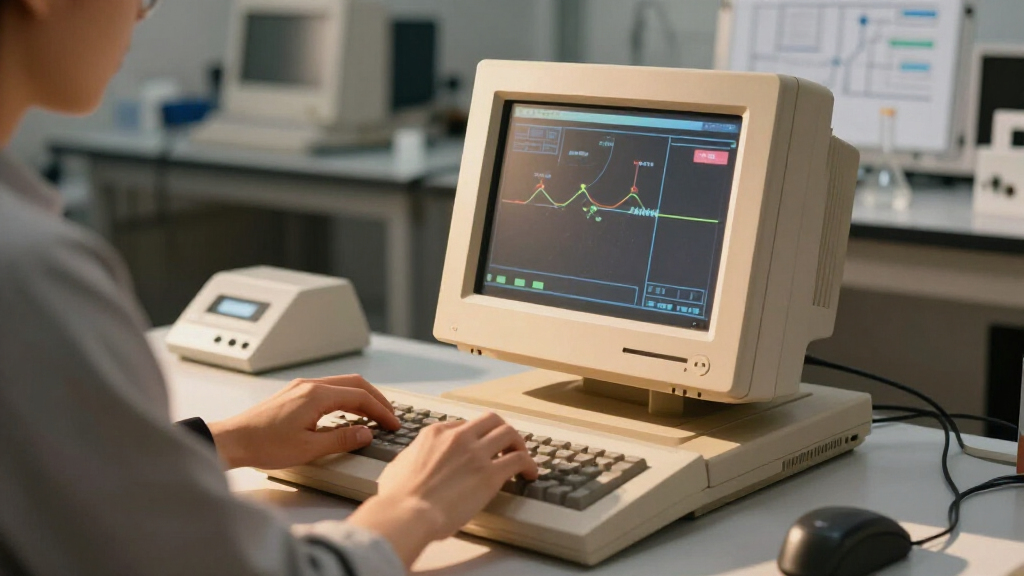
NASA has created a computer emulator for Voyager 1’s Flight Data System, allowing retrieval of decades-old scientific data. This marks a significant step in spacecraft data preservation and analysis.
NASA has successfully developed and tested a software emulator for Voyager 1’s Flight Data System (FDS), allowing the spacecraft’s archived data to be accessed and analyzed for the first time in decades. This breakthrough addresses longstanding challenges in retrieving data from aging spacecraft systems and is a significant milestone in space data preservation.
The emulator was created by NASA’s Jet Propulsion Laboratory (JPL) after years of effort to digitally replicate Voyager 1’s original FDS hardware and software environment. According to NASA officials, the emulator has been successfully tested with archived data, confirming its ability to read and interpret Voyager’s stored scientific measurements. This development is crucial because Voyager 1’s original FDS hardware is no longer operational, and the spacecraft’s aging systems have made direct data retrieval impossible since the late 2010s. NASA emphasizes that this emulator will enable scientists to revisit and analyze decades of data collected during Voyager’s mission, including measurements from the outer solar system and interstellar space.Implications for Space Data Preservation and Scientific Research
This emulator represents a major advance in space data management, demonstrating that legacy spacecraft data can be preserved and accessed despite hardware failures and aging systems. It enables scientists to re-examine data collected over 40 years ago, potentially leading to new insights about the heliosphere and interstellar environment. The achievement also sets a precedent for future missions, highlighting the importance of digital preservation techniques for long-term space exploration assets.
As an affiliate, we earn on qualifying purchases.
Background on Voyager 1 and Data Retrieval Challenges
Voyager 1, launched in 1977, has been transmitting scientific data from beyond the solar system for over four decades. Its original Flight Data System was designed with technology from the 1970s, and as the spacecraft aged, its hardware components failed or became unreliable. In recent years, NASA has faced increasing difficulty in retrieving data directly from Voyager 1’s onboard systems, which has limited the scientific community’s ability to analyze its historic measurements. Previous efforts to recover data relied on limited hardware workarounds, but a comprehensive digital emulator was considered necessary to unlock the full archive.
NASA Voyager 1 data retrieval device
As an affiliate, we earn on qualifying purchases.
As an affiliate, we earn on qualifying purchases.
Remaining Technical and Operational Uncertainties
While the emulator has successfully retrieved archived data in controlled tests, it is not yet clear how it will perform in long-term operational use or with live data streams. NASA officials have not disclosed whether the emulator will be integrated into routine data retrieval processes or remain a research tool. Additionally, the full scope of data that can be recovered and analyzed using this emulator remains to be confirmed, particularly for data stored in degraded or incomplete formats.
space mission data preservation tools
As an affiliate, we earn on qualifying purchases.
As an affiliate, we earn on qualifying purchases.
Next Steps for Data Analysis and Broader Implementation
NASA plans to expand testing of the emulator with additional datasets and intends to collaborate with scientific teams to analyze the retrieved data. The agency also aims to explore applying similar digital preservation techniques to other aging spacecraft. The timeline for making the emulator available for broader scientific use has not been officially announced, but further validation and integration are expected over the coming months.
As an affiliate, we earn on qualifying purchases.
Key Questions
What is the Flight Data System (FDS) on Voyager 1?
The FDS is the onboard computer system responsible for collecting, storing, and transmitting scientific data from Voyager 1 to Earth. It was built with 1970s technology and has since become obsolete.
How does the emulator work to retrieve old data?
The emulator digitally replicates Voyager 1’s original FDS hardware and software environment, allowing modern computers to interpret and access the stored data as if it were still on the spacecraft.
Will this emulator allow real-time data collection from Voyager 1?
No. The emulator is designed to access and analyze archived data. Voyager 1’s hardware is no longer operational for real-time data transmission.
Could this technology be used for other spacecraft?
Potentially, yes. The approach could be adapted to preserve and access data from other aging or decommissioned spacecraft, preserving scientific legacy.
When will the emulator be available for broader scientific use?
NASA has not announced a specific release date. Further testing and validation are expected over the next few months.
Source: hn
Fall Picks
fall essentials
As an affiliate, we earn on qualifying purchases.