To set up effective camouflage shelters and observation posts for overnight stakeouts, use natural materials like leaves, branches, and grass to break up your silhouette and blend into the environment. Choose spots with good natural cover and elevate your position for better visibility. Build low-profile, lightweight shelters that hide your gear and minimize noise. Control scent and weather, and adjust for environmental conditions. Keep optimizing your setup—more tips await to help you stay unnoticed all night.

Prime made for students and young adults
- Fast, free delivery for dorm and study essentials
- Prime Video and Amazon Music included
- Member-only deals
Key Takeaways
- Use natural materials like leaves and branches to conceal shelters and break up their silhouette.
- Select elevated, naturally covered locations with good visibility for strategic observation.
- Build low-profile, portable shelters integrating natural elements for seamless environmental blending.
- Waterproof and scent-proof gear, maintaining concealment with natural covers and scent control techniques.
- Minimize noise during setup and movement, adapting to environmental conditions for ongoing stealth.
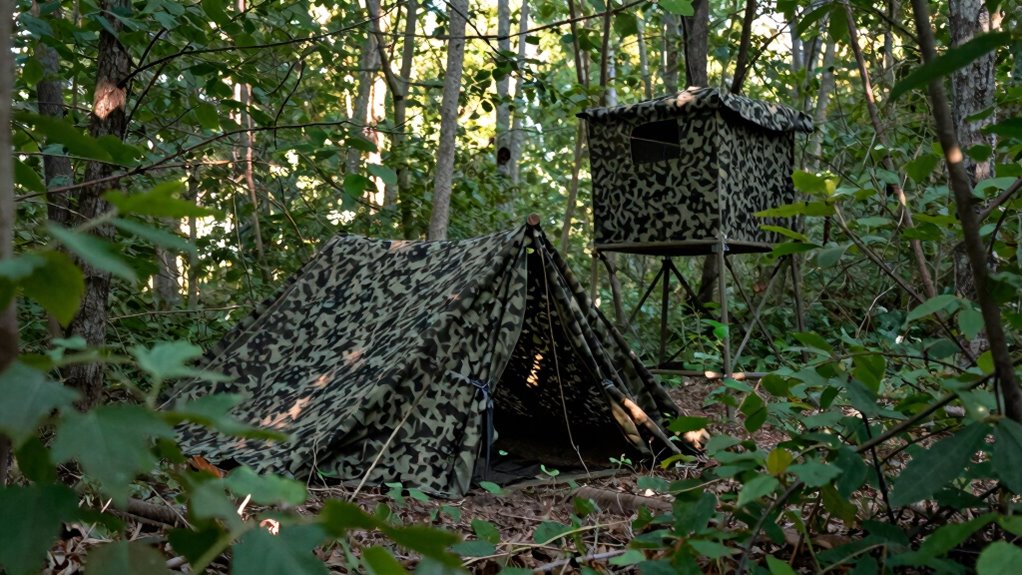
When planning an overnight stakeout, setting up effective camouflage shelters and observation posts is essential to remain undetected and gather critical intelligence. You need to focus on wildlife concealment, ensuring your setup blends seamlessly into the environment. Using natural materials like branches, leaves, and grass helps break up your silhouette and prevents movement from catching the eye of nearby animals or potential observers. The goal is to create a hideout that looks like part of the landscape, so you can observe without disturbing the wildlife or revealing your position.
Effective camouflage blends your shelter into the environment, ensuring silent observation without disturbing wildlife.
Tactical positioning plays a key role in your success. You should choose locations that offer a clear line of sight while remaining hidden from view. Look for natural cover such as thickets, fallen logs, or dense foliage that can shield you from detection. Elevate your observation point if possible, like using a tree stand or a raised platform, which provides better visibility and reduces the chances of your scent or movement being noticed. Remember, the best position balances visibility with concealment, enabling you to monitor activity quietly and effectively. Proper planning and understanding of environmental concealment techniques are crucial for success. Additionally, paying attention to scent control strategies can further improve your stealth and reduce the likelihood of detection.
Constructing your shelter with a low profile is essential. Use lightweight, portable materials that can be camouflaged easily and don’t draw attention. A lean-to or hide-style shelter works well, allowing you to remain close to your observation point while minimizing your footprint. Incorporate natural elements into your shelter design, covering it with leaves and branches so it mimics the surrounding environment. Keep your equipment organized and close at hand, but hidden from view, so you can react swiftly without exposing yourself. Incorporating natural materials into your shelter adds an extra layer of concealment and helps it blend seamlessly into the environment. To enhance stealth, consider sound mitigation techniques to minimize noise during setup and movement.
Weatherproofing your shelter is also important. Use waterproof materials or tarps to protect yourself and your gear from rain or dew, ensuring you stay dry and comfortable through the night. Proper ventilation prevents condensation buildup, which can give away your position. Consider scent control strategies, like using scent-eliminating sprays or covering your gear with natural materials, to prevent animals from detecting your presence through smell. Additionally, paying attention to tactical concealment techniques can further enhance your stealth. Regularly checking and adjusting your concealment setup helps maintain your cover throughout the night. Remember that environmental factors such as wind and sound can also impact your concealment, so adapt your setup accordingly.
As an affiliate, we earn on qualifying purchases.
Frequently Asked Questions
What Are the Best Materials for Camouflage Shelters?
You should use natural, locally sourced materials like branches, leaves, and grasses to build your camouflage shelters, blending seamlessly into the environment. Apply camouflage paint on any exposed surfaces to break up shapes and patterns. Master concealment techniques such as minimizing movement and positioning shelters to shield you from sightlines. Combining these strategies guarantees your shelter remains hidden, giving you the best chance for a successful overnight stakeout.
How Do You Secure a Shelter Against Harsh Weather?
Your shelter is tougher than a mountain fortress, even in brutal weather. To secure it against harsh conditions, focus on proper shelter insulation to retain heat and block cold winds. Use weatherproofing techniques like sealing gaps, adding waterproof covers, and anchoring it firmly to the ground. Reinforce your shelter with sturdy stakes and guy lines, ensuring it withstands storms and snow, keeping you safe and dry through any tempest.
What Are Legal Considerations for Overnight Stakeouts?
You need to guarantee you’re operating within legal permissions when conducting overnight stakeouts. Check local laws about surveillance equipment use and privacy rights to avoid violations. Always obtain necessary permits or authorizations before setting up your observation post. Respect privacy boundaries and avoid intrusive surveillance methods. Being informed about legal considerations helps protect you from potential legal issues and ensures your stakeout remains lawful throughout the operation.
How Do You Maintain Scent Control Inside the Shelter?
Think of yourself as a stealthy fox in the night. To maintain scent control inside the shelter, focus on scent elimination and odor absorption. Use scent-free soap and wash your gear thoroughly before entering. Keep the shelter sealed and avoid bringing in outside scents. Use odor-absorbing materials like activated charcoal or scent-absorbing sprays. This way, your presence remains undetectable, just like a fox slipping silently through the woods.
What Are the Most Effective Camouflage Patterns for Different Environments?
The most effective camouflage patterns depend on your environment. For forests, use woodland or mossy oak patterns that blend with trees and foliage. In open terrains, try grasslands or desert patterns to mimic the surroundings. Incorporate camouflage techniques like layering and matching colors to your habitat for better wildlife concealment. Always stay still and avoid sudden movements to maximize your concealment and reduce your scent alerting animals.
As an affiliate, we earn on qualifying purchases.
Conclusion
As night falls, you realize the perfect camouflage shelter isn’t just about concealment—it’s about blending seamlessly with the environment. Sometimes, a forgotten tree or a hidden crevice unexpectedly becomes your best cover, reminding you that nature often provides the best concealment when you least expect it. With patience and the right setup, even the most discreet observation post can turn into an unnoticeable part of the landscape, making your stakeout successful in the most surprising ways.
As an affiliate, we earn on qualifying purchases.
natural materials for camouflage
As an affiliate, we earn on qualifying purchases.
As an affiliate, we earn on qualifying purchases.
Columbus Day / Indigenous Peoples' Day Picks
long weekend sales
As an affiliate, we earn on qualifying purchases.