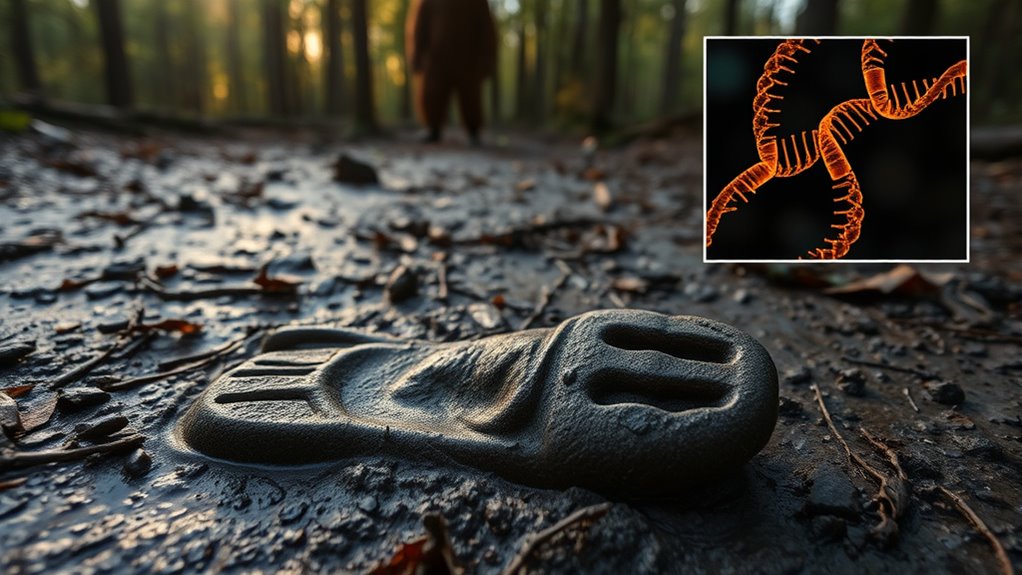

When investigating cryptid evidence, you need to carefully analyze footprints, photos, and DNA samples. Look for genuine signs like unusual footprint size or shape, but remain skeptical of hoaxes or natural causes. With photos, examine clarity and authenticity, checking for staging or editing. For DNA, always consider contamination and seek expert input to interpret results. Remember, understanding these clues can be tricky, but if you keep exploring, you’ll discover more about these mysterious phenomena.
Key Takeaways
- Analyze footprints for unusual size, shape, and stride, while considering natural causes or potential hoaxes.
- Scrutinize photographs for authenticity through digital forensics and context evaluation.
- Collect DNA samples carefully, ensuring contamination is minimized, and collaborate with genetic experts for accurate analysis.
- Evaluate physical evidence within environmental and situational context to determine plausibility.
- Maintain scientific skepticism, recognizing limitations and potential for misinterpretation in all types of cryptid evidence.

Cryptids—creatures whose existence is debated or unproven—have fascinated explorers and skeptics alike for decades. As you delve into cryptid investigations, one of your main focuses might be examining paranormal sightings that many claim to witness in remote forests, lakes, or mountains. These sightings often serve as the initial evidence proponents cite, but they can be highly subjective and influenced by factors like misidentification, hallucinations, or environmental conditions. Skeptics, on the other hand, argue that many of these sightings lack credible proof and are often the result of hoaxes, mistaken identity, or psychological factors. When evaluating these reports, you need to consider how eyewitness accounts are often inconsistent and prone to exaggeration. You might find yourself questioning whether these paranormal sightings are genuine or just stories spun to attract attention or explain strange occurrences.
Moving beyond eyewitness accounts, physical evidence like footprints, photos, and DNA samples becomes crucial in your investigation. Footprints can be compelling, especially if they show unusual characteristics such as size, shape, or stride that don’t match known animals. However, you must scrutinize these prints carefully—looking for signs of natural animal tracks, weathering, or potential for forgery. Many supposed footprints turn out to be hoaxes or misidentifications of large animal tracks, which is why scientific skepticism plays a vital role here. You need to be cautious about jumping to conclusions based solely on footprint evidence, since it’s easy to manipulate or misinterpret. In addition, understanding DNA analysis is essential for confirming or refuting biological origins of samples.
Physical evidence like footprints requires careful scrutiny to avoid hoaxes and misidentification.
Photographic evidence also demands your careful analysis. In many cases, blurry or poorly lit images are dismissed by skeptics, but enthusiasts see potential in every pixel. You might examine the authenticity of a photo by checking for signs of digital editing or deliberate staging. Advanced software can sometimes reveal discrepancies or manipulations that aren’t immediately obvious. Still, photos alone rarely prove the existence of cryptids—they often raise more questions than answers, especially when taken out of context or under questionable circumstances.
DNA evidence might seem like the most conclusive proof, but it’s often the most challenging to interpret. Samples collected from alleged cryptid encounters can be contaminated or misidentified, especially if they’re from unknown animals or environmental sources. You need to work with genetic experts to analyze the DNA, but even then, results can be inconclusive or point to ordinary animals like bears, wolves, or other wildlife. Scientific skepticism remains essential here, as many supposed cryptid DNA findings turn out to be mundane. Overall, your investigation must weigh the physical evidence carefully, always considering alternative explanations and the possibility of natural or human-made causes. That way, you maintain a balanced perspective, grounded in scientific inquiry, whether or not the evidence points to the existence of these elusive creatures.
Frequently Asked Questions
How Do Cryptid Sightings Influence Scientific Research?
Cryptid sightings spark scientific curiosity by challenging existing knowledge and prompting rigorous investigation. Your interest in cryptid folklore can inspire researchers to explore new species or phenomena, improving folklore credibility through evidence. These sightings encourage scientists to develop better methods for verifying claims, fostering open-mindedness and innovation. Ultimately, they push the boundaries of science, urging you to contemplate possibilities beyond conventional understanding and contributing to the ongoing quest for discovery.
What Are the Most Credible Cryptid Sightings Recorded?
Some of the most credible cryptid sightings include those involving mystery footprints found in remote areas, which often match no known animal. Folklore legends also support these sightings, adding cultural credibility. For example, the Patterson-Gimlin film of Bigfoot remains one of the most discussed, though debated, pieces of evidence. While skepticism persists, these sightings continue to intrigue researchers and enthusiasts seeking tangible proof of these elusive creatures.
Can Cryptid DNA Be Conclusively Linked to Known Species?
Cryptid DNA can sometimes be conclusively linked to known species, but genetic contamination and species misidentification often complicate this process. You should be cautious because contamination from other samples may lead to false matches, and misidentified species can cause incorrect conclusions. To establish a definitive link, thorough testing, contamination control, and expert analysis are essential, ensuring that the DNA truly belongs to a cryptid or known species.
How Do Weather Conditions Affect Footprint Preservation?
Rain and sun play hide-and-seek with footprints, shaping their fate like an artist erasing and sketching anew. Moisture levels act as the sculptor, preserving footprints in wet soil or washing them away in dry conditions. Soil erosion can wear down delicate impressions, while damp weather creates a perfect mold for lasting prints. You see, weather’s fickle dance determines whether cryptid footprints remain as fleeting whispers or steadfast clues.
Are There Legal Issues in Collecting Cryptid Evidence?
You should be aware that collecting cryptid evidence can involve legal implications, especially if you trespass or disturb private property. Laws vary by location, and unauthorized collection might lead to charges or affect evidence admissibility in court. Always obtain proper permissions and document your findings carefully. By respecting legal boundaries, you protect the integrity of your evidence and avoid complications that could undermine your investigation.
Conclusion
As you examine footprints, scrutinize photos, and analyze DNA, you uncover clues that challenge your beliefs, test your skepticism, and ignite your curiosity. Each piece of evidence invites you to question reality, to explore the unknown, and to seek truth beyond the visible. In the pursuit of cryptid mysteries, you embrace wonder, confront doubt, and push boundaries—because in the search for the extraordinary, every step, every image, every sample brings you closer to understanding what lies beyond the known.