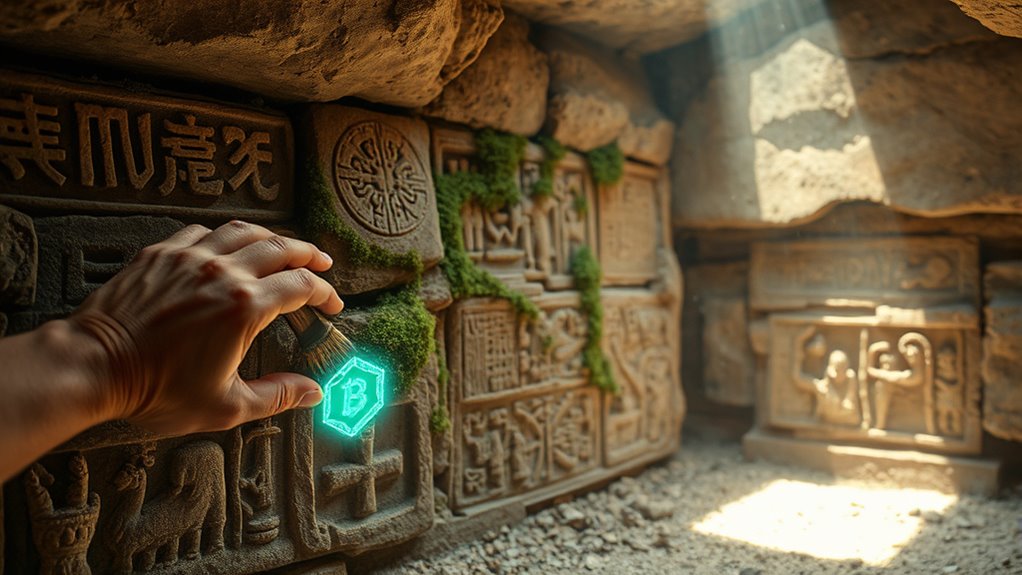

Crypto-archaeology involves exploring blockchain data to uncover traces of lost online civilizations and digital communities. By analyzing transaction histories, digital artifacts, and remnants from old servers or hardware, you can piece together how these societies operated, grew, and disappeared. This emerging field uses advanced tools to uncover stories hidden within digital layers, revealing social, economic, and cultural histories of forgotten worlds. Keep exploring to discover how these digital relics continue to tell their stories.
Key Takeaways
- Crypto-archaeology uncovers ancient digital communities by analyzing blockchain data to find traces of lost civilizations.
- It uses digital artifact recovery methods to retrieve messages, files, and transaction histories from abandoned digital sites.
- Forensic analysis of cryptocurrency transactions reveals social, economic, and cultural patterns of early digital societies.
- Advances in blockchain analysis tools enhance detection of hidden or forgotten digital relics of past civilizations.
- Digital remnants serve as modern artifacts, offering insights into the rise and fall of digital communities and their histories.
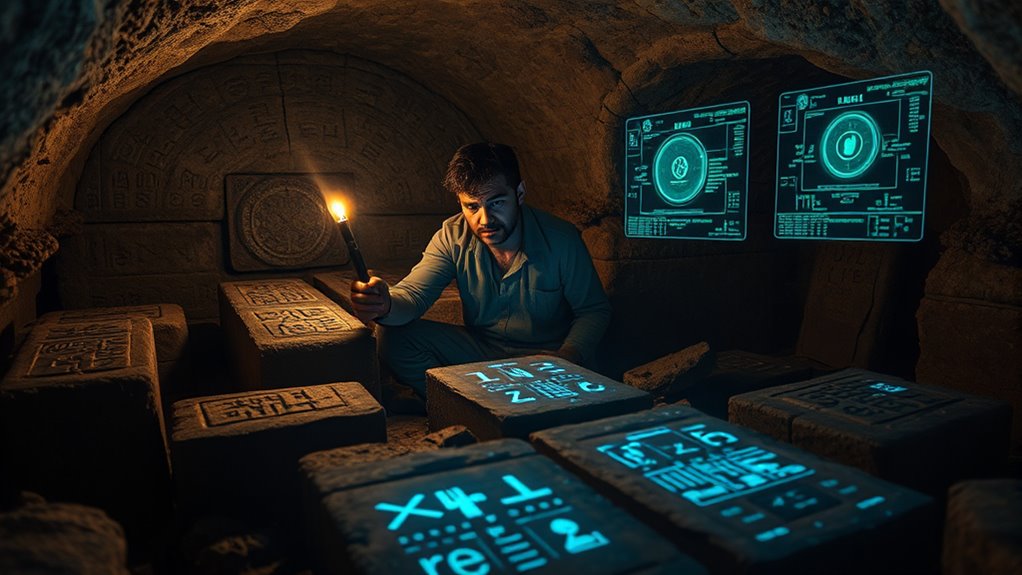
Have you ever wondered how ancient civilizations‘ digital remnants can be uncovered? In the domain of crypto-archaeology, this curiosity drives researchers to explore the hidden layers of our digital past, much like archaeologists excavate ancient sites. Modern technology allows us to trace the digital footprints left behind by early digital communities, uncovering clues about their existence, activities, and eventual disappearance. Central to this effort are fields like cryptocurrency forensics and digital artifact recovery, which serve as tools for digging through the layers of blockchain data to find traces of lost civilizations. These digital remnants, once thought to be anonymous or insignificant, can tell powerful stories about the social, economic, and cultural landscapes of bygone digital eras.
Cryptocurrency forensics involves analyzing blockchain transactions to piece together the activities of early internet economies or clandestine groups. By scrutinizing transaction histories, timestamps, and wallet linkages, you can identify patterns that reveal how these digital societies operated, how wealth was accumulated and transferred, and even how they interacted with the broader world. This forensic work is vital because blockchains are designed to be transparent, yet deciphering this transparency requires specialized skills. You might be surprised to find how seemingly random transactions connect to form a digital web of relationships, offering insights similar to those gained from physical artifacts in traditional archaeology.
Analyzing blockchain transactions uncovers patterns revealing the operation and connections of early digital societies.
Digital artifact recovery complements this process by focusing on retrieving and interpreting digital artifacts—files, messages, or data remnants—that have survived the passage of time. These artifacts may reside within abandoned servers, old hardware, or even within the fragmented data stored on blockchain platforms. When you recover these digital artifacts, you’re essentially excavating the digital ruins of communities long gone. Analyzing them can reveal cultural practices, technological innovations, or even conflicts that shaped their society. Much like uncovering pottery shards or ancient tools, these digital fragments build a picture of a civilization’s identity and history.
Together, cryptocurrency forensics and digital artifact recovery allow you to trace the echoes of ancient digital societies, revealing their stories and structures hidden within the cryptic layers of blockchain data. As you explore deeper into these digital remnants, you’ll find that they not only illuminate the past but also help us understand how digital civilizations evolve and fade. This ongoing exploration pushes the boundaries of traditional archaeology into the digital domain, creating a new frontier where data becomes the relics of forgotten worlds, waiting for you to uncover their secrets.
Additionally, advances in blockchain analysis tools are continually enhancing our ability to detect and interpret these digital traces, opening new avenues for discovery.
Frequently Asked Questions
What Tools Do Crypto-Archaeologists Typically Use for Their Research?
You use tools like blockchain forensics to trace transactions and uncover hidden patterns, helping you find clues about lost civilizations. Digital artifact analysis lets you examine data stored on blockchain networks, revealing artifacts of ancient digital cultures. These tools enable you to piece together historical puzzles by tracking digital footprints and analyzing unique data structures, providing insight into the mysterious worlds of forgotten civilizations active in the digital domain.
How Do Crypto-Archaeologists Verify the Authenticity of Digital Artifacts?
You verify digital artifacts by examining their digital provenance, which tracks their origin and history. You also rely on consensus verification, where multiple sources or experts confirm the artifact’s authenticity. By cross-checking metadata, blockchain records, or cryptographic signatures, you ascertain the artifact isn’t forged. This process helps you confidently distinguish genuine digital relics from counterfeit or manipulated data, preserving the integrity of your crypto-archaeological research.
Are There Any Ethical Concerns in Crypto-Archaeology?
Think of crypto-archaeology as walking a tightrope, balancing discovery with responsibility. You should consider digital ethicality and privacy concerns, as uncovering digital artifacts might expose sensitive data or disrupt communities. Ethical issues arise when data is mishandled or misrepresented. You must guarantee transparency and respect for digital privacy, so your work advances knowledge without compromising the rights and dignity of those connected to the artifacts you’re exploring.
How Does Crypto-Archaeology Differ From Traditional Archaeology?
You explore how crypto-archaeology differs from traditional archaeology by focusing on digital preservation and virtual excavation. Unlike traditional methods that involve physical digs, crypto-archaeologists analyze digital artifacts and use virtual tools to uncover lost civilizations. This approach allows you to access and preserve ancient data in a virtual space, making discoveries more accessible and less invasive, and opening new avenues for understanding history without disturbing physical sites.
What Are the Most Significant Discoveries Made Through Crypto-Archaeology?
You uncover digital relics and solve blockchain mysteries through crypto-archaeology. Significant discoveries include hidden transaction patterns revealing lost societies and digital artifacts that challenge traditional history. You piece together clues from encrypted data and blockchain records, revealing insights into ancient civilizations and their digital footprints. These breakthroughs deepen your understanding of history and technology, transforming how we explore and connect with the past in the digital age.
Conclusion
As you dive deeper into crypto-archaeology, the secrets of vanished civilizations start to emerge, but many mysteries remain hidden. Each artifact or code you uncover could rewrite history—or unseal something unexpected. Are you ready to face what’s buried beneath the digital ruins? The past is waiting to reveal its story, but only if you dare to search further. The question is: how much more is left to discover in this hidden world?