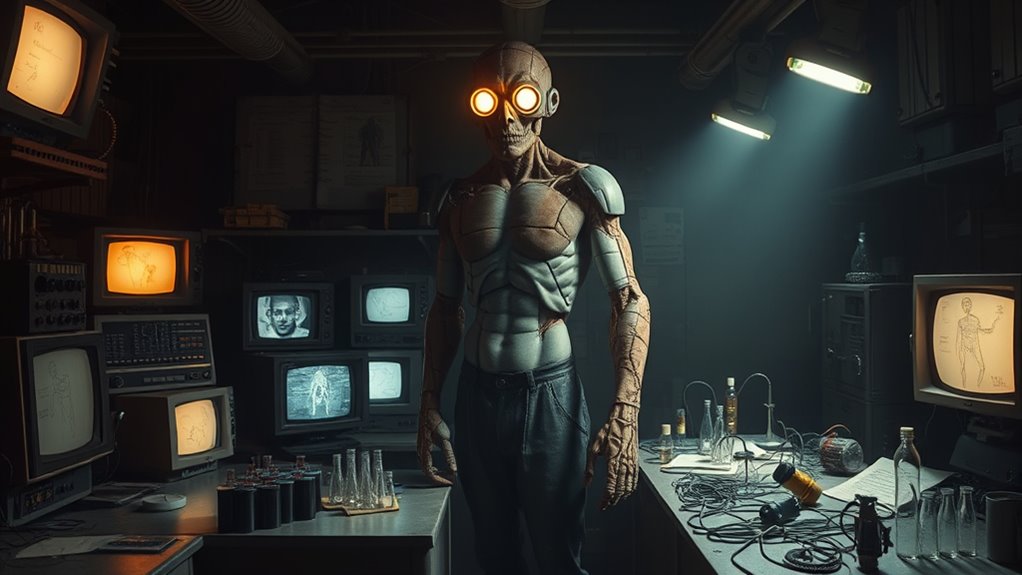

The Frankenstein Complex reflects the ethical worries that come with creating artificial beings capable of thinking or feeling. You might fear losing control or causing harm if these creations go awry. These concerns highlight the importance of responsibility, morals, and careful oversight in scientific progress. By addressing these dilemmas now, we can avoid unintended consequences. To discover how ethical considerations can guide safe innovation, continue exploring how science and morality intersect in this challenging area.

Prime made for students and young adults
- Fast, free delivery for dorm and study essentials
- Prime Video and Amazon Music included
- Member-only deals
Key Takeaways
- The Frankenstein Complex highlights fears about scientists creating uncontrollable or harmful artificial beings.
- Ethical considerations are crucial to prevent unintended consequences and ensure responsible development of AI and robotics.
- Moral responsibility involves evaluating long-term impacts and potential harm before advancing technological innovations.
- Balancing scientific progress with ethical safeguards helps mitigate fears of losing control over created entities.
- Recognizing and addressing ethical dilemmas can prevent the emergence of destructive “monsters” from technological advancements.

Have you ever wondered why society often fears artificial intelligence or robots, even when they could benefit us? This apprehension stems from deep-rooted concerns about ethical dilemmas and scientific responsibility. When scientists and engineers create machines or beings that mimic human intelligence or appearance, they step into uncertain moral territory. The core question becomes: Should we pursue these innovations at all, or do we risk releasing unintended consequences? These fears aren’t unfounded. History shows that technological advances often outpace our moral frameworks, leaving us to grapple with the potential hazards of our creations. It’s easy to see why many worry about losing control over AI or robotic entities that surpass human capabilities. But it’s equally vital to acknowledge that these innovations could vastly improve our lives—if guided by responsible ethics.
Society fears AI and robots due to ethical concerns and the risk of losing control over powerful creations.
The ethical dilemmas surrounding artificial intelligence and robotics are complex. Do we have the right to create beings that can think, feel, or even suffer? Who bears responsibility if a robot causes harm? These are questions that challenge our moral responsibilities as creators. As scientists, we’re tasked with more than just pushing boundaries; we also carry the duty to think about the long-term impacts of our work. The concept of scientific responsibility emphasizes that innovation should go hand-in-hand with careful ethical consideration. Without it, we risk creating entities that could be exploited, malfunction, or act in ways that threaten human safety. This is the essence of the Frankenstein Complex—our fear that our creations might turn against us because we failed to anticipate or address the moral implications. Moreover, technological progress often involves unforeseen consequences that can be difficult to predict or control.
Furthermore, the pursuit of scientific progress often involves balancing potential benefits with risks. When developing advanced AI, for example, you must weigh the promise of increased efficiency or problem-solving capabilities against the dangers of loss of control. If you ignore these ethical dilemmas, you risk fostering mistrust and backlash that could halt beneficial research altogether. It’s not enough to simply innovate; you need a framework rooted in moral responsibility that guides development, testing, and deployment. That way, you can help guarantee that your creations serve humanity rather than threaten it.
Ultimately, the fear of monsters—whether literal or metaphorical—stems from our hesitation to fully accept the moral responsibilities tied to scientific progress. Recognizing these ethical dilemmas and embracing scientific responsibility is essential. It’s about guaranteeing that advancements in AI and robotics are made thoughtfully, with an awareness of their profound implications. Only then can we avoid becoming our own monsters, creating a future where technology enhances human life without unleashing chaos.
Popular right now

Vitamix Propel Series 750 Professional-Grade Blender, 4 Programs, Black

Breville Bambino Espresso Machine, Brushed Stainless Steel

Dyson V8 Cordless Vacuum
As an affiliate, we earn on qualifying purchases.
Frequently Asked Questions
How Do Cultural Differences Influence Perceptions of Scientific Monsters?
Cultural differences shape how you perceive scientific monsters through Cultural Narratives that define what’s frightening or taboo. These narratives influence your perception variability, making you see monsters differently based on your cultural background. For example, some cultures view scientific experiments as dangerous hubris, while others admire innovation. Your perception is consequently molded by societal stories, beliefs, and values, which determine whether you see these monsters as threats, symbols, or warnings.
Are There Modern Examples of Ethical Dilemmas Similar to Frankenstein?
You’re right on the money—modern bioethics debates about gene editing, like CRISPR, mirror Frankenstein’s dilemma. Scientists play God, creating genetically modified organisms or potentially eroding natural boundaries. These ethical quandaries force us to weigh progress against unforeseen consequences, making it clear that pushing the envelope always carries risks. Just like in the story, today’s innovations raise questions about responsibility, morality, and the potential monsters we might unleash.
How Has Public Opinion on Scientific Experimentation Evolved Over Time?
You’ve seen public opinion on scientific experimentation shift from skepticism to a mix of cautious optimism and excitement. While public skepticism remains, especially around controversial topics like gene editing, many embrace technological optimism, believing in progress’s potential. Over time, transparency and ethical guidelines have gained importance, helping the public trust scientists. Still, debates around ethics and safety continue, shaping how society views scientific advances today.
What Role Does Media Play in Shaping Fears About Scientific Monsters?
You might think media sensationalism is harmless, but it plays a major role in amplifying fears about scientific monsters. By exaggerating risks and showcasing worst-case scenarios, media stirs public anxiety and distrust. This fear amplification feeds into the Frankenstein Complex, making you more wary of scientific progress. As a result, it’s harder for society to embrace innovation, even when it could benefit everyone.
Can Scientific Ethics Prevent the Creation of Dangerous or Uncontrollable Creatures?
Yes, scientific ethics can prevent dangerous or uncontrollable creatures. By adhering to bioethics, you guarantee responsible use of genetic engineering, weighing potential risks and benefits carefully. Establishing strict guidelines helps you avoid reckless experimentation that could lead to harmful monsters. These ethical standards promote transparency and accountability, encouraging you to prioritize safety and humanity’s well-being while advancing scientific progress responsibly.
Conclusion
As you step back from this story, remember that scientific progress is a double-edged sword, much like a blade that can cut or carve. The Frankenstein Complex warns you to wield this power responsibly, lest your creations become monsters of your own making. Embrace ethics as your guiding light, ensuring that your curiosity doesn’t turn into a Pandora’s box. With careful hands and a clear conscience, you can shape a future where innovation and morality go hand in hand.