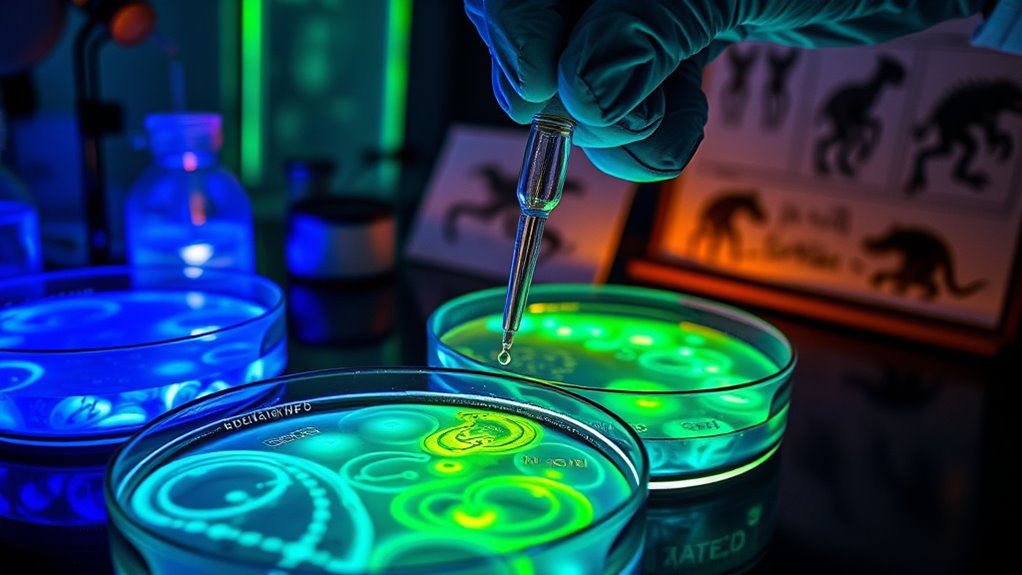
Genetic mutations and anomalies can indeed explain many cryptid sightings by producing unusual traits in known animals or creating hybrids. Advances in DNA analysis allow you to identify if these creatures are just variants, mutations, or hybrids of existing species. Sometimes, isolated populations or spontaneous mutations lead to creatures with extraordinary features. If you want to discover how science is unraveling these mysteries with genetic clues, you’ll find more surprising insights ahead.
Key Takeaways
- Genetic mutations can create physical anomalies that resemble cryptids, explaining sightings without invoking supernatural causes.
- DNA analysis can reveal whether cryptids are natural variants, hybrids, or genetically modified organisms.
- Isolated populations may harbor unique mutations leading to distinctive features in cryptids.
- Comparing cryptid DNA to known species helps determine if they are known animals with unusual genetics.
- Advances in sequencing technology enable precise detection of genetic anomalies that could account for cryptid appearances.
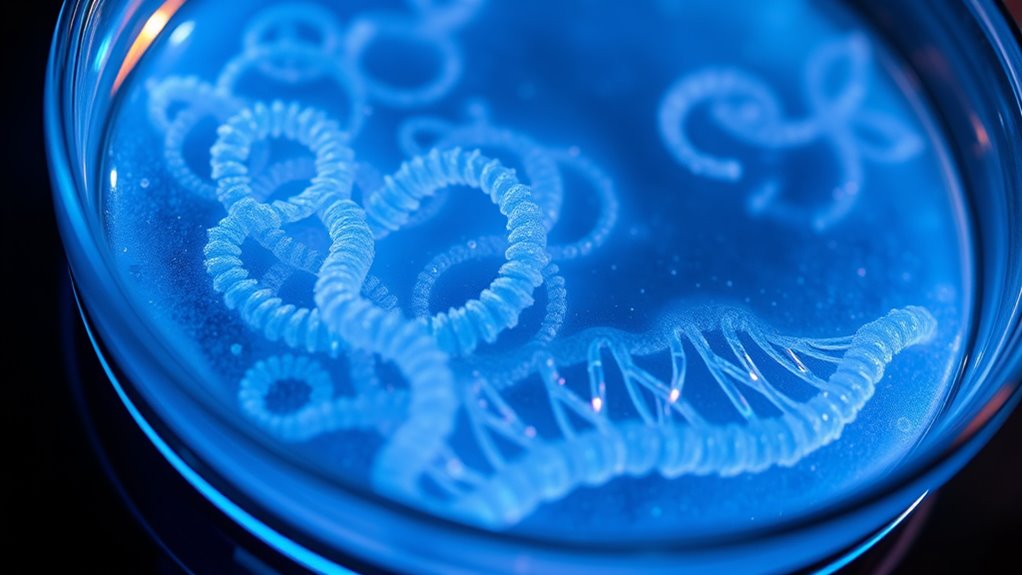
Have you ever wondered if mysterious creatures rumored to inhabit remote regions might leave behind genetic clues? It’s a fascinating idea, especially when you consider how genetic anomalies could be at play. Sometimes, what’s perceived as a cryptid might just be a creature with unusual genetic traits, making it stand out from typical animals. Advances in DNA sequencing allow scientists to analyze tissue samples or environmental DNA collected from suspected habitats, offering a way to uncover these hidden mysteries. By examining these samples, researchers can identify genetic anomalies—mutations, gene duplications, or deletions—that might explain the strange features attributed to cryptids.
DNA sequencing has revolutionized the way we approach cryptid investigations. Instead of relying solely on eyewitness accounts or blurry photographs, scientists can now extract and analyze genetic material, even if only trace amounts are available. This process helps determine whether a supposed cryptid is a known species with atypical genetics or an entirely different entity. For instance, if a creature is reported with unusual size, skin texture, or other distinct traits, genetic analysis can reveal if it’s a variation of a known animal, perhaps a genetic mutation that causes abnormal growth or coloration. Sometimes, these anomalies are natural variations, but in other cases, they could be evidence of species that have evolved or mutated in isolation, giving rise to creatures that seem extraordinary.
The potential for genetic anomalies to explain cryptids is vast. Some creatures might be the result of ancient lineages surviving in isolated pockets, their DNA diverging over time. Others could be the product of recent mutations, possibly caused by environmental factors or accidental interbreeding. By employing DNA sequencing technologies, scientists can compare these genetic sequences to databases of known species, helping to determine if what’s found is familiar or something entirely new. This process can also identify hybrid animals or genetically modified organisms, which might explain sightings of bizarre creatures that defy conventional biology.
Ultimately, understanding how genetic anomalies influence the appearance and behavior of cryptids opens new avenues for investigation. While not every mysterious creature will turn out to be a genetic mutation, many sightings could be explained through the lens of DNA analysis. As technology advances and our ability to decode genomes improves, we may find that some cryptids are not supernatural or mythical but are, in fact, real animals with unusual genetic traits. This approach bridges the gap between folklore and science, offering a compelling way to explore the unknown with tangible evidence.
Frequently Asked Questions
Are There Any Confirmed Cases of Cryptid DNA Analysis?
There are no confirmed cases of cryptid DNA analysis. While some researchers explore evolutionary anomalies and potential genetic overlap with known species, definitive scientific evidence remains elusive. You should approach claims skeptically, as most cryptid DNA reports lack rigorous verification. Although intriguing, current data doesn’t conclusively prove cryptids are real creatures with unique genetic material, keeping the mystery alive and open to further investigation.
Can Genetic Mutations Alone Create Entirely New Species?
Genetic mutations alone can lead to new species if they occur in critical genes and accumulate over time, especially with high mutation rates. You see, genetic diversity plays a key role, providing the raw material for evolution. While mutations can create significant differences, they usually need other factors like natural selection to stabilize and establish a new species, so they’re rarely the sole cause.
What Technologies Are Used to Analyze Cryptid DNA?
You use advanced DNA sequencing techniques to analyze cryptid DNA, allowing you to decode its genetic material precisely. To identify specific traits or origins, you look for genetic markers that highlight unique genetic signatures. This process helps determine if cryptids share similarities with known species or if they possess novel genetic sequences, providing insights into their possible biological origins and whether they could be real creatures or just myths.
How Do Environmental Factors Influence Cryptid Mutations?
Imagine a cryptid lurking in dense forests or deep lakes, where environmental factors like climate, food sources, and predators constantly challenge it. These conditions drive genetic diversity, leading to mutations as the creature adapts for survival. You see, environmental adaptation fuels these genetic changes, shaping cryptids over generations. Such dynamic interactions between environment and genes could explain the mysterious variations and resilience observed in cryptids today.
Have Any Cryptid DNA Samples Been Scientifically Validated?
No, you won’t find scientifically validated cryptid DNA samples yet. Researchers haven’t confirmed any cryptid origin through DNA sequencing, which keeps cryptid status in question. While some claims suggest possible genetic mutations or unknown species, concrete scientific evidence remains elusive. Without verified DNA, cryptids like Bigfoot or the Loch Ness Monster stay in the domain of speculation, making it difficult to prove their existence scientifically.
Conclusion
Ultimately, deciphering cryptid DNA demands diligent dedication and daring discoveries. While mysterious mutations may mimic monstrous myths, meticulous research might unravel uncanny clues hiding in genetics. You can’t dismiss the possibility that bizarre biological blips could birth beastly legends, blurring boundaries between biology and belief. By bravely bridging biology’s boundaries, you propel the pursuit of truth, transforming tales of terror into tangible truths. Embrace exploration, and perhaps, one day, decode the DNA that defines the legendary.