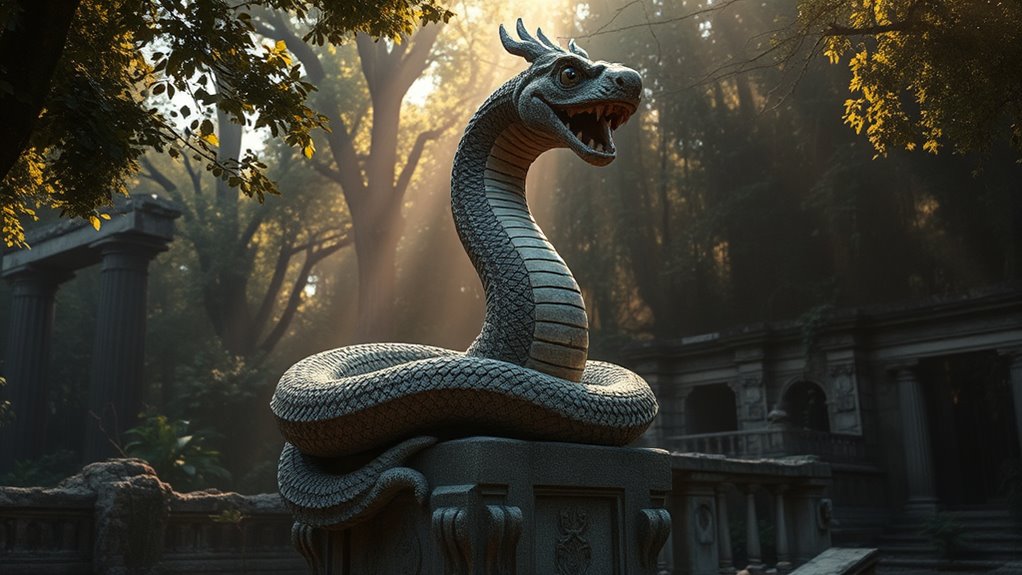

The basilisk’s legend mixes myth, symbolism, and cultural fears, making it both deadly and fascinating. Historically, it may have been inspired by real venomous snakes or lizards, exaggerated into a creature capable of killing with a glance. Its story reflects society’s fears and fascination with serpents as symbols of danger, wisdom, and transformation. If you keep exploring, you’ll discover how this myth has endured and shaped cultural perceptions for centuries.

Prime made for students and young adults
- Fast, free delivery for dorm and study essentials
- Prime Video and Amazon Music included
- Member-only deals
Key Takeaways
- The basilisk originated in medieval European myths, symbolizing deadly danger through a creature with a lethal gaze.
- Its legend likely evolved from fears of venomous snakes or lizards, amplified through storytelling.
- Historically, the basilisk represented evil, sin, and moral peril in art and literature.
- The myth blends symbolism and cultural fears, reflecting human fascination with serpents’ dual meanings of danger and wisdom.
- While rooted in myth, the basilisk’s deadly gaze embodies universal themes of fear, danger, and the unknown.
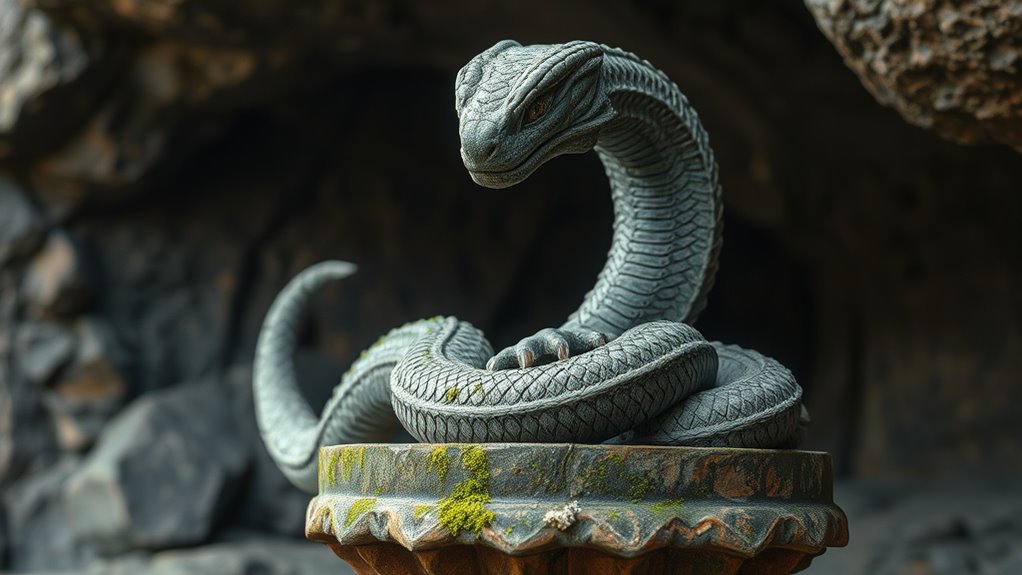
Have you ever wondered where the legend of the basilisk originated? The story’s roots stretch deep into myth and legend, blending ancient fears with the symbolism of serpents. The mythical origins of the basilisk trace back to medieval Europe, where it was widely feared as a creature capable of deadly power. Early descriptions often depict it as a small serpent or lizard that could kill with a single glance. Over time, tales grew more elaborate, transforming the basilisk into a creature of immense size and terror. Its myth likely drew from the deep-seated symbolism associated with serpents, which have long been connected to danger, rebirth, and temptation in many cultures. The serpent symbolism is central to understanding why the basilisk became such a feared figure; it embodies both the threat of death and the allure of forbidden knowledge.
The ancient Greeks and Romans also played a role in shaping the legend. They associated serpents with wisdom and transformation, but also with chaos and destruction. The idea of a creature so deadly that its mere presence could wipe out life echoes this duality. The basilisk’s mythical origins may have been inspired by real reptiles, like certain species of venomous snakes or lizards, magnified through storytelling to embody the ultimate deadly serpent. These stories served as cautionary tales, warning of the dangers lurking in the unknown corners of the world. The creature’s deadly gaze, often depicted as having a petrifying effect, symbolizes the destructive power of fear and the unknown.
Additionally, the concept of mythical creatures evolving from real animals illustrates how human imagination transformed fears into legendary entities. Throughout the Middle Ages, the basilisk also became a symbol of evil and corruption, often representing sin or moral danger. Artists and writers portrayed it as a creature that could bring about destruction with just a glance, reinforcing its mythical status. Its deadly reputation was further fueled by the belief that encountering a basilisk meant certain death, which made it a perfect metaphor for insurmountable fears. Despite its terrifying reputation, the basilisk’s origins are deeply rooted in human fascination with serpents, blending myth, symbolism, and cultural fears into a single legend. Whether you see it as a real creature or a symbol of the dangers lurking within stories, the basilisk remains one of the most enduring figures in myth and folklore, a testament to humanity’s complex relationship with serpents and the deadly power they symbolize.
Frequently Asked Questions
Are There Any Real Animals Believed to Be Basilisk Ancestors?
You won’t find real animals directly linked as basilisk ancestors, but medieval bestiaries often depict serpents symbolizing danger and mystery, inspiring basilisk legends. These stories likely stem from serpent symbolism prevalent across cultures, reflecting fears of venomous creatures. While no actual creature matches the myth, some lizards or snakes with distinctive features might have influenced the fantastical tales, blending myth with real reptilian traits in medieval imagination.
How Did the Basilisk Become a Symbol of Danger in Different Cultures?
Imagine a shadow stretching across medieval walls; the basilisk’s image becomes a powerful allegory for fear itself. In many cultures, it symbolizes danger rooted in cultural fears and superstitions, embodying the threat of deadly unseen forces. Its deadly gaze and lethal reputation cemented its role in medieval symbolism, warning people of unseen perils. Over time, these fears transformed into myth, making the basilisk an enduring emblem of danger and caution across different societies.
What Are the Most Famous Literary References to the Basilisk?
You’ll find the basilisk prominently featured in medieval bestiaries, where it symbolizes lethal danger and deadly power. In literature, Shakespeare mentions it in “The Merchant of Venice,” highlighting mythological symbolism of destruction and fear. Additionally, Harry Potter’s universe references the creature, emphasizing its mythic status. These references showcase the basilisk’s enduring influence, blending historical myth with modern storytelling to evoke themes of peril, intrigue, and the supernatural.
Are There Modern Myths Similar to the Basilisk’s Deadly Gaze?
Yes, modern myths often feature mythical serpents with supernatural sight similar to the basilisk’s deadly gaze. You might encounter stories of creatures like the naga or giant serpents in fantasy novels and games, where their gaze can paralyze or harm. These legends tap into the idea of a supernatural sight that holds power over humans, echoing the basilisk’s deadly stare and keeping the myth alive in contemporary storytelling.
How Has the Basilisk Appeared in Contemporary Popular Media?
You won’t believe how the mythical creature, the basilisk, dominates modern pop culture! It appears in movies, TV shows, and video games, often portrayed as a terrifying creature with deadly powers. From Harry Potter’s petrifying gaze to comic book villains inspired by its myth, the basilisk’s influence is everywhere. Its fearsome reputation keeps it alive in our imaginations, proving that even mythic monsters can become pop culture icons.
Conclusion
So, after all this, you might realize that the basilisk’s true power isn’t just its deadly gaze, but how it’s kept alive through stories. Ironically, our fascination with this tiny serpent has made it immortal in myth, even as we dismiss it as mere legend. Maybe, in the end, the real danger lies not in the creature itself, but in how our fears and stories turn it into something far more terrifying than a simple serpent ever was.
Halloween Picks
halloween
As an affiliate, we earn on qualifying purchases.