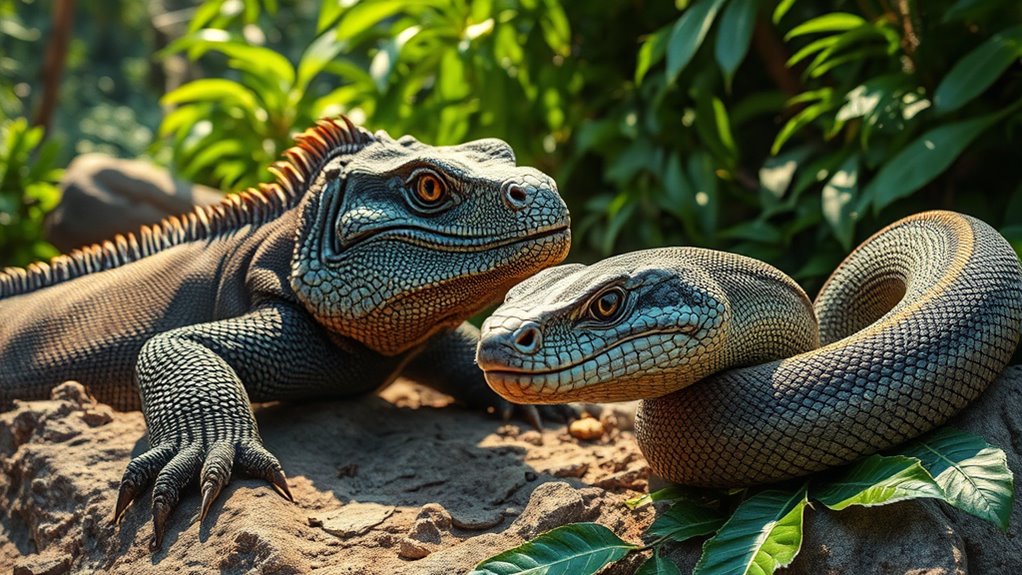

Exploring real dragons involves examining fossils of ancient creatures like Titanoboa and the Komodo dragon, which may have inspired myths. Fossil findings show giant snakes and large reptiles once roamed lush, tropical environments, highlighting how these animals could have sparked legendary tales. Their habitats reveal how they hunted and survived, connecting natural history to mythology. If you keep exploring, you’ll uncover surprising links between prehistoric monsters and legendary dragons that continue to fascinate.

Prime made for students and young adults
- Fast, free delivery for dorm and study essentials
- Prime Video and Amazon Music included
- Member-only deals
Key Takeaways
- Fossil discoveries of massive prehistoric reptiles like Titanoboa suggest ancient creatures that may have inspired dragon myths.
- Modern animals such as the Komodo dragon serve as living links to legendary fire-breathing monsters.
- Ancient habitats like tropical rainforests supported enormous predators, influencing the stories of legendary dragons.
- Fossil evidence reveals that Earth’s past was inhabited by formidable creatures, blurring the line between myth and reality.
- Studying fossilized remains and habitats helps reconstruct how real prehistoric animals could have inspired dragon legends.
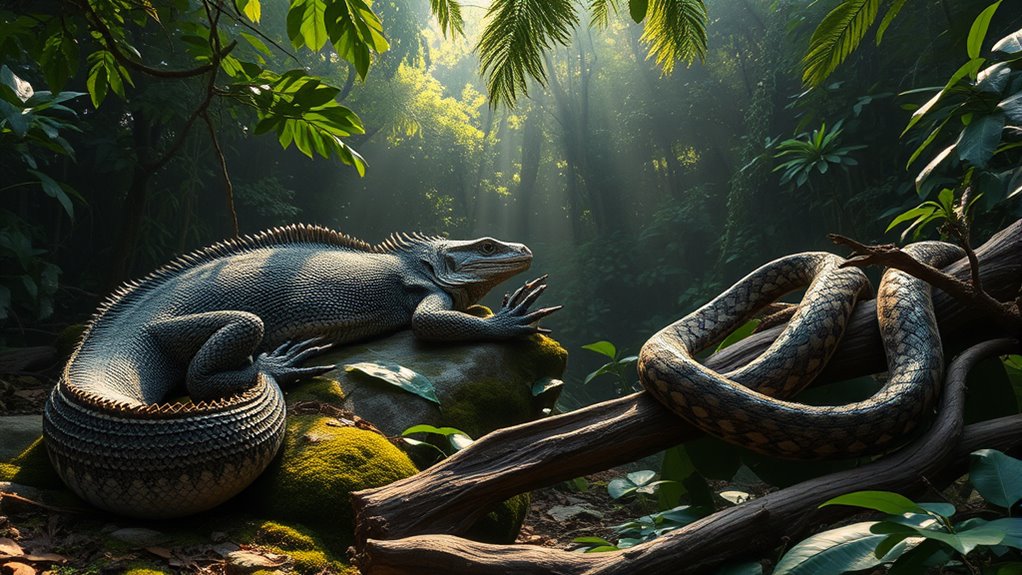
Have you ever wondered if real dragons ever existed? It’s a question that has fascinated humans for centuries, blending myth with the possibility of ancient creatures lurking in the depths of history. While the dragons of legend are often imagined as fire-breathing giants, scientific evidence hints at creatures that might have inspired these stories. When exploring fossil evidence, paleontologists have uncovered remnants of enormous prehistoric reptiles that could be loosely linked to dragon legends. These fossils reveal creatures that once roamed the earth, inhabiting diverse environments that might resemble the living habitats of mythical dragons. For example, the fossils of Titanoboa, the largest known snake, suggest that massive, powerful predators once thrived in tropical swamps and rainforests. Similarly, the Komodo dragon, a real living species today, inhabits the dry islands of Indonesia, acting as a modern-day reminder that some creatures once thought to be purely mythical are very real.
Fossil evidence plays a vital role in understanding these creatures’ existence. When scientists examine ancient bones, teeth, and footprints, they piece together a picture of what these animals looked like and how they might have lived. The discovery of Titanoboa fossils, for example, shows a snake that stretched over 40 feet long, ruling prehistoric swamps and waterways with ease. Its living habitats were dense, humid environments filled with lush vegetation, where it could hunt and hide. These habitats, though different from modern landscapes, help us imagine how such creatures could have thrived and even dominated their ecosystems. The fossil record also indicates that some of these enormous reptiles shared their environments with other giant creatures, creating a world that seems almost fantastical.
Understanding the habitats of ancient reptiles helps us see how these creatures could have influenced legends and myths surrounding dragons and other mythical beasts. While we haven’t found evidence of fire-breathing dragons, fossil discoveries and knowledge of living habitats suggest that Earth once hosted enormous, formidable reptiles that might have inspired dragon myths. These creatures, whether giant snakes or massive lizards like the Komodo dragon, remind us that nature’s history is full of surprises. As you explore the fossil record and study their habitats, it becomes clear that the line between myth and reality can sometimes blur. The idea of dragons isn’t just a product of imagination but could be rooted in the bones of ancient giants whose footprints and fossils still whisper stories of a world long gone. So, the next time you hear about a legendary creature, remember that some of the most extraordinary animals to have ever lived are buried in the ground, waiting for us to uncover their secrets.
As an affiliate, we earn on qualifying purchases.
Frequently Asked Questions
Are There Any Living Species Truly Resembling Mythical Dragons?
No, there aren’t any living species that truly resemble mythical dragons, but some creatures evoke similar mythical symbolism and cultural interpretations. For instance, Komodo dragons and various large snakes inspire awe and fear, often linked to legendary tales. These animals’ fierce appearances and ancient histories make them natural symbols in many cultures. While not real dragons, they embody the mystique and power that myth creators often associate with legendary dragons.
How Do Scientists Verify Fossilized Dragon-Like Creatures’ Identities?
Scientists verify fossilized dragon-like creatures through fossil dating techniques and morphological comparisons. For example, they analyze the age of fossils using radiometric dating to establish a timeline. Then, they compare the fossil’s shape and structure with known species. If the features match a large, serpent-like creature, they may confirm it as a dragon-like fossil. This process helps distinguish genuine ancient creatures from other fossils or misinterpretations.
What Environmental Factors Contributed to Titanoboa’s Gigantism?
You should consider that prehistoric ecology played a vital role in Titanoboa’s gigantism. Warm, humid climates increased prey availability, triggering gigantism, while dense vegetation supported large predators. Elevated temperatures accelerated metabolic rates, promoting growth. These gigantism triggers created an environment where Titanoboa thrived, reaching lengths over 40 feet. The combination of abundant food, suitable climate, and ecological factors fostered this extraordinary size, making Titanoboa one of the largest snakes ever.
Could Modern Climate Change Influence the Resurgence of Giant Snakes?
You might wonder if climate change could bring back giant snakes like in urban legends or fossil myths. It’s possible, as warming temperatures and habitat shifts could support larger predators. For example, increased prey availability might allow snakes to grow bigger again. While science doesn’t confirm a resurgence, changing climates could create conditions similar to those that once favored Titanoboa, sparking fears of a modern-day prehistoric predator.
Are There Undiscovered Dragon Species Still Hiding in Remote Regions?
Yes, there are likely undiscovered dragon species hiding in remote regions. Many cryptozoology myths and dragon folklore point to creatures yet to be found. You might explore dense jungles, deep caves, or isolated islands, where legends often originate. These unexplored habitats could harbor real dragons or similar creatures, fueling your curiosity and inspiring future discoveries that blur the line between myth and reality.
As an affiliate, we earn on qualifying purchases.
Conclusion
As you imagine these mighty creatures, from the Komodo dragon’s fierce independence to Titanoboa’s ancient dominance, you realize real dragons once ruled worlds just as legendary as fiction. Though they’re gone, their echoes remind you that nature’s giants, whether myth or reality, challenge your understanding of strength and survival. In their absence, you see that true power isn’t just size, but the story you carry—an enduring quest to uncover what’s truly extraordinary.
As an affiliate, we earn on qualifying purchases.
dinosaur and prehistoric creature toys
As an affiliate, we earn on qualifying purchases.
As an affiliate, we earn on qualifying purchases.
Columbus Day / Indigenous Peoples' Day Picks
long weekend sales
As an affiliate, we earn on qualifying purchases.