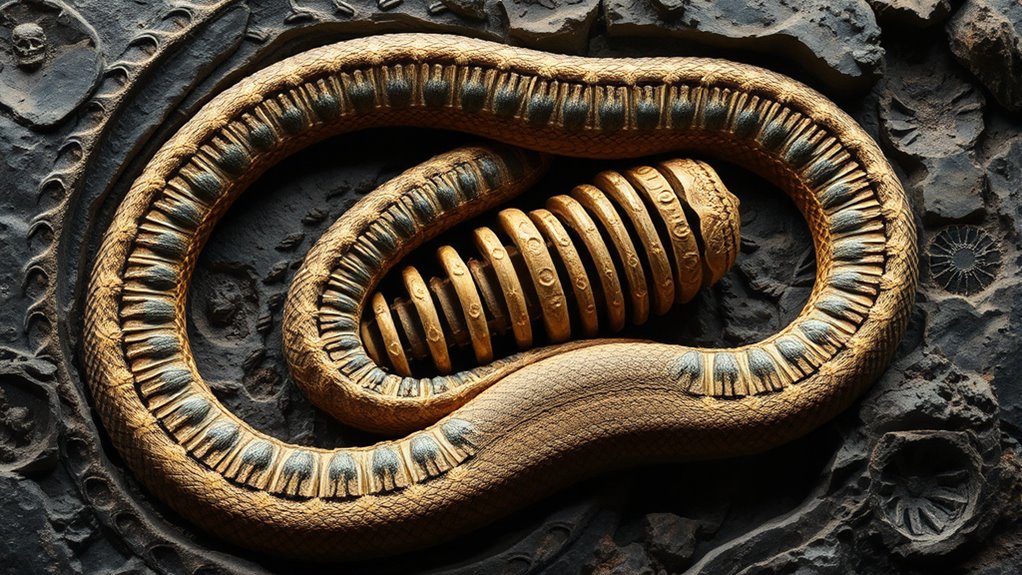

Fossil evidence confirms that the Titanoboa was a massive prehistoric snake, once ruling Earth’s ecosystems around 60 million years ago. Thanks to fossils found in sediment layers and advanced techniques like CT scans, scientists know it measured over 40 feet long and preyed on large aquatic animals like crocodilians and turtles. These discoveries reveal a fascinating glimpse into ancient ecosystems, showing how this giant snake dominated its environment. Keep exploring to uncover even more astonishing details.

Prime made for students and young adults
- Fast, free delivery for dorm and study essentials
- Prime Video and Amazon Music included
- Member-only deals
Key Takeaways
- Fossil discoveries of Titanoboa reveal it was the largest snake ever, measuring up to 50 feet long.
- Advanced techniques like CT scans and mineral replacement allowed detailed analysis of its size and structure.
- Fossil evidence shows Titanoboa thrived in warm, swampy tropical ecosystems around 60 million years ago.
- Its fossils indicate it was a top predator, preying on large aquatic animals like crocodilians and turtles.
- Scientific findings confirm Titanoboa was a real prehistoric monster, reshaping understanding of ancient ecosystems.
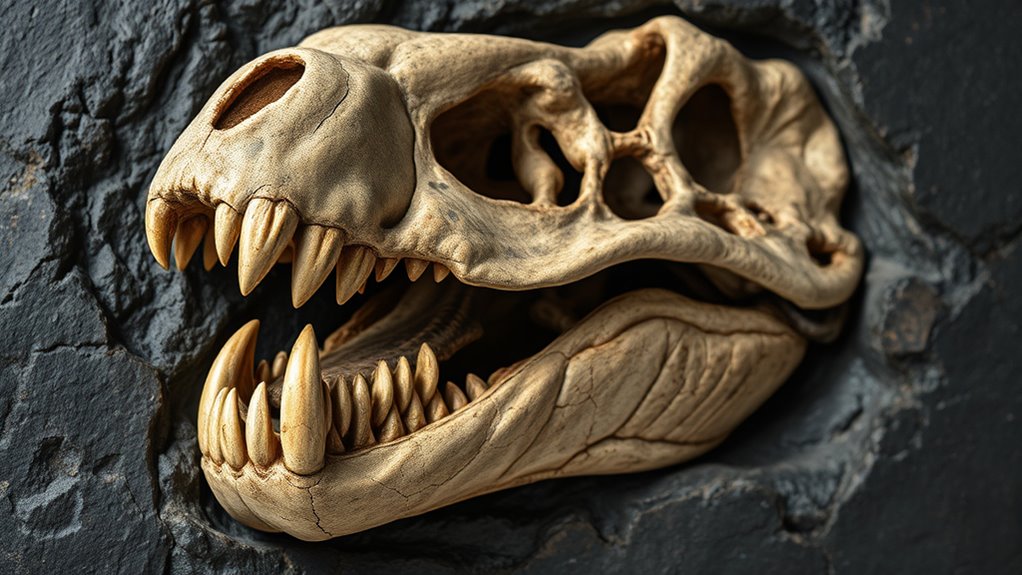
Recent fossil discoveries reveal that giant snakes once roamed Earth’s ancient landscapes, challenging our understanding of prehistoric life. As you explore into the history of the Titanoboa, you realize how these fossils have reshaped our view of prehistoric ecosystems. The fossil record provides a window into a world where massive creatures thrived, and thanks to advanced fossil preservation techniques, scientists have uncovered astonishing details about this colossal serpent. These techniques, such as CT scanning and careful mineral replacement, enable researchers to reconstruct the snake’s size, structure, and even aspects of its habitat, illuminating its place in ancient environments.
You might imagine stepping back in time, where lush, tropical forests stretched across the landscape, supporting a diverse array of life. The fossil evidence suggests that Titanoboa lived approximately 60 million years ago, shortly after the dinosaurs’ extinction, in a warm, swampy ecosystem. Its fossils, often found in sediment layers rich in plant material and aquatic creatures, indicate that it was a dominant predator within its environment. The preservation of these fossils is no accident; paleontologists use meticulous fossil preservation techniques to extract delicate bones from the surrounding matrix, ensuring that even the tiniest details are maintained. These methods allow for precise measurements and analysis, helping scientists determine the snake’s length—estimated at over 40 feet—and its massive girth.
Understanding the prehistoric ecosystems that Titanoboa inhabited helps you appreciate its role as a top-tier predator. Its immense size implies it preyed on large aquatic animals, such as giant crocodilians and turtles, which were also part of the ecosystem. The fossil record, with its well-preserved bones, gives clues about the food chain and climate conditions of that time. You see how fossil preservation techniques play an essential role here—they prevent the bones from decaying, so scientists can study them in detail, even millions of years later. These fossils, often found in coal beds or ancient river deposits, reveal the complex interactions within prehistoric ecosystems, where Titanoboa was a key player. Additionally, the application of Etsy Shops marketing strategies, like detailed descriptions and high-quality images, can help enthusiasts and educators share this fascinating discovery with a broader audience.
As you piece together this ancient story, it becomes clear that the Titanoboa was more than just a giant snake. It was a crucial component of a fragile but thriving prehistoric ecosystem. Modern fossil techniques continue to reveal secrets from the past, allowing you to better understand how life on Earth has evolved. The discovery of Titanoboa is a testament to the power of scientific ingenuity and how fossil preservation techniques can transform a simple skeleton into a vivid picture of prehistoric life, challenging your notions of what creatures once roamed the Earth.
As an affiliate, we earn on qualifying purchases.
Frequently Asked Questions
How Long Did Titanoboa Typically Live in Its Environment?
You might wonder about a Titanoboa’s lifespan in its environment. Typically, snake lifespan varies, but for a giant like Titanoboa, environmental factors such as climate, food availability, and predators played significant roles. Given its size and the warm, lush environment of the Paleocene epoch, it likely lived around 20 to 30 years, possibly longer if conditions remained ideal. These factors helped determine how long this massive snake thrived.
What Did Titanoboa Mainly Feed On?
Imagine Titanoboa as a relentless predator, a giant vacuum cleaner of the ancient swamp. It mainly fed on large aquatic animals like crocodiles and fish, thanks to its powerful feeding mechanisms. Its prey preferences show it targeted sizable, slow-moving creatures, allowing it to constrict and swallow them whole. Its immense size and strength made it a dominant predator, effectively controlling the ecosystem’s balance.
How Does Titanoboa Compare to Modern Snakes in Size?
You’ll find that Titanoboa was vastly larger than modern snakes due to prehistoric gigantism. It reached about 42 feet long, making it one of the biggest snakes ever. In size comparison, it surpasses today’s largest snake, the green anaconda, by nearly double. This incredible snake’s massive size highlights how prehistoric gigantism allowed Titanoboa to dominate its environment, unlike the smaller snake species we see today.
Were There Any Predators That Hunted Titanoboa?
You might wonder if any prehistoric predators hunted titanoboa. While evidence is limited, large crocodilians like Purussaurus likely preyed on it, using their size and powerful jaws. Titanoboa’s snake defense mechanisms, such as constriction and camouflage, helped it survive against threats. However, its immense size probably deterred many predators, making it a top predator in its environment, with few natural enemies.
How Accurate Are the Current Estimates of Titanoboa’s Weight?
You’ll find that current estimates of Titanoboa’s weight are quite accurate, thanks to advanced fossil measurement techniques and paleontological estimation methods. Scientists believe it could reach over 2,500 pounds, making it one of the heaviest snakes ever. These methods analyze fossil size and bone density, giving you a reliable picture of its massive size. While some uncertainty remains, modern techniques continually refine these estimates, making them more precise over time.
As an affiliate, we earn on qualifying purchases.
Conclusion
You’ve just learned that Titanoboa was the largest snake ever discovered, stretching up to 42 feet long and weighing over a ton. Imagine encountering a creature that’s longer than a city bus! This fossil evidence not only proves giant snakes once slithered the Earth, but also sparks your imagination about prehistoric worlds. So next time you think of snakes, remember Titanoboa’s incredible size—truly a monster of the past that still captures our curiosity today.
dinosaur and prehistoric creature figurines
As an affiliate, we earn on qualifying purchases.
As an affiliate, we earn on qualifying purchases.
As an affiliate, we earn on qualifying purchases.
Fall Picks
fall essentials
As an affiliate, we earn on qualifying purchases.