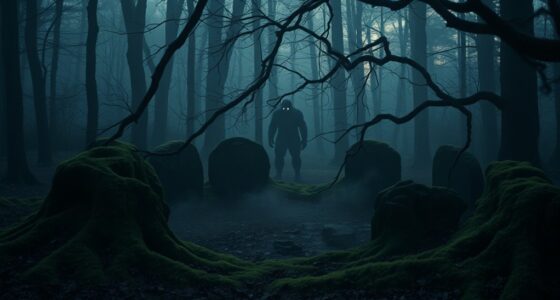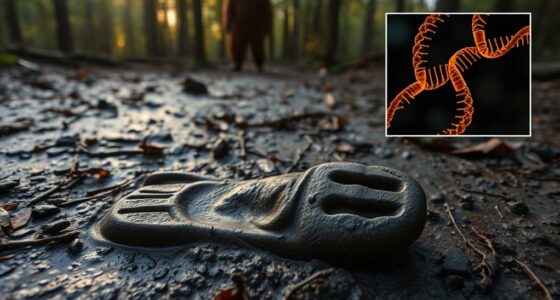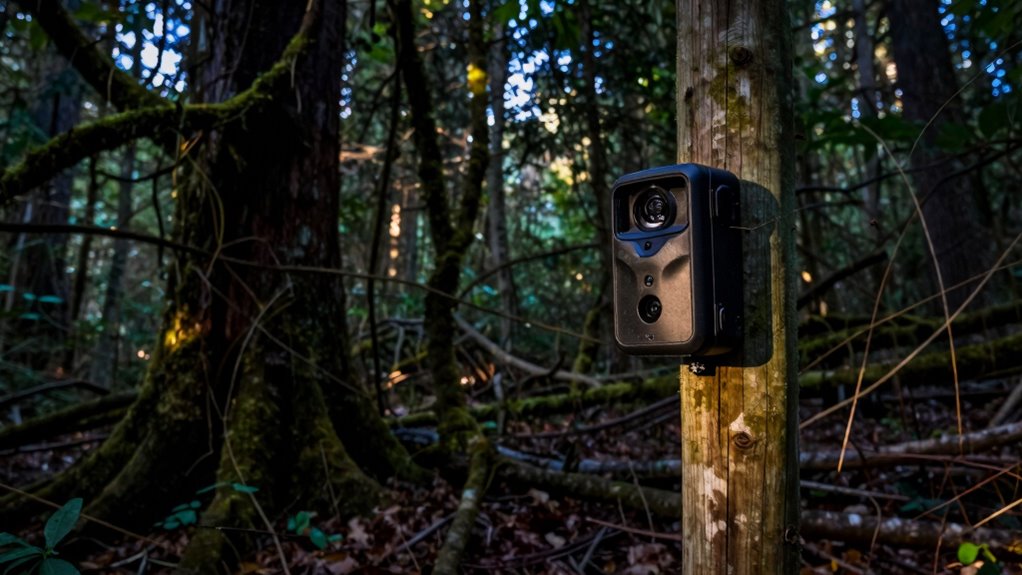

To enhance your Bigfoot stakeout with trail cameras, focus on strategic placement along animal trails, footprints, or natural congregation spots, blending in with camouflage. Set your camera at eye level and adjust sensitivity to avoid false triggers from foliage. Study animal habits to time your shots and reposition cameras as needed for the best angles. Patience and observation are key—if you keep refining your approach, you’ll increase your chances of capturing that elusive footage.
Key Takeaways
- Place cameras along well-used, natural animal trails where Bigfoot is most likely to pass.
- Use camouflage and natural cover to blend the camera and avoid alerting Bigfoot.
- Adjust motion sensitivity and trigger speed to capture quick, elusive movements.
- Position cameras at eye level (~3-4 feet) to get clear, detailed footage of large footprints or sightings.
- Observe animal and Bigfoot activity patterns seasonally to optimize camera placement and timing.

Have you ever wondered how wildlife enthusiasts and hunters capture clear images of animals in their natural habitats without disturbing them? The secret often lies in smart camera positioning. When setting up a trail camera, you need to think about where animals are most likely to pass through. Look for well-used game trails, fresh footprints, or areas where animals tend to congregate. Position your camera at a height that aligns with their typical eye level—usually around three to four feet off the ground. This guarantees you get clear, detailed shots that reveal animal behaviors and details that might be missed from a lower or higher angle.
Understanding wildlife behavior is vital for effective camera placement. Animals tend to follow specific paths, especially during certain times of day or year. For example, during mating season or in search of food, their activity patterns change, and they stick to familiar routes. By observing these patterns, you can strategically place your camera along these routes, increasing your chances of capturing that perfect shot. The more you learn about their habits, the better your positioning becomes, making your trail camera an unobtrusive observer rather than an invasive presence. Properly considering animal movement patterns can greatly improve your success rate. Additionally, understanding seasonal behaviors can help you anticipate where wildlife might be during different times of the year. Recognizing the importance of camera placement ensures your equipment is optimized for capturing elusive creatures. Incorporating behavioral cues into your planning can further refine your setup, helping you anticipate animal activity more accurately. Developing an understanding of animal activity cycles can also help you time your observations for optimal results.
Studying animal habits helps position cameras unobtrusively for better wildlife and Bigfoot footage.
In a Bigfoot stakeout, this approach becomes even more significant. You want your camera to blend into the environment seamlessly, so it doesn’t alert any creatures to its presence. Camouflage or natural cover helps keep your setup discreet. Once you’ve chosen the right location based on wildlife behavior, you also need to think about camera settings—like motion sensitivity and trigger speed—to catch quick movements without generating false triggers from moving leaves or branches. Properly adjusting these settings guarantees you don’t miss that fleeting glimpse or blurry photo of a Bigfoot.
Patience and observation are key. You might need to move your camera around a few times to find the perfect spot, but once you do, it becomes a powerful tool for capturing elusive creatures. Remember, the goal isn’t just to snap a photo, but to do so without disturbing or alarming the wildlife. When your camera is well-placed and tuned to animal activity, you can gather valuable evidence and insights about creatures like Bigfoot or other wildlife, all while respecting their natural environment. It’s this combination of strategic placement and understanding animal behavior that truly helps you succeed in a Bigfoot stakeout. Proper planning and ongoing observation can significantly increase your chances of success in capturing meaningful footage.
trail camera with adjustable sensitivity
As an affiliate, we earn on qualifying purchases.
As an affiliate, we earn on qualifying purchases.
Frequently Asked Questions
Can Trail Cameras Capture Clear Images of Bigfoot?
Yes, trail cameras can capture clear images of Bigfoot if you choose models with wildlife camouflage to blend into the environment, making them less noticeable. Look for cameras with high-resolution sensors and fast trigger speeds for sharp images. Additionally, guarantee the camera has durable construction to withstand weather conditions and wildlife activity. Proper placement, like near trails or water sources, increases your chances of capturing clear, detailed shots of Bigfoot.
What Night Vision Features Are Best for Bigfoot Stakeouts?
For a successful Bigfoot stakeout, you want trail cameras with strong night vision features. Look for cameras with effective infrared illumination, which provides clear images without startling wildlife. Additionally, prioritize lens sensitivity, as it enhances low-light performance and captures more detail in darkness. These features work together to guarantee you get crisp, detailed night shots, increasing your chances of spotting Bigfoot during your surveillance.
How Long Do Trail Cameras Typically Operate in the Field?
Imagine your trail camera sitting silently in the woods, waiting. Typically, it operates for several weeks to months, depending on battery life and data storage capacity. With fresh batteries and ample storage, it captures countless moments before needing a recharge or data transfer. You might find it still recording as the seasons change, revealing nature’s secrets while you stay alert, confident your camera’s endurance keeps pace with the wilderness’s unpredictable moments.
Are There Specific Camera Brands Favored for Bigfoot Research?
For Bigfoot research, you prefer brands known for wildlife conservation and camera durability, like Bushnell and Stealth Cam. These brands are trusted because they withstand harsh conditions and have reliable motion sensors, increasing your chances of capturing elusive footage. Investing in durable, eco-friendly cameras guarantees you’re not only supporting wildlife conservation efforts but also getting equipment that’s built to last through long, unpredictable stakeouts.
What Is the Best Placement for Trail Cameras to Spot Bigfoot?
You should place your trail cameras at about waist level, around 3 to 4 feet high, to capture clear images of Bigfoot. Position your camera near areas with bait placement, like food scraps or natural attractants, to lure Bigfoot into view. Focus on trails, water sources, and dense cover, ensuring your camera’s field of view is unobstructed. Consistent placement and strategic baiting increase your chances of a successful Bigfoot sighting.
camouflage wildlife trail camera
As an affiliate, we earn on qualifying purchases.
As an affiliate, we earn on qualifying purchases.
Conclusion
So, while trail cameras might seem like simple tools, they’re your silent witnesses in the wilderness, capturing elusive moments in the shadows. Like a flashlight piercing through fog, they reveal what’s hidden and unknown. In the end, they’re not just gadgets—they’re your eyes in the dark, helping you piece together the mystery of Bigfoot. Sometimes, it’s the quietest tools that tell the loudest stories.
high resolution trail camera for wildlife
As an affiliate, we earn on qualifying purchases.
As an affiliate, we earn on qualifying purchases.
motion activated trail camera for Bigfoot
As an affiliate, we earn on qualifying purchases.
As an affiliate, we earn on qualifying purchases.