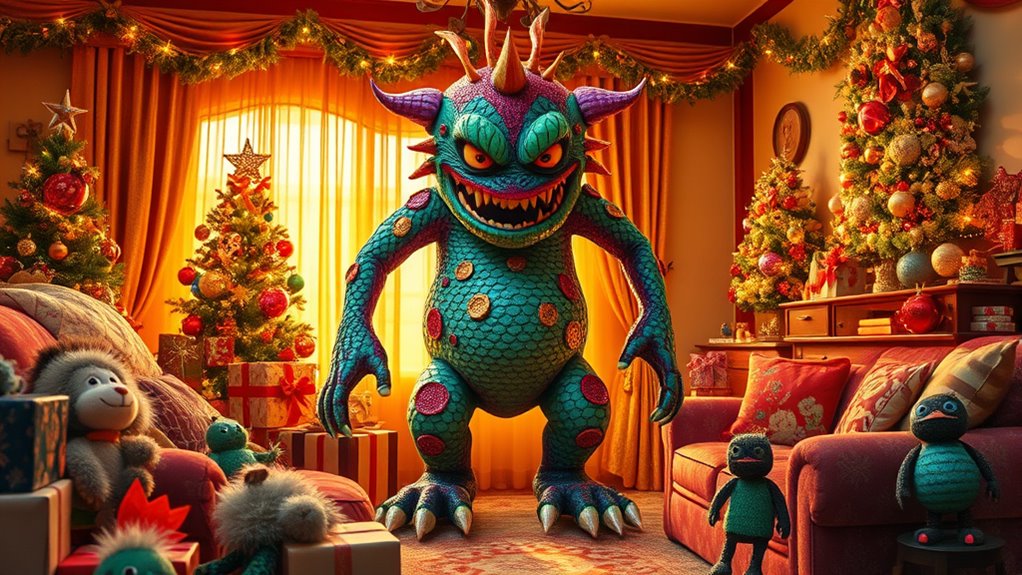
Monsters in Christmas traditions often symbolize both fear and wonder, blending myth and morality to create rich storytelling. They originated from ancient folklore, representing natural forces or moral lessons, and have evolved into festive symbols like Krampus, who punishes naughty children. These creatures add excitement and mystery while reinforcing cultural values and morality. Exploring their stories reveals how traditions adapt over time, making the holiday season more enchanting—continue to uncover how these mythical beings shape Christmas customs.

Prime made for students and young adults
- Fast, free delivery for dorm and study essentials
- Prime Video and Amazon Music included
- Member-only deals
Key Takeaways
- Mythical monsters symbolize moral lessons and cautionary tales rooted in ancient folklore, often linked to winter or natural forces.
- They have evolved from symbols of fear to festive figures, blending tradition and celebration in Christmas customs.
- Monsters like Krampus serve as moral enforcers, punishing naughty children and reinforcing good behavior during holiday seasons.
- Incorporating monsters into Christmas stories and decorations enhances cultural identity and preserves folklore across generations.
- They add mystery, excitement, and storytelling richness, enriching the festive atmosphere and passing down moral values.
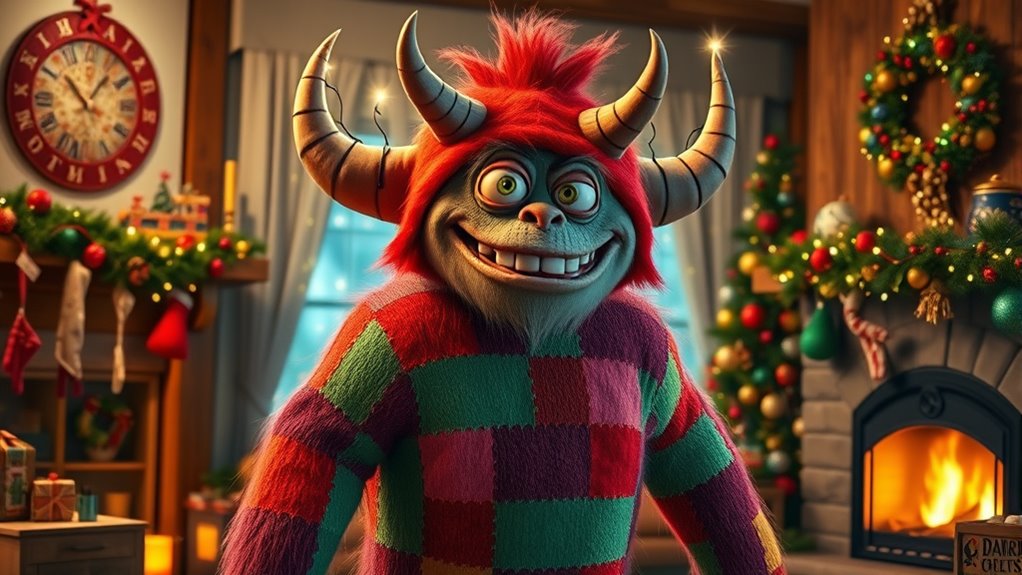
Have you ever wondered why some Christmas traditions include monsters and mythical creatures? It’s a fascinating aspect of holiday folklore that might seem unusual at first, but it actually has deep roots in cultural stories passed down through generations. These mythical creatures often originate from folklore origins, where they served as symbols of moral lessons, cautionary tales, or even celebrations of the supernatural. Over time, these beings found their way into Christmas customs, transforming from symbols of fear into figures of folklore that add a unique charm to the holiday season. Many of these mythical creatures come from European folklore, where stories of monsters and spirits were used to explain natural phenomena or enforce social norms. For example, in certain regions, mischievous creatures like Krampus—an intimidating, horned figure—are part of Christmas traditions. Krampus, with his terrifying appearance, was originally seen as a counterpart to Saint Nicholas, punishing naughty children. His folklore origins trace back to pre-Christian Alpine traditions, where he was believed to ward off evil spirits and remind people of the importance of good behavior. Over time, the image of Krampus was woven into Christmas celebrations, blending fear and festivity in a way that captures the imagination. Similarly, other mythical creatures associated with Christmas have roots in stories meant to teach lessons or serve as warnings. In some cultures, monsters like the Yule Lads or the Anglo-Saxon “wights” are depicted as mischievous or even malevolent beings who visit homes during the holiday season. Their folklore origins often link back to ancient rituals and beliefs, where these creatures represented the chaotic forces of nature or the spirits of winter. Over centuries, these stories evolved, and their monsters became less about terror and more about adding a sense of wonder and excitement to Christmas traditions. You might also notice that monsters and mythical creatures are used to create a sense of mystery and adventure during the holidays. They serve as a reminder of the rich tapestry of stories that make Christmas a time of storytelling and imagination. These creatures embody the blending of pagan, Christian, and local folklore, illustrating how traditions adapt over time while retaining their core symbolic meanings. Whether viewed as frightening figures or playful characters, their folklore origins give these monsters a cultural significance that enriches the holiday experience. Additionally, the symbolic role of monsters in Christmas traditions highlights how storytelling helps preserve cultural identity and pass down values through generations. So, next time you see a depiction of a mythical creature in Christmas decorations or stories, remember it’s more than just a spooky figure — it’s a piece of history, folklore, and tradition that continues to enchant us.
As an affiliate, we earn on qualifying purchases.
Frequently Asked Questions
How Do Monsters Influence Modern Christmas Celebrations?
You see, monsters influence modern Christmas celebrations through festive creature symbolism and holiday monster myths that add fun and excitement. These mythical beings, like Krampus or playful elves, serve as warnings or helpers, making the holiday more engaging. You might dress up as a holiday monster or enjoy stories featuring these creatures, which help keep traditions lively and memorable while blending spooky elements with festive cheer.
Are There Specific Monsters Associated With Christmas in Different Cultures?
You might not realize it, but in some cultures, monsters like Krampus in Alpine folklore are tied to Christmas. Krampus, a devilish creature from regional legends, punishes naughty children, contrasting Santa’s kindness. Different regions have their own monsters, like the Belsnickel in Germany or the Yule Cat in Iceland, all woven into cultural folklore. These monsters serve to teach lessons and add a spooky twist to holiday traditions.
Why Are Monsters Used to Teach Moral Lessons During Christmas?
You may wonder why monsters are used in Christmas moral storytelling. Monster symbolism often represents negative behaviors or consequences, helping you understand the importance of good morals. By incorporating monsters, storytellers create memorable lessons that resonate emotionally, encouraging you to reflect on your actions. These stories use monsters to teach moral lessons effectively, making the message stick while adding an element of excitement and challenge to traditional Christmas narratives.
How Has the Portrayal of Christmas Monsters Evolved Over Time?
You’ll find that the portrayal of Christmas monsters has evolved from simple folklore monsters to more complex, humorous characters. About 65% of modern holiday stories feature mythical creatures that embody both mischief and moral lessons. Today, these creatures often reflect cultural shifts, blending tradition with pop culture, making them more relatable and less frightening. You now see them as symbols of playful chaos, highlighting how folklore monsters adapt over time to resonate with audiences.
Do Children’s Christmas Stories Feature Monsters as Heroes or Villains?
In children’s Christmas stories, monsters usually play the villain’s role rather than heroes, often embodying mischievous or scary traits that challenge Santa’s helpers or Christmas spirits. However, some tales reframe monsters as misunderstood characters who ultimately help save the holiday. You might see monsters as part of the magic, learning to embrace kindness and cheer, turning villains into unlikely heroes that teach valuable lessons during the festive season.
mythical creature Christmas decorations
As an affiliate, we earn on qualifying purchases.
As an affiliate, we earn on qualifying purchases.
Conclusion
So, next time you see a strange creature in a Christmas story, remember it’s more than just a monster—it’s a symbol of challenge, change, and tradition. These beings remind us that even in the brightest celebrations, there’s room for mystery and growth. Isn’t it beautiful how monsters help us embrace life’s complexities during the holiday season? Embrace these stories, and let them inspire you to find magic in the unexpected.
As an affiliate, we earn on qualifying purchases.
As an affiliate, we earn on qualifying purchases.
Halloween Picks
halloween
As an affiliate, we earn on qualifying purchases.