In Irish folklore, banshees are spectral women whose mournful wails warn of imminent death. You might imagine them dressed in white or grey, their haunting cries echoing through the night. These spirits symbolize Ireland’s deep connection to mortality, serving as spiritual messengers from the land. Their presence reminds you of life’s fragile nature and the importance of honoring loved ones. If you continue exploring, you’ll uncover more about these legendary guardians of Ireland’s spiritual traditions.
Key Takeaways
- Banshees are Irish mythic spirits believed to wail to foretell an impending death in a family.
- They are often depicted as noble women dressed in white or grey with haunting cries.
- Their wails serve as spiritual signals, connecting the living with the spiritual realm and emphasizing mortality.
- Traditionally, only certain family lineages are thought to hear the banshee’s cry, linking her to ancestral heritage.
- The banshee symbolizes Ireland’s deep spiritual beliefs about death, continuity, and the transition from life to afterlife.
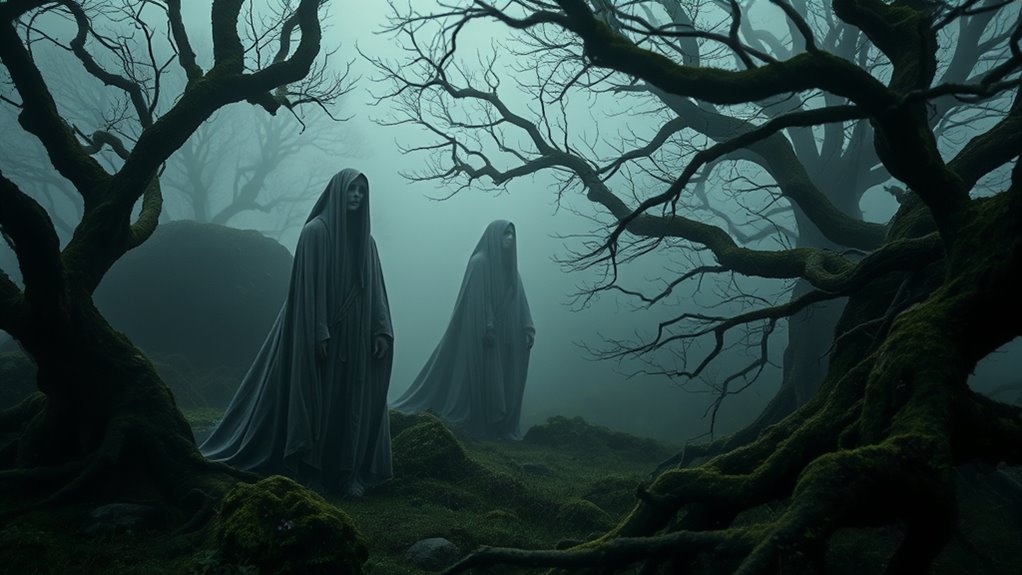
Have you ever heard the haunting wails that signal an impending death in Irish folklore? If so, you’re touching on the mysterious world of the banshee, a figure deeply rooted in Ireland’s cultural history. The mythical origins of the banshee trace back centuries, blending ancient Celtic beliefs with stories passed down through generations. Originally, these wailing women were thought to be spirits of the land, embodying the sorrow and grief tied to mortality. Over time, their role evolved, transforming into supernatural heralds who announce the imminent death of a loved one. Some legends describe them as noble women dressed in white or grey, while others depict them as more frightening, with long, flowing hair and piercing eyes. Regardless of their appearance, their mournful cries are unmistakable, echoing through the night and striking fear into those who hear them. The banshee’s mythic origins are often linked to Irish clans or specific families, with some stories suggesting that only certain lineages have the ancestral right to hear her wails. This connection emphasizes their role as protectors or omens, woven into the fabric of family history and identity. Additionally, the banshee’s association with cultural symbolism highlights her role in reflecting Ireland’s deep-seated beliefs about death and spiritual continuity.
In Irish culture, the banshee functions as a powerful symbol, representing the omnipresence of death and the importance of honoring those who have passed. Her cries serve as a reminder of mortality, urging families to prepare for loss and cherish their loved ones. The banshee’s presence also underscores the belief in spirits that continue to watch over the living, offering both a warning and a form of spiritual connection. This dual symbolism makes her a complex figure—neither wholly terrifying nor wholly comforting. Instead, she embodies the natural cycle of life and death, a bridge between the mortal and spiritual worlds. For many Irish communities, stories of the banshee reinforce a sense of cultural continuity, linking present-day lives with ancient traditions. Her wails are seen as a solemn, sacred call, calling souls home and marking the end of life’s journey. By understanding her mythology and symbolism, you gain insight into how Irish folklore treats death not as an end, but as a crucial transition, celebrated and mourned through stories of the wailing women who have become enduring symbols of Ireland’s rich spiritual landscape.
Frequently Asked Questions
Are Banshees Considered Good or Evil Spirits?
You might see banshees as morally ambiguous spirits, embodying both spiritual benevolence and ominous warning. They aren’t strictly good or evil; instead, they serve a crucial role in Irish folklore by foretelling death, which can be seen as compassionate or frightening. Their wailing symbolizes a profound connection to the spiritual domain, reminding you that such spirits hold complex, layered meanings rather than fitting neatly into categories of good or evil.
Can Anyone Hear a Banshee’s Wail?
Ever wonder if anyone can hear a banshee’s wail? In Irish folklore origins, banshees are believed to be spirits that herald death, and their supernatural sightings are often silent, but some say their screams can be heard by those destined to die. While many believe only certain people can hear them, others think their wails are meant for all, warning of impending tragedy. Can you imagine hearing such a chilling call?
Do Banshees Appear in Modern Irish Culture?
Yes, banshees do appear in modern Irish culture through pop culture and modern depictions. You’ll see them in movies, TV shows, and literature, often portrayed as eerie or supernatural beings warning of death. These representations keep the myth alive, blending traditional folklore with contemporary storytelling. You might even encounter banshee references in Irish festivals or online, showing how this haunting legend continues to influence Irish identity today.
Are Banshees Linked to Specific Irish Regions?
You’ll find banshees linked to specific Irish regions through regional legends and folklore variations. In the west, especially Connacht, they’re often seen as mourning women, while in the north, stories depict them as omens of death. These regional legends shape each area’s unique portrayal of banshees, highlighting how local culture influences their stories. So, yes, their presence varies across Ireland, reflecting regional beliefs and storytelling traditions.
What Are Common Myths About Banshees’ Origins?
You might think banshees are just spooky ghosts, but their mythical origins are steeped in cultural misconceptions. Some say they’re cursed spirits of the dead or fairy women, yet legends suggest they’re protectors or omens of death. These myths exaggerate their true nature, revealing how stories morph over time. Instead of terrifying harbingers, banshees symbolize the deep respect and fear for mortality woven into Irish folklore.
Conclusion
As you explore Ireland’s haunting banshees, remember that over 70% of Irish households claim some connection to these spirits. Their piercing wails, believed to foretell death, still echo through the countryside today. You might find it fascinating how a legend can hold such cultural weight, blending fear and reverence. So next time you hear a distant cry, you’ll know it’s part of a rich tradition that keeps these wailing women alive in Irish memory.