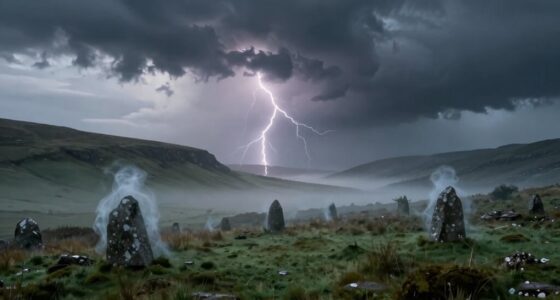
Scottish Bean Nighe and Welsh Gwrach Y Rhibyn are eerie figures that warn of approaching death. The Bean Nighe appears as a bloodstained washerwoman at streams, embodying Celtic views of mortality, while the Gwrach Y Rhibyn is a ghostly, ragged woman roaming moorlands and battlefields, symbolizing Welsh beliefs about fate. Both serve as haunting symbols of life’s fleeting nature. To uncover more about these legends and their cultural significance, keep exploring these fascinating spirits.

Prime made for students and young adults
- Fast, free delivery for dorm and study essentials
- Prime Video and Amazon Music included
- Member-only deals
Key Takeaways
- Both the Bean Nighe and Gwrach Y Rhibyn are Celtic folklore spirits that predict death and serve as symbols of mortality.
- The Bean Nighe is depicted as a bloodstained washerwoman at streams, while Gwrach Y Rhibyn appears as a decrepit woman roaming moors or battlefields.
- The Bean Nighe’s rituals involve washing clothes, whereas Gwrach Y Rhibyn’s appearances are ghostly and less ritualistic.
- Both figures embody cultural fears of death and act as boundary guardians between life and the afterlife.
- They reflect regional differences: Bean Nighe’s roots in Scottish Celtic traditions and Gwrach Y Rhibyn in Welsh mythology.

Have you ever wondered how a simple concept can take on countless forms? The idea of a mournful, supernatural female figure appears across many cultures, each with its own unique twist. Two fascinating examples are the Scottish Bean Nighe and the Welsh Gwrach Y Rhibyn. These entities share similarities but also reflect distinct cultural histories and beliefs, revealing how societies interpret death and the supernatural.
The historical origins of the Bean Nighe trace back to Scottish folklore, where she is seen as a sort of death omen or messenger. She is often depicted as a washerwoman, washing bloodstained clothes in lonely streams or riverbanks. According to legend, she is the spirits of women who died violently or prematurely, forever condemned to foretell death. Her role is deeply rooted in Celtic traditions, serving as a bridge between the living and the dead. The cultural significance of the Bean Nighe is profound; she embodies the fears surrounding mortality and the mysterious forces that govern life and death. People believed that encountering her was either a warning of impending doom or an opportunity to negotiate one’s fate, making her a powerful figure in Scottish cultural consciousness. Her image and stories have persisted for centuries, symbolizing the inevitable and often unpredictable nature of death.
The Bean Nighe symbolizes mortality, serving as a Celtic bridge between life and death through her ominous washing rituals.
Across the border in Wales, the Gwrach Y Rhibyn shares many traits with the Bean Nighe but also exhibits unique characteristics. Her name translates to “the hag or the ghost,” and she appears as an ominous, decrepit woman clothed in rags, often seen roaming the moors or near battlefields. The origins of the Gwrach Y Rhibyn are less clearly documented, but her presence in Welsh mythology points to a similar understanding of death and the supernatural. She is believed to foretell death or misfortune, acting as a warning to those who encounter her. Her cultural significance lies in her role as a guardian of the boundary between life and the afterlife, embodying the fears and respect for mortality that are central to Welsh folklore. Unlike the Bean Nighe, who is often associated with washing clothes, the Gwrach Y Rhibyn’s appearances are more spectral and less ritualistic, emphasizing her role as a harbinger rather than a caretaker of the dead.
Both figures exemplify how different cultures interpret the mystery of death through female supernatural beings. Their stories reveal a shared human tendency to personify mortality and to seek understanding through myth. Despite their differences, the Scottish Bean Nighe and the Welsh Gwrach Y Rhibyn serve as enduring symbols of life’s transient nature, reminding us of the deep roots these legends have in their respective cultural heritages.
Top picks for "banshee variation scottish"
As an affiliate, we earn on qualifying purchases.
Frequently Asked Questions
How Are the Bean Nighe and Gwrach Y Rhibyn Historically Connected?
You see, the Bean Nighe and Gwrach y Rhibyn are historically connected through their mythological origins as harbingers of death. Both embody cultural symbolism of death and transformation in Scottish and Welsh folklore. They are believed to appear before tragedy, serving as warnings or omens. Their stories reflect shared Celtic themes, linking them as supernatural figures that embody the mysterious, often unsettling, progression between life and death in their respective cultures.
Do These Spirits Have Any Specific Rituals to Ward Them Off?
Imagine building a barrier of glowing, protective light around yourself; that’s what ritual protection offers against spirits like the Bean Nighe and Gwrach Y Rhibyn. To ward them off, you might carry sacred objects, recite prayers, or perform specific rituals to strengthen spiritual barriers. These acts help create a shield, making it harder for these spirits to reach or harm you, keeping your space safe from their haunting presence.
Are There Modern Sightings or Stories of These Entities Today?
You might find modern sightings or contemporary stories of these spirits intriguing, as some people claim to have experienced encounters. Witnesses often describe hearing eerie wails or seeing shadowy figures resembling these entities. Though such stories are rare and often anecdotal, they continue to fuel local legends and paranormal discussions. If you’re curious, exploring forums and paranormal research sites can reveal recent accounts that keep these spirits alive in modern folklore.
How Do These Banshee Variations Compare to Irish Banshees?
You’ll find that Scottish Bean Nighe and Welsh Gwrach Y Rhibyn reflect unique cultural differences and folklore symbolism, making them distinct from Irish banshees. While Irish banshees often signal imminent loss with mournful wails, their Scottish and Welsh counterparts embody different symbols of change and mystery. These variations showcase local beliefs, shaping how each culture perceives the supernatural, blending tradition with regional storytelling nuances.
What Are the Symbolic Meanings Behind Their Appearances?
You see, their appearances carry deep symbolic symbolism reflecting cultural significance. The Scottish Bean Nighe often symbolizes death and transformation, her washing or wringing cloth representing purification. The Welsh Gwrach Y Rhibyn embodies warnings, with her ghostly form signifying impending doom. Both reveal how these mythic figures serve as cultural symbols, embodying societal values, fears, and beliefs about mortality, change, and the supernatural’s role in guiding or warning communities.
Conclusion
So, as you see, these banshee variations vividly voice different vignettes of valiant vigilance. The Scottish bean nighe and Welsh gwrach y rhibyn reveal riveting reflections of regret, rousing reactions from domains beyond. By bridging boundaries between beliefs, these beings beckon us to believe in boundless, battered but beautiful boundaries of folklore. Embrace these enigmatic entities, and you’ll experience the evocative essence of eerie echoes echoing endlessly, eternally enriching every encounter with enchanting, elusive, and extraordinary echoes of the extraordinary.
Halloween Picks
halloween
As an affiliate, we earn on qualifying purchases.