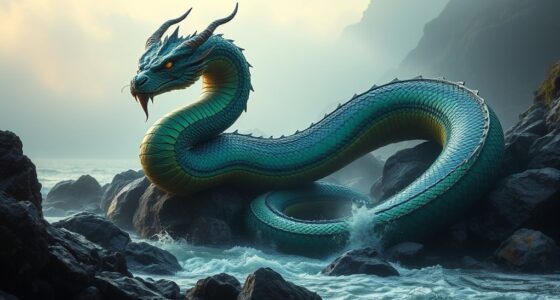
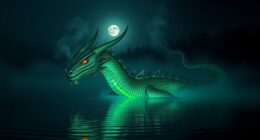
In Irish folklore, the Dobhar‑chú is known as Ireland’s king otter, an awe-inspiring aquatic creature with sleek fur and piercing eyes. It inhabits remote lakes and rivers, moving effortlessly beneath the surface. Described as fierce, swift, and supernatural, it guards its territory while instilling fear with its haunting cry. This legendary beast symbolizes nature’s power and Ireland’s mystical landscape—uncover more about its stories and significance as you continue your journey.
Key Takeaways
- The Dobhar‑chú is an Irish legendary aquatic creature with silvery fur, inhabiting remote lakes and rivers across Ireland.
- It combines otter-like features with supernatural qualities, known for its speed, strength, and haunting cry.
- Symbolizing nature’s power, it functions as both a guardian and a fierce predator within Irish folklore.
- Legends depict it as nearly impossible to catch, often warning of its lethal attacks and supernatural abilities.
- The creature embodies Ireland’s mystical landscape, representing the wild, mysterious depths of Irish lakes and cultural heritage.

The folklore of the Dobhar‑chú, a legendary Irish creature, has fascinated storytellers for centuries. As you explore Irish folklore traditions, you learn that this mythical aquatic creature embodies both awe and terror. Known as Ireland’s king otter, the Dobhar‑chú is said to inhabit remote lakes and rivers, lurking beneath the surface with sleek, silvery fur and piercing eyes. Stories describe it as a formidable beast, capable of swift, deadly attacks on those who venture too close to its watery domain.
The Dobhar‑chú is Ireland’s legendary water beast, fierce and swift beneath the lakes’ surface.
In Irish legends, the Dobhar‑chú is often portrayed as a guardian of its territory, fiercely protective and nearly impossible to catch. Its mythic status stems from tales that depict it as a creature of immense strength, blending the features of an otter with supernatural qualities. When you hear these stories, you might imagine a creature that moves effortlessly through the water, its presence both mesmerizing and terrifying. Some legends suggest it has a haunting cry that echoes across the lakes, warning intruders to stay away. Others tell of brave souls who attempted to hunt the creature but found themselves overwhelmed by its speed and ferocity.
The Irish folklore traditions surrounding the Dobhar‑chú highlight its role as both a protector and a predator. It’s often linked to themes of nature’s power and the mysterious depths of Irish lakes. These stories serve to explain strange occurrences or disappearances in the wilderness, reinforcing the idea that the creature is a supernatural force of nature. You might hear tales from local communities about mysterious sightings or strange ripples on the water, adding to the creature’s legendary reputation. Such accounts keep the myth alive, passing it down through generations as a warning or a marvel.
What makes the Dobhar‑chú particularly enthralling is how it embodies the wild, untamed spirit of Irish folklore traditions. It’s not just a creature of fear but also a symbol of the mysterious, hidden world beneath Ireland’s serene lakes. Its mythical status persists because it taps into universal fears of the unknown and the awe-inspiring power of nature. When you explore Irish stories, you realize that the Dobhar‑chú isn’t just a myth — it’s a reflection of the land’s ancient, mystical landscape. This legendary creature continues to haunt the collective imagination, a true testament to Ireland’s rich tapestry of folklore and the enduring allure of its mythical aquatic creatures. Additionally, the stories of the Dobhar‑chú often incorporate supernatural qualities, emphasizing its role as a creature beyond natural explanation.
Frequently Asked Questions
Are There Recent Sightings of the Dobhar‑Chú?
Yes, there have been recent cryptid sightings of the dobhar‑chú reported by folklore enthusiasts. Some claim to have seen a mysterious, otter-like creature near Irish lakes, fueling speculation and excitement. While skeptics remain doubtful, these sightings keep the legend alive and attract attention from those fascinated by Irish folklore. If you’re interested, stay alert, as you might just encounter a piece of Ireland’s mystical history yourself.
How Does the Dobhar‑Chú Compare to Other Irish Water Monsters?
The dobhar‑chú is arguably Ireland’s most formidable water monster, standing out among water monster comparisons for its fierce hybrid form. Unlike the sleek selkie or the elusive kelpie, it combines a terrifying otter and serpent, making it uniquely menacing. As one of Ireland’s key mythological creatures, it embodies primal water power, making it more intimidating than many other Irish water monsters. You’d definitely want to steer clear if you ever encounter it.
What Symbolism Is Associated With the Dobhar‑Chú in Irish Culture?
You’ll find that the dobhar‑chú symbolizes protection, mystery, and primal strength in Irish culture. Its cultural symbolism often reflects a connection to nature, emphasizing the importance of water guardianship and respect for the natural world. This legendary creature embodies the mystical and powerful aspects of Irish folklore, serving as a reminder of the deep-rooted respect and reverence for nature’s forces that influence Irish cultural symbolism today.
Are There Legends of People Encountering the Dobhar‑Chú Today?
Imagine wandering along misty Irish lakes, where local legends whisper of encounters with the dobhar‑chú. Though rare, some say they’ve glimpsed this mythical creature, fueling folklore preservation efforts. These stories echo through generations, keeping the legend alive. While concrete proof remains elusive, such tales serve as a reminder of Ireland’s mystical past, inviting you to believe in the magic lurking just beneath the water’s surface.
Has the Dobhar‑Chú Influenced Modern Irish Literature or Media?
Yes, the dobhar‑chú influences modern Irish literature and media through vivid storytelling and literary references. You might see its mythic presence in contemporary books, movies, or TV shows that draw on Irish folklore to craft suspenseful narratives. Writers and filmmakers often incorporate the creature’s mysterious, aquatic nature to evoke a sense of folklore’s enduring power, keeping the legend alive in modern storytelling and enthralling audiences with its mystical allure.
Conclusion
As you close this chapter, imagine the Dobhar‑chú lurking beneath Ireland’s shimmering lakes, a whisper of old legends echoing through time. Like the guardian of forgotten secrets, it invites your curiosity and warns of nature’s mysterious depths. In every ripple and shadow, you’re reminded of Ireland’s rich folklore—an enduring link to a world where myth and reality intertwine, forever guarding its hidden stories beneath the surface, waiting for those willing to listen.