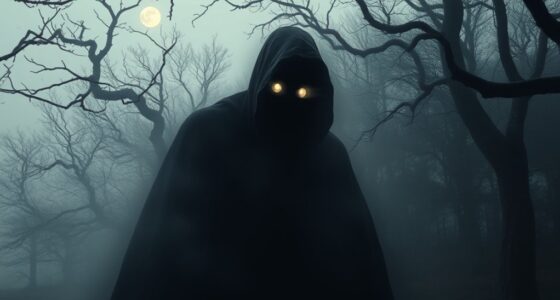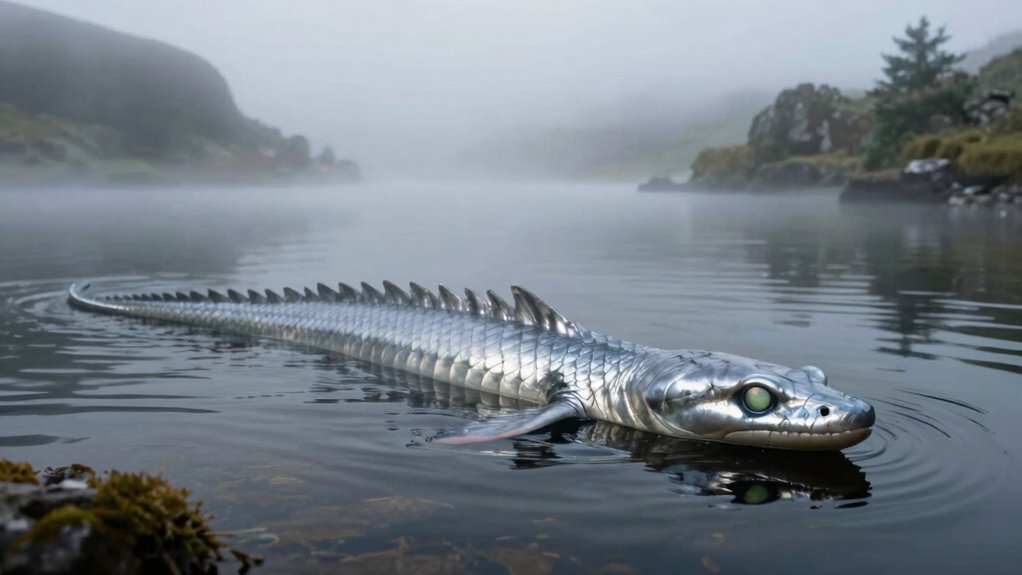

The Dobhar-chú is a legendary Irish lake-monster deeply connected to Ireland’s rich folklore and water traditions. As you explore this myth, you’ll see how it reflects the community’s relationship with water, blending fear and fascination. Sightings and stories keep its legend alive, symbolizing nature’s mysteries and remnants of ancient beliefs. If you keep discovering, you’ll uncover more about how this mythical creature embodies Ireland’s enduring fascination with lake monsters and water’s depths.

Get school and study supplies delivered free — and shop member deals
- Fast, free delivery on millions of items
- Access to Prime Big Deal Days deals on October 6–7
- Prime Video, Amazon Music and more included
Key Takeaways
- The Dobhar-chú is a legendary Irish water monster rooted in folklore, blending mythic traits with fears of the unknown beneath lakes.
- It symbolizes Ireland’s cultural relationship with natural water bodies and serves as a cautionary tale for travelers.
- Sightings and stories over centuries keep the legend alive, blending fact, myth, and community storytelling.
- The legend reflects Ireland’s broader lake-monster tradition, emphasizing mystery, wonder, and respect for aquatic environments.
- Modern interest persists through investigations, folklore, and cultural symbolism, maintaining its significance in Irish heritage.
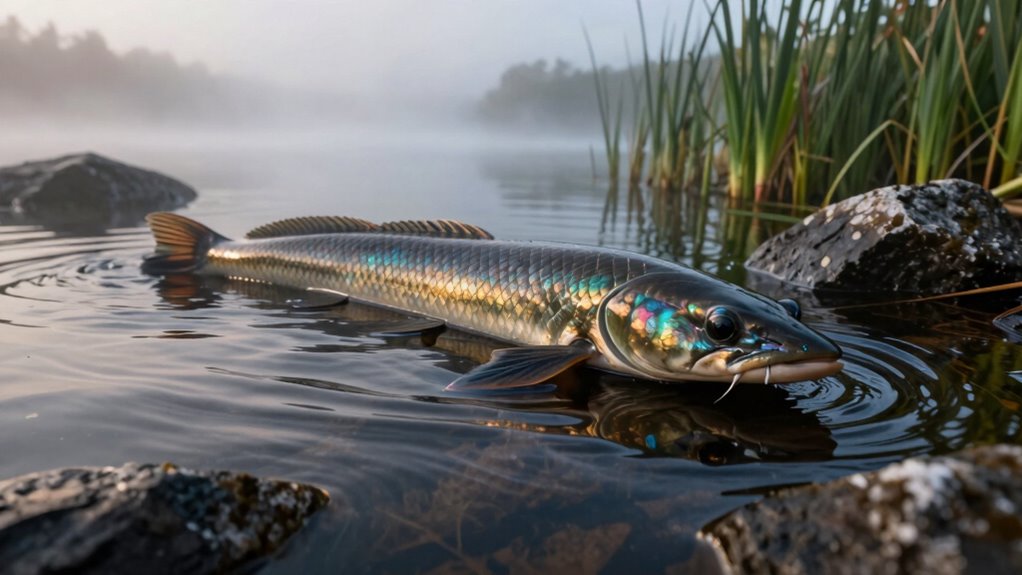
Many cultures around the world share a fascination with mysterious creatures lurking in lakes, and the tradition of lake-monster legends continues to captivate imaginations today. Among these legends, Ireland’s Dobhar-chú stands out as a particularly intriguing cryptid. You might have heard stories of this creature through local folklore or cryptid sightings reported over the years. Its origins are deeply rooted in Irish mythology, blending mythic elements with real-world fears of the unknown lurking beneath the water’s surface. As you explore the folklore origins of the Dobhar-chú, you’ll find that it embodies both cultural symbolism and the universal human curiosity about what lies hidden in lake depths.
The Dobhar-chú’s legend has been passed down through generations, and many believe it originated from early Irish tales meant to explain strange sightings or unexplained disappearances. These stories often describe the creature as a large, otter-like beast with fearsome features—sharp teeth, a sleek body, and sometimes, a hint of supernatural power. Over the centuries, cryptid sightings have fueled local tales, with villagers recounting encounters that sparked fear and awe. Such reports, whether based on actual sightings or embellished over time, contribute to the folklore origins of the Dobhar-chú, solidifying its place in Ireland’s cultural tapestry. These stories serve as cautionary tales, warning travelers to stay away from certain lakes or to respect the water’s mysterious depths. The persistence of these legends underscores the importance of cultural storytelling in shaping local beliefs and traditions. Additionally, the legend’s endurance highlights how mythology can influence contemporary perceptions of natural environments. The ongoing cryptid sightings serve to keep the legend alive, linking the past with present beliefs and experiences.
You might wonder how these legends persist in modern times. Despite the lack of concrete evidence, the legend endures because of the power of storytelling and community memory. Cryptid sightings, whether in the form of eyewitness accounts or shadowy glimpses, keep the legend alive, allowing it to evolve with each retelling. Today, enthusiasts and researchers continue to investigate reports, often seeking physical evidence, but the cultural significance of the Dobhar-chú remains rooted in its folklore origins. Its story taps into a shared human desire to understand the unknown, to find meaning in mysterious encounters, and to preserve a cultural identity tied to Ireland’s lakes and waterways.
In the end, the Dobhar-chú epitomizes how folklore and cryptid sightings intertwine, giving life to legends that resonate long after the stories are told. It reminds you that these creatures are more than just mysterious beings—they are symbols of a culture’s relationship with nature, fear, and wonder. The lake-monster tradition, embodied in the legend of the Dobhar-chú, continues to inspire curiosity and respect for Ireland’s watery mysteries, blending myth with the ongoing human quest to uncover what lurks beneath the surface.
As an affiliate, we earn on qualifying purchases.
Frequently Asked Questions
Are There Any Recent Sightings of the Dobhar-Chú?
Recent sightings of the dobhar-chú are rare, but some lake folklore enthusiasts still report cryptid sightings around Irish lakes. You might hear local stories or see online accounts claiming glimpses of this mysterious creature, fueling ongoing curiosity. While concrete evidence remains elusive, these tales keep the legend alive, inviting you to explore Ireland’s rich cryptid lore and the possibility that the dobhar-chú still lurks in the depths, waiting to be discovered.
How Does the Dobhar-Chú Compare to Other Irish Monsters?
You’ll find that the Dobhar-chú stands out among Irish monsters due to its mythical hybridity, blending aquatic and beastly features. Unlike other creatures, it symbolizes both fear and protection in Irish culture, embodying deep-rooted fears and respect for nature’s power. Its unique form and cultural symbolism set it apart from legends like the Loch Ness Monster, making it a fascinating part of Ireland’s rich mythological tapestry.
What Is the Origin of the Dobhar-Chú Legend?
You plunge into the mist-shrouded lakes of Ireland, where legend whispers of the Dobhar-chú’s mythical origins. This creature’s story emerges from ancient Irish folklore, symbolizing primal fears and water’s mysterious depths. Its mythic roots reflect cultural symbolism, embodying both protection and danger. Over centuries, tales of this lake-monster have woven into local traditions, echoing humanity’s fascination with unseen forces lurking beneath the tranquil surface.
Have Any Scientific Investigations Been Conducted?
Scientific investigations into the Dobhar-chú are scarce, mainly because cryptid folklore often lacks concrete evidence. You’ll find that scientific skepticism questions the existence of such creatures, emphasizing the absence of verified sightings or physical proof. While some enthusiasts seek to explore local legends through research or modern technology, mainstream science remains unconvinced, viewing the Dobhar-chú as a fascinating but unproven piece of Ireland’s mysterious lake history.
Are There Cultural Festivals Celebrating the Dobhar-Chú?
You’ll find that there are no major folklore festivals specifically dedicated to the mythical water creature, the dobhar-chú. Notably, only a handful of local events or storytelling gatherings celebrate Ireland’s lake-monster tradition, highlighting its cultural significance rather than formal festivals. These folklore festivals often feature tales and legends, offering a unique glimpse into Ireland’s mythic past, even if they don’t focus solely on the dobhar-chú itself.
As an affiliate, we earn on qualifying purchases.
Conclusion
As you explore Ireland’s lake-monster tales, you realize these stories aren’t just legends—they’re woven into the very fabric of the land, hinting at mysteries waiting to be uncovered. Perhaps, in some quiet lake, you’ll find a ripple or a shadow that echoes the dobhar-chú’s legend. Sometimes, coincidence sparks curiosity, and you’re left wondering if these creatures are just stories or echoes of something still lurking beneath the water’s surface.
As an affiliate, we earn on qualifying purchases.
As an affiliate, we earn on qualifying purchases.
Halloween Picks
halloween
As an affiliate, we earn on qualifying purchases.