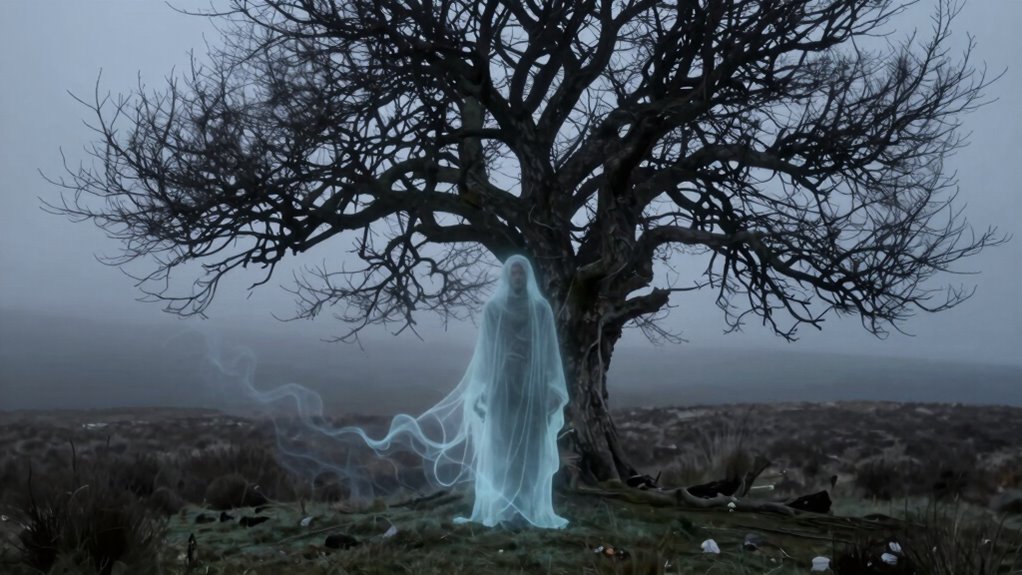

From keening to banshee wails, sound transforms into a supernatural sign through cultural beliefs, stories, and traditions. When you hear ghostly cries, your mind often links them to death, warning, or spirits, heightening fears and fascination. Societies pass down these sounds as symbols of impending doom or messages from beyond, shaping collective beliefs and legends. If you keep exploring, you’ll uncover how these sounds continue to influence cultural perceptions of the unknown.
Key Takeaways
- Cultural beliefs and traditions interpret mysterious sounds like keening or wails as messages from spirits or supernatural entities.
- Emotional and psychological responses amplify the perception of sounds as ominous or supernatural, reinforcing their significance.
- Legends and folklore evolve around these sounds, framing them as warnings, omens, or signals from the beyond.
- Historical uses of such sounds serve to explain the unknown and shape collective cultural responses to supernatural phenomena.
- Sounds act as cultural symbols and psychological triggers, bridging tangible experiences with supernatural or spiritual interpretations.
Have you ever heard a mysterious sound that seemed to carry a message beyond ordinary perception? It’s a common experience, and for many, it sparks a sense of wonder or fear. These sounds often become intertwined with cultural interpretations, shaping how people understand and respond to them. In different societies, similar noises can evoke vastly different reactions. For example, a mourning wail or keening might be seen as a sign of grief in one culture, while in another, it might be viewed as a supernatural message or a call from spirits. These interpretations aren’t random; they’re rooted in shared beliefs, stories, and traditions passed down through generations. When you encounter these sounds, your mind instinctively seeks meaning based on your cultural background, often assigning supernatural significance to what might otherwise be dismissed as natural noise. Additionally, the psychological effects of these sounds are equally powerful. When you hear a chilling cry or an inexplicable whisper, your brain reacts by triggering a range of emotional responses—fear, curiosity, or even awe. These feelings are often heightened because your mind associates certain sounds with danger or the supernatural, especially if the context feels ominous or uncertain. The psychological effects can intensify your perception of the sound, making it seem more supernatural than it might truly be. This heightened state can lead to a snowball of fear or fascination, reinforcing beliefs that these sounds are messages from beyond. Your subconscious may even interpret these noises as warnings or signs, fueling superstitions and legends that grow over time. Throughout history, sounds like keening, banshees’ wails, or ghostly whispers have become symbols of impending doom or communication from the other side. These supernatural signs often serve as a bridge between the tangible and intangible, allowing communities to make sense of the unknown. Moreover, understanding the cultural significance of these sounds helps shed light on how societies have historically interpreted and responded to mysterious noises. These interpretations are often influenced by supernatural beliefs that shape the collective consciousness across generations. In this way, sound becomes a powerful tool—either as a cultural artifact, a psychological trigger, or a supernatural sign—shaping your understanding of life, death, and the unseen.
As an affiliate, we earn on qualifying purchases.
Frequently Asked Questions
How Do Different Cultures Interpret Supernatural Sounds Uniquely?
You see, different cultures interpret supernatural sounds uniquely through cultural symbolism and ritual significance. For example, some see a wailing sound as a sign of impending death, while others view it as a protective warning. You might find certain sounds linked to spirits or ancestors in one culture, yet considered mere echoes in another. These interpretations shape rituals, beliefs, and responses, highlighting how sound’s supernatural meaning varies across societies.
Can Sound-Based Omens Predict Specific Events Accurately?
Sound-based omens can’t reliably predict specific events because they often rely on sound symbolism and subjective interpretation. You might experience auditory hallucinations or interpret certain sounds as warnings, but these are influenced by cultural beliefs or personal fears. While some cultures believe sounds foretell events, scientific evidence doesn’t support their accuracy. Instead, these omens serve more as symbolic messages or cultural expressions rather than precise predictors.
Are There Scientific Explanations Behind Supernatural Auditory Phenomena?
Imagine the mind as a theater where acoustic illusions play tricks, making ordinary sounds seem extraordinary. Scientific explanations reveal that supernatural auditory phenomena often result from sound symbolism—the way our brains interpret certain noises as meaningful. These illusions and interpretations can create the eerie sense of a supernatural presence, but they’re rooted in real psychological and physiological processes, not supernatural forces, turning fear into a fascinating dance of perception.
How Do Personal Experiences Influence Belief in Supernatural Sounds?
Your personal experiences shape your belief in supernatural sounds through psychological triggers and auditory illusions. When you hear unfamiliar or eerie noises, your mind may interpret them as supernatural due to existing fears or cultural beliefs. Auditory illusions can make ordinary sounds seem extraordinary, reinforcing your perceptions. These factors influence how you perceive and interpret sounds, often leading you to believe in supernatural origins even when scientific explanations exist.
What Role Does Folklore Play in Shaping Supernatural Sound Legends?
Folklore shapes supernatural sound legends by embedding sound symbolism and mythical acoustics into cultural stories. You’ll notice that legends often link eerie sounds to specific symbols or mythic elements, reinforcing their supernatural significance. These stories, passed down through generations, influence your perception of sounds, making them seem more mystical or ominous. Folklore’s vivid acoustic imagery helps create memorable, powerful legends that deepen your belief in supernatural phenomena.
As an affiliate, we earn on qualifying purchases.
Conclusion
You see, sound is like a whispering thread woven into the fabric of the supernatural, guiding or warning us in ways words can’t. From keening to banshees, these eerie echoes become more than mere noise—they transform into signals that stir our deepest fears and hopes. Just as a lighthouse’s beam cuts through fog, sound pierces the unknown, revealing hidden truths or shadows. So, listen closely; the supernatural often speaks in the language of sound, waiting to be heard.
spiritual communication audio device
As an affiliate, we earn on qualifying purchases.
As an affiliate, we earn on qualifying purchases.
As an affiliate, we earn on qualifying purchases.