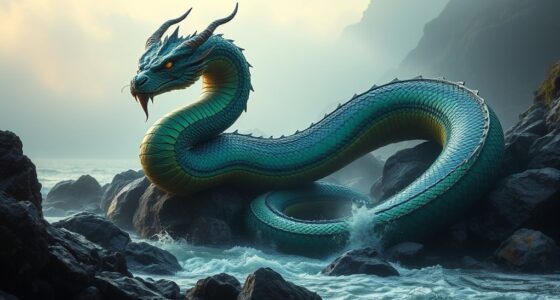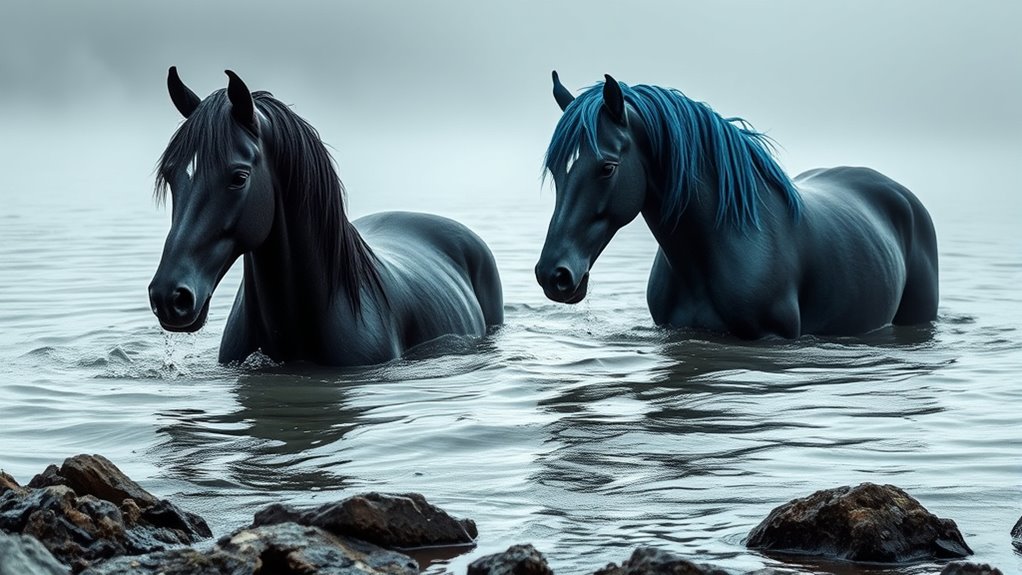

Irish water horses, like the Kelpie and Each Uisge, are legendary creatures blending myth and legend, embodying water’s beauty and danger. These shape-shifting spirits often appear as stunning horses or handsome men, luring unsuspecting victims before revealing their true, threatening nature. Their stories symbolize water’s dual qualities—beautiful yet deadly—and serve as warnings to respect natural mysteries. If you keep exploring, you’ll uncover more about these fascinating symbols of Ireland’s rich folklore.
Key Takeaways
- The Kelpie and Each Uisge are mythical water horses from Irish and Scottish folklore symbolizing water’s beauty and danger.
- Kelpies are shape-shifting horses that lure victims before dragging them into water; Each Uisge can appear as a horse, man, or monster.
- Both legends serve as cautionary tales emphasizing respect for natural water bodies and their unpredictable, potentially deadly nature.
- These creatures reflect cultural beliefs about spirits and shape-shifters rooted in ancient Irish and Scottish traditions.
- Today, the Kelpie and Each Uisge remain cultural symbols representing water’s enchanting yet perilous qualities.
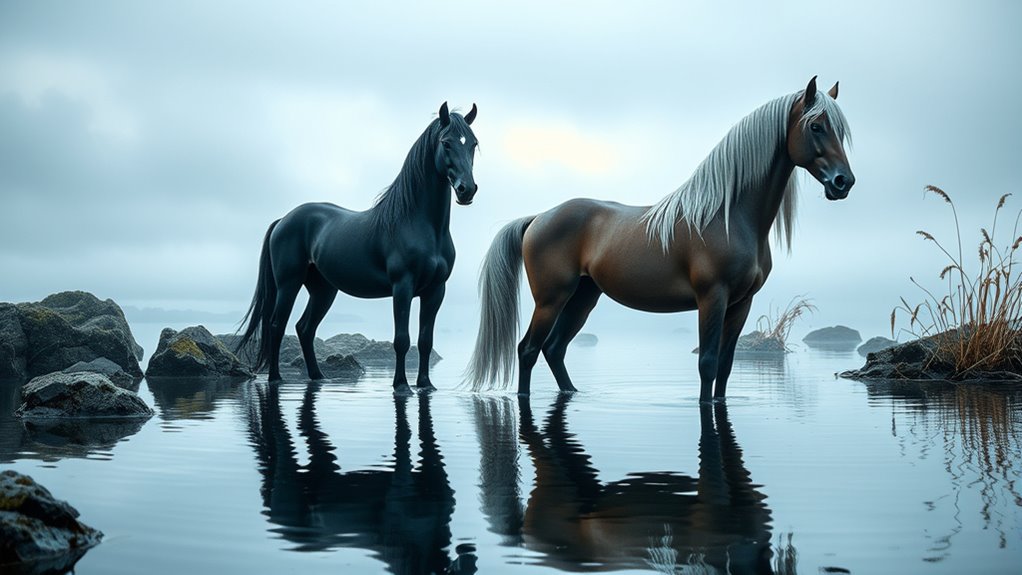
Have you ever wondered about the legendary Irish Water Horses? These mystical creatures have fascinated people for centuries, blending myth and legend into enthralling tales. Among the most famous are the Kelpie and the Each Uisge, both rooted in Irish and Scottish folklore. Their mythical origins trace back through centuries of storytelling, evolving from ancient beliefs in spirits and shape-shifters. These stories served to explain natural phenomena, warn travelers, or embody cultural values. Over time, the Kelpie and the Each Uisge became more than just water spirits—they became symbols of Ireland’s rich cultural symbolism, representing the mysterious and often dangerous relationship humans had with water. Their stories carried lessons about respecting nature’s power and the unpredictable forces lurking beneath the surface.
Irish Water Horses like the Kelpie and Each Uisge symbolize water’s beauty and danger in myth and culture.
The Kelpie, often depicted as a beautiful horse, is said to inhabit the lochs and rivers of Scotland, with roots that stretch into Irish myth as well. Its mythical origins are intertwined with tales of shape-shifting and enchantment. According to legend, it appears as a stunning horse to lure unsuspecting passersby, only to transform into a terrifying creature or drag its victims into the depths. The Kelpie’s cultural symbolism reflects both allure and danger—an embodiment of nature’s duality. It reminds you to be cautious around water bodies, respecting their beauty while acknowledging their potential peril. In Irish folklore, similar water spirits serve to reinforce the reverence and wariness people held toward rivers and lakes, emphasizing the importance of safety and humility in the face of nature’s might.
The Each Uisge, which translates to “water horse,” is another prominent figure in Irish and Scottish legends. It’s often portrayed as a shape-shifting water spirit that takes the form of a horse, but it can also appear as a handsome man or a monstrous creature. Its mythical origins are linked to ancient beliefs in spirits that inhabit lakes and rivers, acting as guardians—or sometimes threats. The Each Uisge symbolizes the unpredictable nature of water—beautiful yet deadly. Its stories serve as cautionary tales, warning you to stay away from dangerous waters. The creature’s cultural symbolism emphasizes respect for nature’s mysteries and the importance of understanding the environment’s hidden forces. Recent studies on water spirits suggest how deeply these legends are rooted in the human tendency to personify and understand natural phenomena.
Both the Kelpie and the Each Uisge embody more than just myth—they reflect the deep cultural symbolism that Irish and Scottish communities have attached to water. These water horses stand as reminders of water’s enchanting beauty and its potential for destruction. Their stories continue to resonate, illustrating the enduring power of folklore to shape cultural identity and teach lessons about respecting the natural world. Whether as mythic origins or symbols of cultural symbolism, these Irish water horses remain enthralling figures, echoing through legends and reminding us of water’s dual nature—beautiful yet perilous.
Frequently Asked Questions
Are Irish Water Horses Real or Mythical Creatures?
You might wonder if Irish water horses are real or mythical. These creatures, like the Kelpie and Each Uisge, come from mythical origins, but they hold significant cultural symbolism in Irish folklore. While there’s no scientific proof they exist today, stories about these enchanting water horses have been passed down for generations, capturing imaginations and representing the mysterious, powerful nature of water in Irish culture.
How Do Kelpies and Each Uisge Differ in Legends?
You’ll find that kelpies and each uisge differ in legends through their mythical transformations and symbolic symbolism. Kelpies often appear as beautiful horses that lure you to ride, then drag you underwater, embodying danger and deception. In contrast, each uisge usually takes the form of a handsome man or horse, symbolizing both allure and peril. Their stories highlight mythic themes of transformation and serve as warnings about trusting appearances.
What Regions in Ireland Are Most Associated With These Water Horses?
You’ll find the most folklore tied to Kelpies in County Tipperary and County Antrim, where regional legends flourish around lakes and rivers. The Each Uisge is often linked to the River Shannon and the Scottish-Irish border, making waterway locations central to their stories. These regions are where local tales warn of these water horses lurking, playing a crucial role in local lore and serving as a reminder to respect the water’s mysterious depths.
Do Irish Water Horses Have Any Symbolic or Cultural Significance?
You’ll find that Irish water horses, like the Kelpie and Each Uisge, hold deep symbolic and cultural significance. They represent water symbolism, embodying mystery, danger, and the unpredictable power of water. As cultural representations, they serve as cautionary tales and mythic symbols, connecting communities to their natural environment. These legendary creatures remind you of the mystical bond between Irish folklore and nature’s forces, shaping cultural identity and storytelling traditions.
Are There Modern Stories or Sightings of These Creatures Today?
You might be surprised to hear that modern sightings and paranormal stories of Irish water horses, like Kelpies and Each Uisge, still pop up today. Some folks claim to see mysterious shapes in lakes or hear strange whispers near water, fueling local legends. While skeptics see it as folklore, believers keep sharing stories, keeping the myth alive and adding a splash of magic to Ireland’s mysterious waters.
Conclusion
Remember, history often repeats itself. The Irish water horses, like the kelpie and each uisge, remind us of the power and mystery of the past. These legendary creatures continue to captivate imaginations, blending myth with reality. Embrace the stories that stir your curiosity, for as the saying goes, “There’s truth in legends.” Keep exploring, and you’ll find that sometimes, the most fantastical tales hold a kernel of truth.