During harvest time, you leave offerings like crops or food near the fields to honor the púca, a mischievous spirit believed to control land fertility. These customs are meant to appease the púca and secure its favor for a bountiful harvest. Festivals and rituals often include storytelling and symbolic tokens, reinforcing the bond between the land and community. If you keep exploring, you’ll discover how these traditions continue to shape Irish cultural heritage today.
Key Takeaways
- The púca is a mischievous spirit believed to influence harvest success and land fertility.
- Harvest offerings, like crops left at fields, are made to appease the púca and ensure good fortune.
- Community festivals include rituals that honor the púca, emphasizing reciprocal respect for land and spirits.
- The púca’s share symbolizes a bond between humans and unseen spirits, fostering harmony and cultural continuity.
- These customs reflect Ireland’s tradition of honoring natural forces to maintain environmental balance and community well-being.
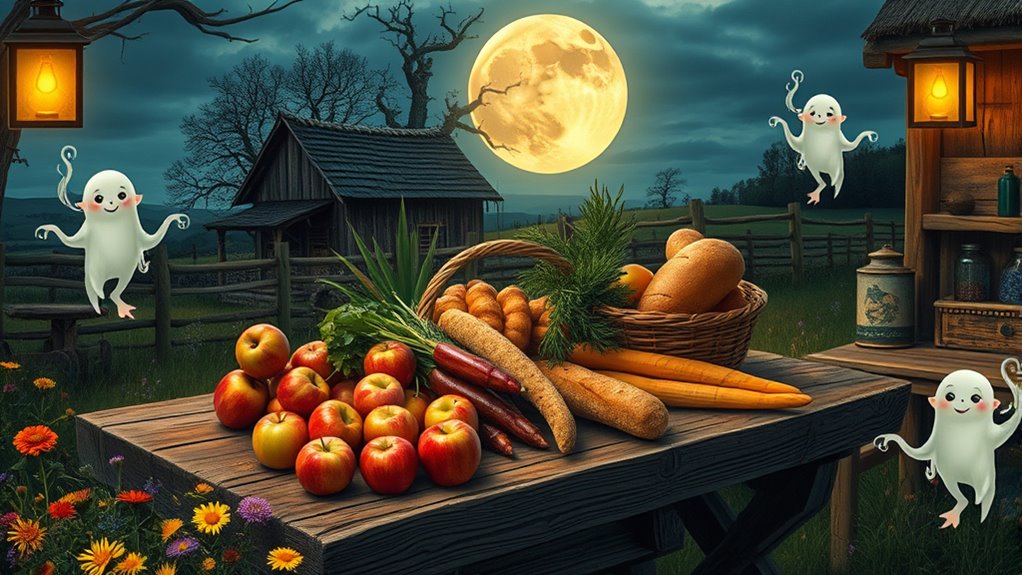
In Irish folklore, the Púca is a mysterious and mischievous spirit believed to influence the harvest season through unique customs and folk beliefs. This elusive creature is thought to play a crucial role in shaping the harvest traditions that communities uphold during this time of year. As you participate in these customs, you might notice that the púca’s share is woven into the very fabric of the celebrations, symbolizing both the spirit’s presence and the communal effort to honor it. The idea is that the púca, with its trickster nature, ensures the land’s fertility and abundance by demanding a part of the harvest, which is then shared among the community as a sign of respect.
In Irish folklore, the Púca is a mysterious and mischievous spirit believed to influence the harvest season through unique customs and folk beliefs. This elusive creature is thought to play a crucial role in shaping the harvest traditions that communities uphold during this time of year. As you participate in these customs, you might notice that the púca’s share is woven into the very fabric of the celebrations, symbolizing both the spirit’s presence and the communal effort to honor it. The idea is that the púca, with its trickster nature, ensures the land’s fertility and abundance by demanding a part of the harvest, which is then shared among the community as a sign of respect.
During harvest time, it’s common for local families to prepare special offerings that are believed to appease the púca. These offerings—often consisting of a portion of the gathered crops—are left at harvest sites or in the fields, symbolizing the púca’s share of the bounty. This act isn’t just about generosity; it’s a way to guarantee that the mischievous spirit remains content and continues to bless the land. The belief is that if the púca’s share is properly acknowledged, the spirit will protect the fields from harm and bring good fortune for future seasons. These customs serve as a reminder to respect the land and its spirits, emphasizing a harmonious relationship between humans and nature.
In some regions, communities organize harvest festivals that feature storytelling, music, and dances dedicated to the púca. These traditions often include rituals where villagers leave small tokens or food near the fields, symbolically offering the púca its share. Such acts reinforce the collective belief that the spirit’s favor is essential for a successful harvest. The púca’s share, thus, becomes more than just an offering—it represents a reciprocal bond between the land and its people, rooted in ancient folk beliefs and customs. Over generations, these practices have helped preserve the cultural significance of the harvest, emphasizing gratitude and respect for the land’s mysterious forces.
As you take part in these harvest customs, remember that they’re about more than just celebrating the bounty. They’re about honoring the unseen energies believed to influence the land, with the púca’s share symbolizing a crucial link between the community and the spirits that govern the harvest. By acknowledging the púca’s role and participating in these folk traditions, you become part of a long-standing effort to maintain balance, ensure future abundance, and keep alive the stories that connect you to Ireland’s rich cultural heritage.
Understanding the connection between folk beliefs and natural phenomena, such as the influence of spirits like the púca, highlights the importance of cultural traditions in preserving community identity and environmental harmony.
Frequently Asked Questions
The púca’s influence shaped Irish agricultural folklore by encouraging farmers to observe harvest customs that honored the spirit, believing it would bring good luck and abundant crops. You might have left offerings or performed rituals to appease the púca, ensuring its favor. These traditions reinforced community bonds and emphasized respect for nature’s spirits, deeply embedding the púca’s share into Irish farming practices and cultural beliefs about harvest prosperity.
Like different strokes for different folks, regional variations shape púca-related harvest customs across Ireland. In some areas, folks believe the púca demands offerings during harvest, while others see folklore differences that emphasize respecting the spirit in more subtle ways. These regional differences reflect local traditions and beliefs, making each community’s customs unique. So, when you celebrate the harvest, remember that local folklore influences how you honor the púca in your area.
You’ll notice that Púca symbols like carved pumpkins, dark horses, and twisted branches are often used during harvest festivals. These symbols represent the Púca’s mischievous spirit and serve as protective charms. People leave harvest offerings such as bread, apples, or small gifts alongside these symbols to honor the Púca and seek its favor. These customs help guarantee a bountiful harvest and ward off mischievous spirits during the season.
How Has Modern Society Preserved or Adapted These Folk Beliefs?
Modern society preserves and adapts folk beliefs by integrating them into local festivals, storytelling, and cultural events. You might see traditional symbols and customs celebrated during harvest festivals or shared through modern folklore, keeping the Púca’s Share alive. Communities actively use these traditions to foster cultural preservation, ensuring that old beliefs remain meaningful and relevant in today’s world, blending history with contemporary celebrations.
Are There Specific Rituals to Ward off Misfortune From the Púca?
You can ward off misfortune from the púca by using protective charms like iron or certain herbs, which are believed to repel the mischievous spirit. Ritual offerings, such as leaving small treats or symbolic items at specific places, also help appease the púca and prevent trouble. Performing these customs regularly, especially during harvest festivals, shows respect and can keep you safe from its playful or vengeful tricks.
Conclusion
As you reflect on the púca’s share, it’s clear how these traditions shape community bonds and beliefs. Imagine a small Irish village where villagers leave treats for the púca, hoping for good harvests and protection. These customs, rooted in folklore, remind you that respecting the unseen forces around us can foster harmony. Embracing these traditions keeps the rich tapestry of harvest customs alive, connecting you to centuries of folklore and shared cultural heritage.