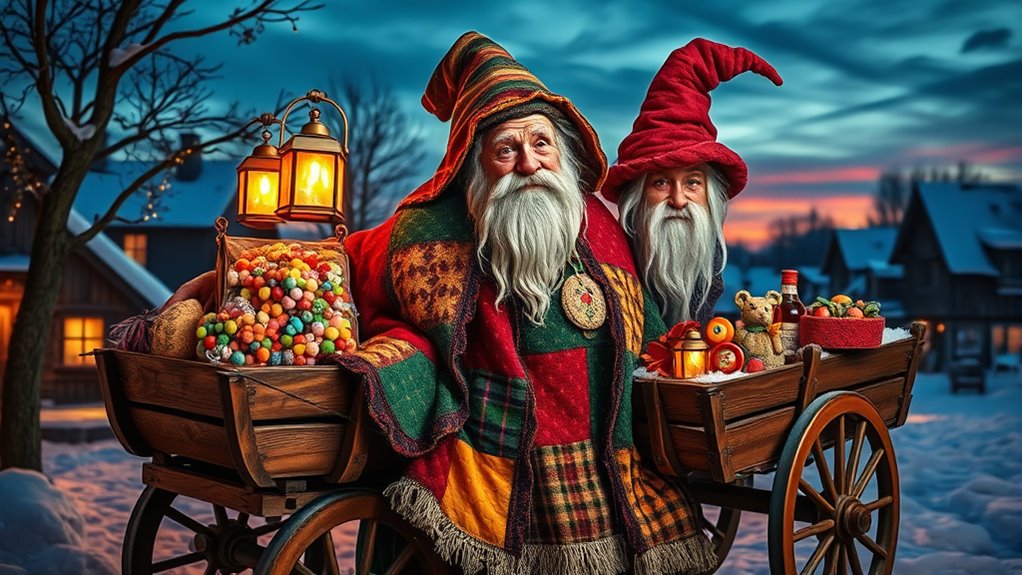
The Italian Befana is a cherished figure who visits children on Epiphany night, bringing gifts and sweets. She’s based on an old, kind witch whose story blends pagan roots with Christian traditions. Often portrayed with a pointy hat and broomstick, she fills stockings with treats. Today, celebrations include colorful parades and markets. If you want to discover how her legend has evolved and how Italians honor her now, there’s more to explore.
Key Takeaways
- The Befana is a kind-hearted witch who delivers gifts to children on Epiphany, January 6th, in Italy.
- Her legend blends pagan fertility rites and Christian stories, linked to the Roman goddess Strenia and the Wise Men’s journey.
- Modern celebrations include parades, street festivals, and children’s traditions of leaving shoes or stockings for her to fill.
- She is depicted wearing a pointy hat and cloak, often flying on a broomstick, and is celebrated through crafts, music, and storytelling.
- The Befana symbolizes Italy’s cultural heritage, emphasizing giving, community, and the magical spirit of Epiphany festivities.
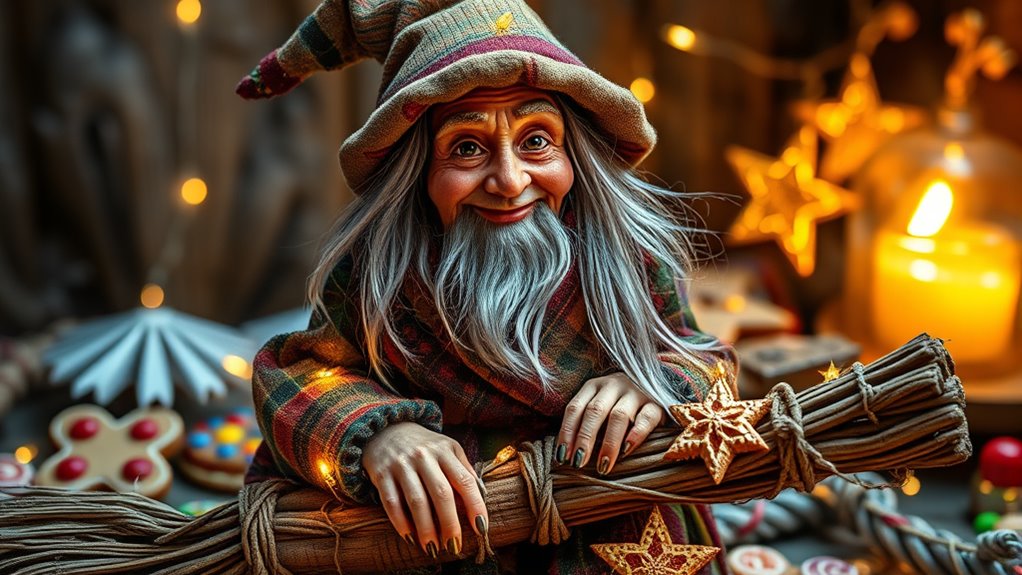
Every year on January 6th, children and adults in Italy enthusiastically await the arrival of the Befana, a legendary witch who brings gifts and treats. This tradition centers around an old, kind-hearted witch who travels through the night, filling stockings with sweets, fruit, and small presents for children who have been well-behaved. The story of the Befana is deeply rooted in Italy’s cultural history, with origins that stretch back centuries. The historical origins of the Befana blend pagan and Christian traditions, evolving from ancient fertility rites and early Christian stories. Some believe her figure is linked to the Roman goddess Strenia, associated with New Year’s blessings, while others see her as a symbol of the Epiphany, representing the Wise Men’s journey to see the newborn Jesus. Over time, her story merged with Christian narratives, transforming her into a kindly witch who visits homes on the night before Epiphany, delivering gifts in her sack. Today, these origins are celebrated with lively festivals and street parades, keeping her legend alive for new generations.
Modern celebrations of the Befana are colorful and festive, marked by community gatherings, markets, and reenactments. In towns and cities across Italy, you’ll find people dressing up as the Befana, often wearing pointy hats and flowing cloaks, as children excitedly await her arrival. Many families participate in special events, setting out shoes or stockings for her to fill overnight, just like in the old tales. In some regions, there are parades featuring elaborate floats depicting the Befana flying on her broomstick, complete with music and dancing. Children’s eyes light up when they receive their gifts, and adults enjoy reminiscing about the folklore. The tradition also extends into local crafts and markets, where artisans sell handmade dolls and decorations inspired by the Befana. Schools and community centers often organize storytelling sessions, emphasizing both the fun and the cultural significance of her legend.
Additionally, understanding the potential pitfalls of adopting new payment technologies can help communities support local artisans and markets by encouraging secure and trustworthy digital transactions during festivities. Whether through centuries-old stories or lively modern festivities, the Befana remains a cherished symbol of Italy’s rich cultural tapestry. She embodies the spirit of giving, the magic of childhood, and the blending of ancient traditions with contemporary celebrations. As you take part in the Epiphany festivities, you’ll see how her legend continues to enchant, reminding everyone of Italy’s unique ability to preserve its history while celebrating the joy of the present. The Befana’s story is a vibrant reminder of Italy’s cultural heritage and the enduring magic of traditions passed down through generations.
Frequently Asked Questions
How Did Befana Become Associated With the Epiphany?
You might find that Befana became associated with the Epiphany through historical origins rooted in Italian folklore and Christian traditions. As a symbol of cultural symbolism, she delivers gifts to children on January 6th, representing the Wise Men’s journey to visit Jesus. Over time, her story merged with religious celebrations, turning her into a beloved figure who embodies kindness and the magic of the holiday season.
Are There Regional Variations in Befana Traditions Across Italy?
You’ll find that regional customs and local folklore shape Befana traditions across Italy. In some areas, she’s celebrated with lively festivals, while others focus on quieter, family-centered rituals. For instance, in Venice, the Befana is linked to unique, historical tales, whereas in Sicily, vibrant parades highlight her festive spirit. These regional variations add depth to her story, allowing each community to honor her in a way that resonates with local culture and beliefs.
What Are the Origins of the Befana’s Broomstick?
The Befana’s broomstick stems from historical symbolism and mythical origins, representing her role as a traveler and purifier. You see, in ancient times, broomsticks symbolized cleansing and warding off evil spirits. Mythically, the broom allows her to fly swiftly through the night skies, delivering gifts. This imagery connects her to ancient traditions of spiritual journeying, blending folklore with symbolism that endures in Italian culture today.
How Do Children Prepare for Befana’s Visit?
You prepare for Befana’s visit by leaving out your shoes, often filled with traditional treats like cookies and candies, as a festive gift for her. Kids hang up stockings or clean their shoes to welcome her, hoping for small gifts or sweets in return. You might also leave a glass of wine or water for her to enjoy after her long night of flying on her broomstick, embracing the festive spirit of the holiday.
Are There Modern Celebrations or Events Honoring Befana Today?
Yes, modern celebrations of Befana are lively and festive. You can find traditional crafts and colorful decorations at souvenir markets, where locals and tourists alike gather to honor her. Events often include parades, storytelling, and children’s activities, keeping the tradition alive. Many towns host special markets selling Befana-themed souvenirs, making it a delightful experience that blends history with contemporary festivities, ensuring her legend remains a cherished part of Italian culture.
Conclusion
As you embrace the legend of La Befana, remember she’s like a gentle breeze carrying gifts and good wishes through the night. Her story connects you to centuries of tradition, reminding you that kindness and magic can brighten even the coldest winter days. So, when you see the twinkling lights and taste the sweet treats, know that her spirit is still alive, guiding you with the warmth of a holiday that feels like a cozy hug from history itself.