
Exploring the Benandanti of Italy reveals a unique tradition of shape-shifting fighters who believed they left their bodies to protect crops and communities from evil spirits. Unlike cursed monsters, they saw their transformations—often into wolves or hares—as voluntary acts driven by spiritual purpose. Their ritual practices, involving herbs, incantations, and trance states, blurred the lines between dreams and reality. Keep exploring to uncover more about how these mystical warriors shaped local folklore and beliefs.
Key Takeaways
- The Benandanti were Italian spiritual “night travelers” believed to leave their bodies in trance to protect crops.
- They assumed animal forms like wolves and hares during their sacred shape-shifting rituals.
- Their practices aimed to defend communities from witches and evil spirits, emphasizing good over malevolent forces.
- Shape-shifting was voluntary and rooted in spiritual rituals, not curses, reflecting their role as protectors.
- Their legacy highlights a unique folklore tradition where wolves symbolize spiritual warriors fighting for good.

Have you ever heard of the Benandanti, a mysterious group from Italy’s past? These individuals held secret knowledge that connected them to the domains of folklore rituals and ancient beliefs about shape-shifting. Unlike the typical werewolf lore you’re familiar with, which often emphasizes cursed transformations driven by moonlight, the Benandanti believed they were fighting for good against malevolent forces. They claimed to be able to leave their bodies during sleep and travel through the night, defending crops and communities from evil spirits and witches. This spiritual journey set them apart from other folklore rituals, which often involved elaborate ceremonies, charms, and symbols meant to ward off dark influences.
The Benandanti believed they fought for good, leaving their bodies at night to defend crops from evil spirits and witches.
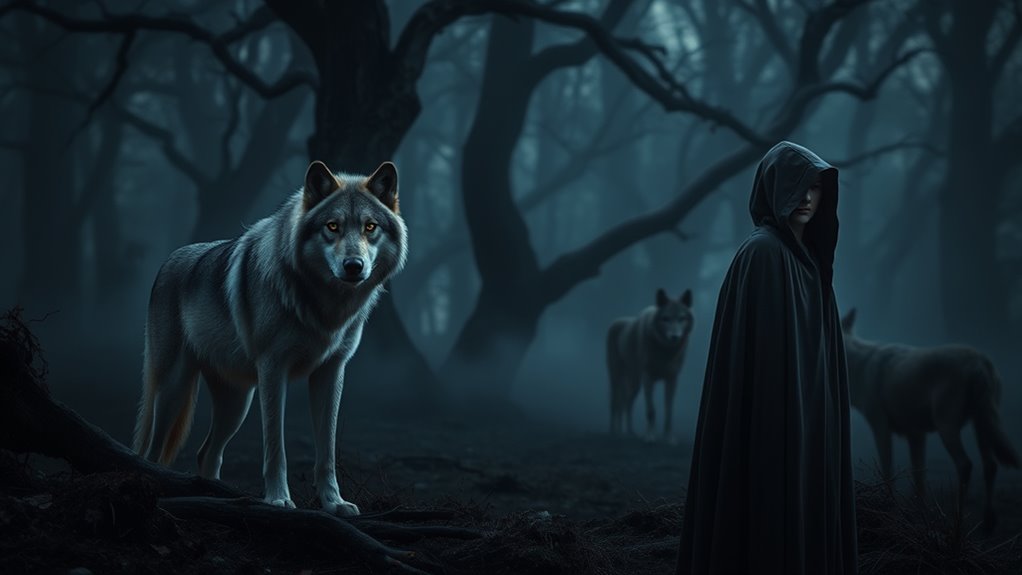
The core of their belief was that these night travelers, or “dream-shifters,” possessed special powers that allowed them to assume animal forms—most notably that of a wolf or a hare. They saw themselves as protectors, engaging in battles with witches and malevolent entities that threatened their villages. This sense of divine purpose echoes the werewolf lore, but instead of cursed transformations, the Benandanti’s shape-shifting was voluntary and tied to spiritual practice. Their rituals involved trance states, where they believed they entered altered states of consciousness to perform their nightly missions. These folklore rituals often included the use of herbs, incantations, and talismans, all designed to enhance their spiritual journeys and safeguard them from harm. Additionally, some scholars suggest that their practices may have been connected to early forms of spiritual healing and community protection, rooted in local traditions.
What’s fascinating is that the Benandanti’s practices reveal a complex view of good versus evil that’s rooted in local traditions. They didn’t see themselves as cursed monsters but as chosen defenders, engaging in sacred acts to protect their communities. Their beliefs were passed down secretly, often through oral tradition, making their rituals mysterious and elusive. They believed that during these nocturnal voyages, they could influence the physical world—bringing rain, ensuring good harvests, or warding off curses. These ideas align with folklore rituals aimed at controlling natural and supernatural forces, which was common in many agrarian societies.
In essence, the Benandanti’s story offers a unique perspective on werewolf lore and folklore rituals. It shows a culture where shape-shifting was a sacred act, a spiritual battle rather than a curse. Their practices blurred the lines between dreams, spirits, and physical reality, illustrating how folklore rituals served as a means to connect with unseen worlds. While they’re often portrayed as mysterious figures lost to history, their legacy reminds us that belief in shape-shifting and supernatural protection runs deep in human tradition, rooted in the desire to understand and influence the forces beyond our control.
Frequently Asked Questions
How Did the Benandanti Influence Italian Folklore?
You see, the benandanti shaped Italian folklore by embodying medieval superstition and rural beliefs. Their stories about magical night journeys and battles with evil spirits reinforced local traditions, blending pagan and Christian ideas. By sharing these tales, they kept alive a sense of mysticism in villages. Their influence persists today, reminding you of Italy’s rich, folkloric history rooted in rural superstitions and the mystical world.
Are There Any Modern Groups Inspired by the Benandanti?
Yes, you can find modern spiritual movements inspired by the benandanti, especially within the folklore revival scene. These groups often explore their beliefs about spirits, dreams, and shamanic practices, drawing parallels to the benandanti’s nocturnal journeys. They see themselves as keepers of ancient traditions, embracing folklore to connect with their roots and foster community. This resurgence helps preserve and reinterpret their cultural heritage in contemporary spiritual contexts.
What Symbols Are Associated With Benandanti Rituals?
You’ll notice that benandanti rituals often include witch symbols like crosses, pentagrams, and moon phases, which symbolize protection and spiritual connection. Herbal motifs are also prominent, representing healing and nature’s power. These symbols create a sacred atmosphere, emphasizing the importance of nature, fertility, and spiritual guidance in their rituals. By understanding these symbols, you can better appreciate the deep connection between the benandanti and ancient European witch traditions.
How Did the Benandanti Survive Persecution?
You survive persecution by keeping your secret rituals hidden and maintaining strong community resilience. By staying discreet about your practices, you avoid attracting suspicion, while your close-knit group supports each other through hardships. This unity helps you preserve your traditions, passing them down quietly over generations. Your resilience, combined with secrecy, guarantees your survival despite external pressures and accusations, allowing your beliefs and practices to endure in secrecy.
Are There Any Documented Sightings of Shape-Shifting Benandanti Today?
You might be intrigued by claims of modern sightings of shape-shifting Benandanti, but there’s little solid evidence to support these folklore legends. While some enthusiasts believe stories persist in local traditions, documented sightings remain unverified. The idea that Benandanti still shape-shift today is more rooted in myth and legend than reality. So, until credible evidence emerges, these tales stay in the domain of folklore rather than documented fact.
Conclusion
You might find it fascinating that only about 10% of the Benandanti were women, challenging common assumptions about gender roles in folklore. As you explore their stories of shape-shifting and woodland battles, remember that these traditions weren’t just tales—they reflected deep-rooted fears and beliefs. By understanding their unique experiences, you gain a richer perspective on Italy’s mystical past and how it shaped local culture for centuries. Keep exploring; these legends still have stories to tell.