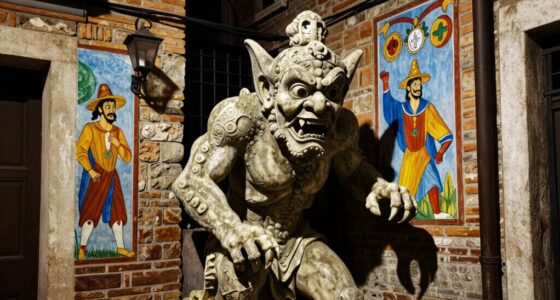
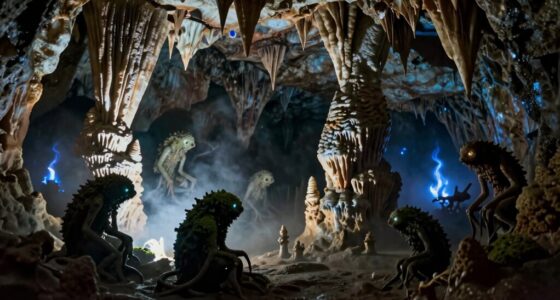
Italian folklore often links monsters to landscapes because these environments symbolize natural forces, moral lessons, and cultural identity. You’ll find mountains, lakes, and forests serving as thresholds between the known and unknown, embodying chaos, transformation, and fears. These stories turn physical landscapes into symbols of danger or divine power, reinforcing community values and boundaries. If you keep exploring, you’ll discover how these connections help shape Italy’s rich cultural traditions and collective memory.

Prime made for students and young adults
- Fast, free delivery for dorm and study essentials
- Prime Video and Amazon Music included
- Member-only deals
Key Takeaways
- Italian folklore associates monsters with landscapes like mountains, forests, and lakes, symbolizing chaos, transformation, and the unknown.
- These environments serve as thresholds between the known and mysterious, reflecting cultural fears and moral lessons.
- Legends explain natural phenomena and moral concepts through monsters rooted in specific landscapes, reinforcing cultural identity.
- Landscapes in Italian stories symbolize divine power, danger, and subconscious depths, reinforcing social boundaries and caution.
- Monstrous links to landscapes help communities preserve traditions, reinforce morals, and shape collective identity across generations.

Italy’s rich folklore is filled with creatures that both fascinate and terrify, reflecting centuries of tradition and storytelling. When you explore why these monsters are so often linked to specific landscapes, you’ll see it’s rooted in their mythical origins and cultural symbolism. These stories weren’t just random tales; they served to explain the unknown, protect communities, and reinforce cultural values. Over generations, the landscape itself became intertwined with these myths, creating a vivid tapestry where monsters embody the fears and morals of local communities.
Italian monsters are deeply connected to landscapes, embodying fears, morals, and cultural stories rooted in their mythical origins.
You might notice that many Italian monsters are tightly connected to mountains, forests, or lakes—settings that seem remote and mysterious. These environments are seen as thresholds between the known and the unknown, so it makes sense that they become the homes or battlegrounds of supernatural creatures. For example, the legend of the *Lupo Mannaro* (werewolf) often emerges from forested areas, symbolizing primal fears of nature’s wildness and the danger lurking just beyond civilization’s reach. These landscapes aren’t just backdrops but serve as living symbols of chaos, transformation, and the untamed forces that humans seek to understand or control.
Additionally, the environments themselves often carry symbolic significance, which deepens their connection to folklore and enhances the meaning behind these monstrous associations. The mythical origins of these monsters often tie back to ancient beliefs and stories meant to explain natural phenomena or moral lessons. A mountain might be seen as a sacred place, but if it’s associated with a monster, it also becomes a symbol of divine punishment or mysterious power. Lakes or caves, similarly, are believed to harbor supernatural beings, representing the depths of the unknown or the subconscious. These creatures often symbolize collective fears—death, disease, or moral failings—and their association with specific landscapes turns those fears into tangible threats rooted in the environment. Understanding these symbolic landscapes helps us grasp how cultural storytelling shapes perceptions of the land and its hidden dangers. Moreover, such landscapes often serve as cultural memory, preserving stories that reinforce community identities and values through generations.
Cultural symbolism plays a big role in why these monsters are linked to particular terrains. They serve as cautionary tales, warning people about venturing into forbidden or dangerous areas. The monsters become embodiments of the risks associated with the natural world—reminding you to respect the land and heed local customs. These stories also reinforce social cohesion by establishing boundaries: stay away from certain places, or face the wrath of monsters that embody the land’s hidden dangers. In this way, the monsters aren’t just scary stories but meaningful symbols rooted in the landscape’s mythical origins and cultural symbolism, shaping how communities relate to their environment and their history.
In essence, Italian folklore’s monsters are inseparable from their landscapes because they are born from the land’s mythical roots and serve as powerful symbols within the culture. They remind you that the environment isn’t just scenery but a living part of the stories and fears that define a community’s identity.
As an affiliate, we earn on qualifying purchases.
Frequently Asked Questions
How Do Italian Monsters Reflect Regional Cultural Differences?
You see, Italian monsters reflect regional cultural differences through their mythical symbolism, embodying local fears, values, and history. In each area, these creatures symbolize unique cultural identities, like the regional struggles or moral lessons. By personifying specific landscapes or societal issues, these monsters create a vivid connection between geography and cultural expression, helping communities preserve their traditions and share their stories across generations.
Are Italian Landscape-Themed Monsters Unique to Specific Regions?
Yes, Italian landscape-themed monsters are unique to specific regions, reflecting local myths and landscape symbolism. You’ll find that these mythical creature classifications often embody the characteristics of their environments, like mountain or coastal monsters. These regional monsters serve as symbolic guardians or warnings, tying their identity closely to local landscapes. By exploring these unique creatures, you gain insight into how geography influences cultural storytelling across Italy.
What Symbols Do Italian Monsters Represent in Local Traditions?
You might think Italian monsters are just scary stories, but they often symbolize deeper meanings through mythical symbolism and cultural allegories. These creatures represent natural forces, fears, or moral lessons rooted in local traditions. For example, some monsters embody the unpredictability of nature, while others warn against societal dangers. By understanding these symbols, you gain insight into Italy’s rich cultural history and the lessons these legends aim to convey.
How Have Italian Monsters Evolved Over Centuries?
Over centuries, Italian monsters have evolved from mythical origins rooted in ancient beliefs into symbols of moral lessons or societal fears. You see this in folklore symbolism, where monsters embody warnings or societal taboos, adapting to cultural changes. As stories are passed down, these creatures gain new traits, reflecting contemporary anxieties while maintaining their mythic essence. This evolution keeps Italian folklore vibrant and relevant across generations.
Do Italian Folklore Monsters Influence Modern Italian Art?
You might not realize it, but Italian folklore monsters deeply influence modern Italian art. Their mythical symbolism sparks artists to explore eerie, mysterious themes, creating enthralling reinterpretations. These creatures evoke emotion and intrigue, inspiring contemporary works that blend tradition with innovation. By weaving ancient legends into modern art, Italy keeps its folklore alive, inviting you to experience a world where mythical monsters continue to shape artistic expression and cultural identity.
As an affiliate, we earn on qualifying purchases.
Conclusion
You now see how Italian folklore ties monsters to landscapes, shaping your imagination with every mountain, forest, and lake. These stories remind you that “the devil is in the details,” turning ordinary places into mysterious domains. As you explore Italy’s wild terrains, remember that legends breathe life into the land—inviting you to discover the magic hidden beneath the surface. Embrace the mystery, and let these stories deepen your connection to Italy’s enchanting landscapes.
stories about Italian landscapes and monsters
As an affiliate, we earn on qualifying purchases.
As an affiliate, we earn on qualifying purchases.
cultural folklore collections Italy
As an affiliate, we earn on qualifying purchases.
As an affiliate, we earn on qualifying purchases.
Columbus Day / Indigenous Peoples' Day Picks
long weekend sales
As an affiliate, we earn on qualifying purchases.