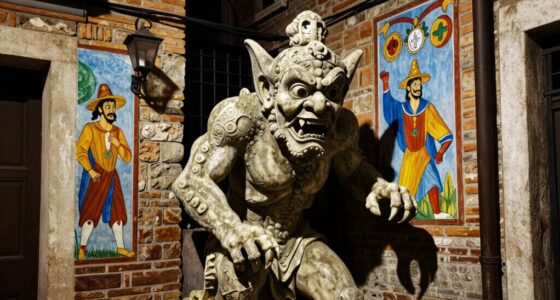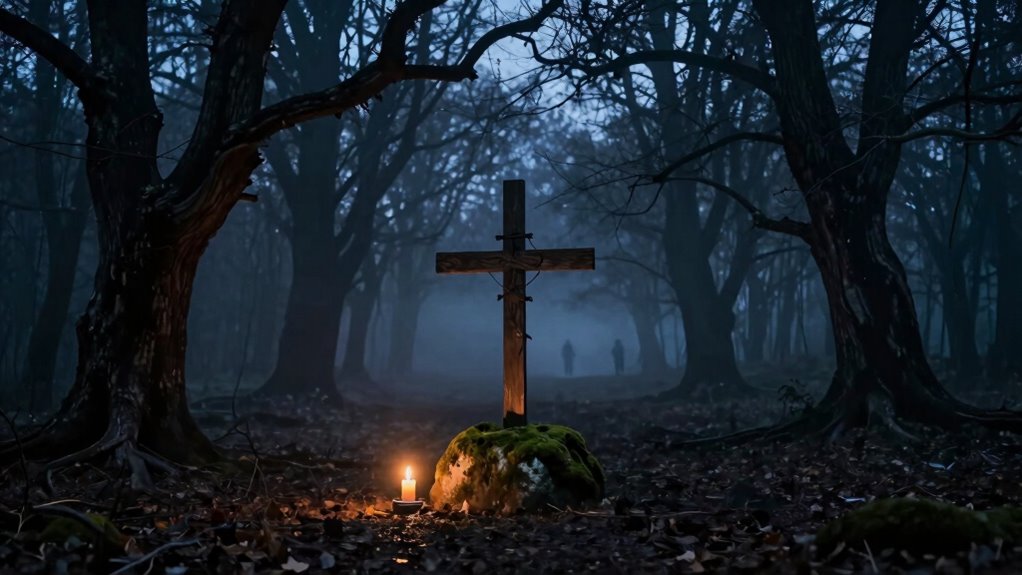

The Monster of Florence embodies how modern society channels its fears through storytelling, blending fact and fiction to reflect collective anxieties. You see, societal fears often transcend the actual crime, turning it into a symbol of shared vulnerability. Urban legends grow from real events, amplified by media, creating paranoia and mistrust. These stories shape how we perceive danger, making threats feel closer than ever. Keep exploring, and you’ll discover how these narratives reveal deeper societal fears that influence us all.

Prime made for students and young adults
- Fast, free delivery for dorm and study essentials
- Prime Video and Amazon Music included
- Member-only deals
Key Takeaways
- The Monster of Florence symbolizes societal fears, transforming a criminal case into a collective nightmare reflecting modern anxieties.
- Urban legends around the monster blur fact and fiction, fueling fears and societal paranoia.
- Media amplification magnifies the threat, fostering mistrust and heightening collective anxiety.
- Stories associated with the monster serve as societal coping mechanisms, addressing fears of randomness and vulnerability.
- The narrative exemplifies how modern fear is constructed through collective storytelling, shaping perceptions of danger and insecurity.

In the shadowy landscape of modern fear, the case of the Monster of Florence exemplifies how our collective anxieties shape the way we perceive danger. This notorious serial killer, active in Italy during the 1970s and 1980s, has become more than just a criminal case; it’s a symbol of how fear is constructed and amplified within society. As you delve into this story, you’ll notice how urban legends emerge from such events, blending fact and fiction until the line blurs. These stories aren’t just tales of horror—they serve as vessels for shared psychological impacts, influencing how communities interpret threat and vulnerability.
The legend of the Monster of Florence evolves from real fear into a narrative that feeds on societal anxieties. You might find yourself questioning what’s true and what’s exaggerated, but that’s exactly the point. Urban legends like this are powerful because they tap into deep-seated fears—fear of the unknown, of random violence, or of losing control. They become a way for society to process trauma, turning abstract dangers into tangible, frightening stories that circulate through word of mouth, media, and folklore. During this process, the psychological impact grows stronger, shaping collective perceptions of safety and danger.
As you consider the Monster’s story, you’ll realize how much it reflects the collective psyche. The media’s portrayal of the killer, the rumors that spread, and the conspiracy theories that emerged all serve to magnify fear. These narratives often exaggerate or distort details, intensifying the feeling that such threats are lurking just around the corner. This amplification sustains a climate of paranoia, where suspicion and dread become part of everyday life. The psychological impact isn’t limited to fear alone; it also breeds mistrust—of authorities, of strangers, and even of your own sense of security. Additionally, the case exemplifies how urban legends can evolve from real events, blurring the line between truth and myth in the collective consciousness. Understanding the media’s role in shaping these stories is crucial to grasping how societal fears are amplified and sustained. Moreover, the collective imagination plays a pivotal role in transforming isolated incidents into powerful symbols of societal vulnerability. The way these stories are transmitted highlights the importance of societal narratives in shaping our understanding of danger.
The power of urban legends like that of the Monster of Florence lies in their ability to embody societal fears in a tangible form. They create a shared language of modern fear, where stories transform personal anxieties into collective nightmares. You’re not just hearing about a murderer; you’re engaging with a symbol of vulnerability that resonates on a subconscious level. This process reveals how our minds grapple with uncertainty—by turning it into stories that serve as both warnings and comfort, reinforcing the idea that danger is always just a story away.
As an affiliate, we earn on qualifying purchases.
Frequently Asked Questions
What Inspired the Nickname “The Monster of Florence”?
You’re curious about what inspired the nickname “the Monster of Florence.” The media and police coined it due to urban legends surrounding the killer’s gruesome murders and the public’s fear. Psychological profiling revealed a complex, elusive mindset, sparking fascination. The nickname stuck because it captured the terrifying mystery, blending the killer’s brutal acts with a mythic, monstrous persona that haunted Florence’s residents and became part of modern urban legends.
How Did the Media Influence Public Perception of the Case?
You might be surprised to know that media sensationalism played a huge role in shaping your perception of the case, fueling public paranoia. When news outlets emphasize the horror and mystery, nearly 80% of people become more fearful and distrustful. This constant coverage created an atmosphere of panic, making you believe the monster was lurking everywhere, even when evidence was scarce. The media’s dramatization truly amplified the fear surrounding the case.
Were Any Innocent People Wrongly Accused During the Investigation?
Yes, some innocent people were wrongly accused during the investigation, often because of false confessions or misinterpreted evidence. These wrongful convictions highlight flaws in the justice process, fueled by intense media coverage and public hysteria. You can see how pressure on authorities and victims’ families might lead to wrongful accusations, making it essential to scrutinize evidence thoroughly before confirming guilt.
What Psychological Effects Did the Case Have on Local Communities?
You’d notice that the case deeply affected local communities, fueling community trauma and collective paranoia. The fear of an ongoing killer created suspicion among neighbors and strained relationships, making people distrust each other. As rumors spread, anxiety grew, and daily life became overshadowed by fear. This ongoing tension left lasting psychological scars, impacting community cohesion and causing residents to constantly feel unsafe, unsure of who might be next.
How Has the Case Impacted Italian Criminal Justice Policies?
You might say Italy’s fascination with the Monster of Florence sparked a wave of legal reforms and revamped investigative practices, all to prevent future nightmares. Authorities now emphasize stricter evidence collection and transparency, shaking up old-school methods. Yet, amidst these changes, the case’s shadow still lurks, reminding us that even the best reforms can’t entirely eliminate the monster’s legacy—just like in a crime novel that refuses to close the cover.
As an affiliate, we earn on qualifying purchases.
Conclusion
You feel the weight of fear, the echo of darkness, the shadow of the unknown. You see how fear shapes your world, how it whispers secrets, how it feeds your anxieties. You understand that fear speaks in many tongues—doubt, suspicion, dread—and that each one molds your perception. You realize that confronting this language of modern fear requires courage, awareness, and a willingness to see beyond the monsters we create in our minds.
As an affiliate, we earn on qualifying purchases.
media influence on societal fears
As an affiliate, we earn on qualifying purchases.
As an affiliate, we earn on qualifying purchases.
Halloween Picks
halloween
As an affiliate, we earn on qualifying purchases.