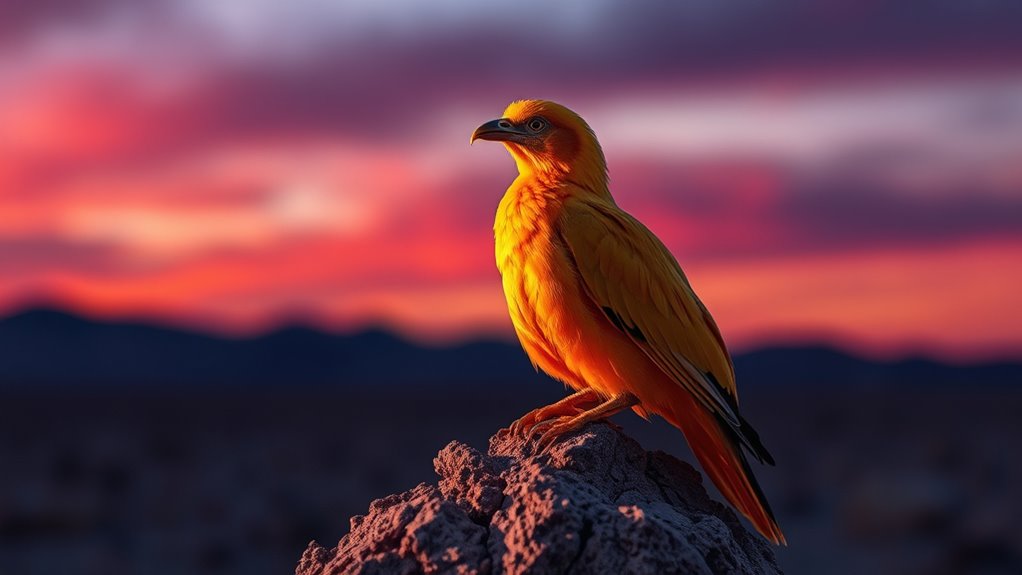

The Alicanto is a legendary Chilean bird famed for its glowing, gold feathers that light up the dark desert skies of the Atacama. Rooted in indigenous stories, it symbolizes hope, prosperity, and guidance for local people, especially miners and hunters seeking wealth. Its shimmering feathers catch the night moonlight, making it a mystical icon representing the connection between nature, fortune, and spiritual strength. Want to uncover more about this enchanting creature’s fascinating lore and cultural significance?
Key Takeaways
- The Alicanto is a mythical Chilean bird known for its luminous, golden feathers that illuminate the dark desert skies.
- Rooted in indigenous folklore, it symbolizes hope, guidance, and prosperity for the people of northern Chile.
- It feeds on gold and minerals, representing the pursuit of wealth and the dangers of greed.
- The bird’s shimmering appearance makes it a cultural icon inspiring art, stories, and songs in Chile.
- Sightings of the Alicanto are considered messages from the universe, linking natural mysticism and cultural identity.

Have you ever heard of the Alicanto, the legendary bird said to illuminate the dark skies of the Chilean desert? This mythical creature has captivated local folklore for centuries, its origins shrouded in myth and mystery. According to legend, the Alicanto’s mythical origins trace back to indigenous stories that blend elements of the natural world with spiritual symbolism. Some tales suggest that it was created by ancient gods or spirits to serve as a guardian or a divine messenger, while others believe it emerged from the desert’s mystical energy itself. Regardless of its origins, the Alicanto embodies a powerful cultural symbolism for the people of northern Chile. It’s seen as a symbol of hope, guidance, and the promise of wealth, often associated with the mineral-rich landscapes of the Atacama Desert. Its shimmering, golden feathers represent prosperity and abundance, making it a creature that’s both revered and feared.
The Alicanto’s cultural symbolism runs deep within local traditions and stories. To the indigenous Atacameños and other desert communities, spotting this bird isn’t just a visual marvel; it’s a sign from the universe, a message promising fortune or warning of danger. Because it’s said to feed on gold and other minerals, the Alicanto also symbolizes the elusive pursuit of wealth and the dangers that come with greed. In many stories, hunters or miners seek the bird, hoping to find its treasure-filled feathers, though few ever succeed. Its luminous appearance in the night sky makes it a mystical beacon for those charting the harsh desert landscape, often serving as a reminder of the divine forces believed to govern their world. Interestingly, the Alicanto’s genetic variation is what gives it its unique, luminous feathers that catch the light in the desert night, making it a fascinating subject of local lore. Over time, the Alicanto has become a cultural icon, inspiring local art, folklore, and even modern interpretations of Chilean identity. Its image appears in paintings, stories, and songs, reinforcing its significance as a symbol of resilience and hope amid the desert’s harsh conditions.
The myth of the Alicanto persists because it resonates with the human desire for prosperity and guidance. Its mythical origins and layered cultural symbolism continue to shape how people see the desert and their place within it. Whether seen as a spiritual guardian or a creature of legend, the Alicanto embodies the mystical connection between nature, wealth, and cultural identity. It reminds you that even in the darkest, most desolate places, there’s hope and beauty — a shining light that beckons, much like the mythical bird itself.
Frequently Asked Questions
Are Alicantos Real or Mythical Creatures?
You might think alicantos are mythical creatures, but they’re deeply rooted in Chilean folklore as cultural symbolism. While there’s no scientific proof of their existence, stories depict these birds as magical beings that guide miners to gold. Their shimmering feathers and mysterious nature make them seem like mythical creatures, but for locals, they represent hope and good fortune, blending legend with cultural significance in Chilean tradition.
What Is the Origin of the Alicanto Legend?
Like a whisper from the Andes, the alicanto legend stems from mythical origins rooted in Chilean culture. You learn that it symbolizes wealth and guidance, often linked to the land’s mineral riches. This creature’s story reflects cultural symbolism, representing hope and prosperity amid the harsh landscape. Its shimmering feathers evoke the country’s gold deposits, making the alicanto a cherished myth that has been passed down through generations.
How Do Locals Traditionally View the Alicanto?
Locals see the alicanto as a symbol of good fortune and hope, deeply rooted in local folklore. You might hear stories where the bird’s golden glow represents prosperity, guiding miners and dreamers alike. It holds cultural symbolism as a mystical creature that brings luck and wealth, inspiring respect and awe. Many believe that spotting an alicanto is a sign of upcoming success, making it a cherished part of their cultural heritage.
Are There Any Known Sightings of the Alicanto Today?
You won’t find confirmed urban legends or wildlife sightings of the alicanto today, as it remains a legendary creature rather than a confirmed species. People still share stories about glimpses of this mythical bird, but no verified sightings have been documented. Its reputation endures through folklore and cultural tales, keeping the mystique alive even though no concrete evidence exists. This legendary status fuels curiosity and keeps the alicanto a symbol of Chilean myth.
How Has the Myth of the Alicanto Influenced Chilean Culture?
You see the alicanto’s mythical symbolism reflecting Chilean dreams of fortune and hope, deeply woven into cultural significance. Its legend inspires artists, writers, and villagers alike, representing the pursuit of wealth and the allure of the unknown. While it’s a myth, it fuels national identity and resilience, reminding you that even in darkness, beauty and prosperity can shine—a symbol that guides and motivates through Chile’s rich cultural tapestry.
Conclusion
As you imagine the Alicanto’s shimmering feathers, you see its beauty and mystery, its legend and lore. You hear the tales of its gold, its guiding light, its elusive presence. You feel the wonder it sparks, the fascination it ignites, the stories it leaves behind. The Alicanto isn’t just a bird; it’s a symbol of Chile’s rich history, a beacon of hope and myth wrapped in feathers and flight, forever enthralling your imagination.