

The Almas is a legendary creature from Mongolian folklore, often described as a hairy, ape-like being that roams remote mountain regions. Witnesses report fleeting glimpses, strange footprints, and eerie vocalizations in rugged terrains. These stories serve as cautionary tales and reflect the region’s mysterious wilderness. Despite modern efforts using cameras and recordings, no conclusive proof has been found. If you explore further, you’ll discover more about this intriguing symbol of primal wilderness.
Key Takeaways
- The Almas is a legendary, elusive, ape-like creature rooted in Mongolian nomadic folklore, often linked to wilderness mysteries.
- Sightings include strange footprints and fleeting glimpses in remote mountainous and forested areas of Mongolia.
- Folklore portrays the Almas as shy, intelligent, and symbolic of primal wilderness, serving as cautionary stories.
- Modern efforts use trail cameras and audio recordings to document the creature, though no conclusive evidence exists.
- The legend reflects human fascination with unknown creatures, possibly representing relics of prehistoric ancestors or undiscovered primates.
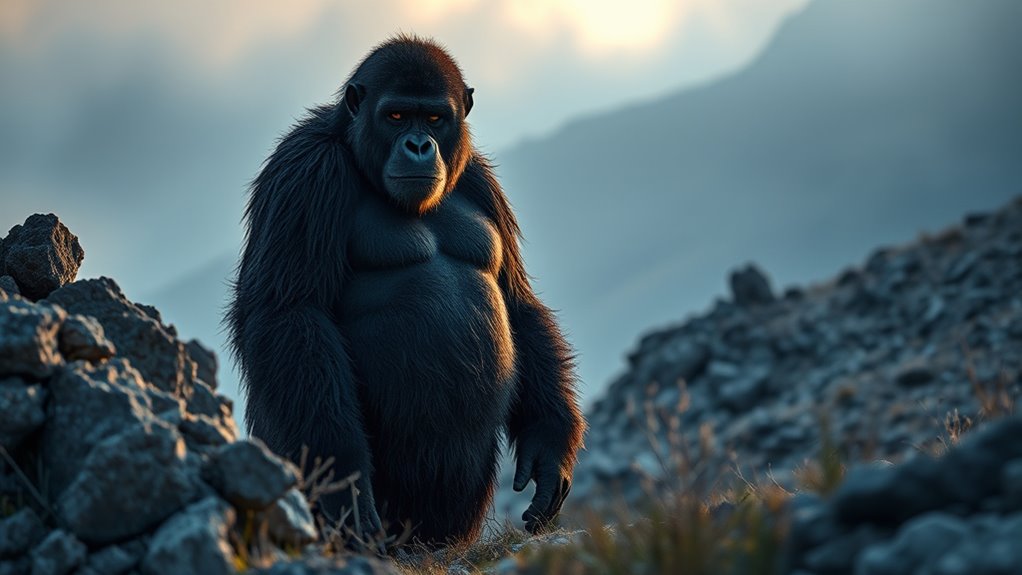
Have you ever wondered if the legendary Mongolian wild man, known as the Almas, truly exists? This mysterious creature has captured the imagination of explorers, locals, and cryptid enthusiasts for generations. Reports of cryptid sightings across the remote mountains and forests of Mongolia fuel the curiosity surrounding the Almas, making it one of Asia’s most enduring folklore legends. Many believe that these sightings stem from actual encounters with a creature resembling a primitive human, while others see them as part of cultural storytelling that has been passed down through centuries. The folklore origins of the Almas are deeply rooted in the nomadic tribes’ traditions, where tales of a hairy, ape-like being serve as cautionary stories or explanations for unexplained noises and strange footprints in the wilderness. These stories often depict the Almas as elusive, shy, and sometimes even intelligent, leading some to speculate that it could be a surviving relic of a prehistoric ancestor or an undiscovered primate species.
Throughout history, villagers and explorers have reported strange tracks, unusual vocalizations, and fleeting glimpses of a large, hairy figure lurking in the mountains. These cryptid sightings tend to occur in rugged terrain, where the dense forests and high elevations make it easier for the creature to evade human discovery. While definitive evidence remains elusive, the consistency of these reports keeps the legend alive. Many local traditions describe the Almas as a creature possessing human-like intelligence, capable of avoiding detection, and sometimes even exhibiting signs of curiosity toward humans. This blend of folklore origins and cryptid sightings weaves a compelling narrative that captures the imagination of those interested in the unknown. Additionally, modern technology such as trail cameras and audio recordings has been used in attempts to document these elusive beings, but conclusive proof remains absent.
Despite the lack of scientific proof, the stories persist, partly because they resonate with the deep-seated human fascination with the mysterious and the wild. Some researchers suggest that the Almas might be a cultural manifestation—an allegory for the untamed wilderness or a symbol of humanity’s primal past. Others remain skeptical, arguing that many sightings can be attributed to misidentification of bears, mountain goats, or other large animals. Yet, the legend endures because it taps into the universal human desire for discovery and the thrill of encountering something truly unknown. Whether the Almas is a real creature or a folkloric relic, it continues to inspire stories, folklore origins, and cryptid sightings that remind us how much of the world remains unexplored and mysterious.
Frequently Asked Questions
Are There Recent Sightings of the Almas?
Recent cryptid sightings of the almas continue to surface, fueling local folklore origins and intrigue. You might hear stories from remote Mongolian villages claiming encounters with this elusive wild man, described as a hairy, humanoid creature. These accounts often blend tradition with mystery, keeping the legend alive. While no scientific evidence confirms these sightings, they persist in folklore, inspiring explorers and cryptid enthusiasts to seek out the almas in its natural habitats.
What Evidence Supports the Existence of the Almas?
Think of the Almas as a shadow cast by folklore traditions, whispering of something unseen. Scientific skepticism questions any concrete evidence, yet some footprints, hair samples, and eyewitness accounts hint at a possible wild inhabitant. While these clues spark curiosity, they lack definitive proof. You’re left to weigh tradition’s stories against scientific rigor, recognizing that the Almas remains an intriguing mystery lurking between myth and reality.
How Do Local Legends Describe the Almas?
You hear that local legends describe the almas as a mysterious, hairy creature with mythical origins, often seen roaming remote mountain areas. These stories emphasize its elusive nature and spiritual significance, portraying it as a symbol of wilderness and ancient traditions. According to locals, encounters with the almas carry cultural importance, reflecting a deep connection with nature and ancestral beliefs, making it a revered and intriguing part of regional folklore.
Have Any Researchers Studied Almas Habitats?
Did you know researchers have studied almas habitats extensively? They focus on habitat preferences and ecological niches, often finding almas prefer remote mountain ranges and dense forests. These environments provide cover and abundant food sources, making them ideal for survival. By analyzing these habitats, researchers aim to understand their behavior and distribution better, though concrete evidence remains elusive. Your curiosity about almas habitats could lead to uncovering fascinating ecological insights.
What Are the Differences Between Almas and Bigfoot?
You’ll find that almas and Bigfoot differ in their origins and appearances within mythical creatures and folklore. Almas, rooted in Mongolian folklore, are often described as hairy, human-like beings living in remote mountain regions. Bigfoot, from North American legends, is also a large, ape-like creature but with different cultural stories and sightings. While both are elusive, folklore origins shape how each creature is perceived and studied, highlighting regional differences in mythical creature tales.
Conclusion
So, next time you hear about the Almas, remember they might just be real, elusive creatures lurking in Mongolia’s wilds. Some dismiss them as myths, but many believe they’re ancient survivors, hiding from humans. Whether you think they’re legends or living beings, their mystery sparks our curiosity. Maybe, just maybe, exploring these stories reminds us how much we still don’t know about our world’s hidden wonders. Keep questioning—adventure and discovery await!