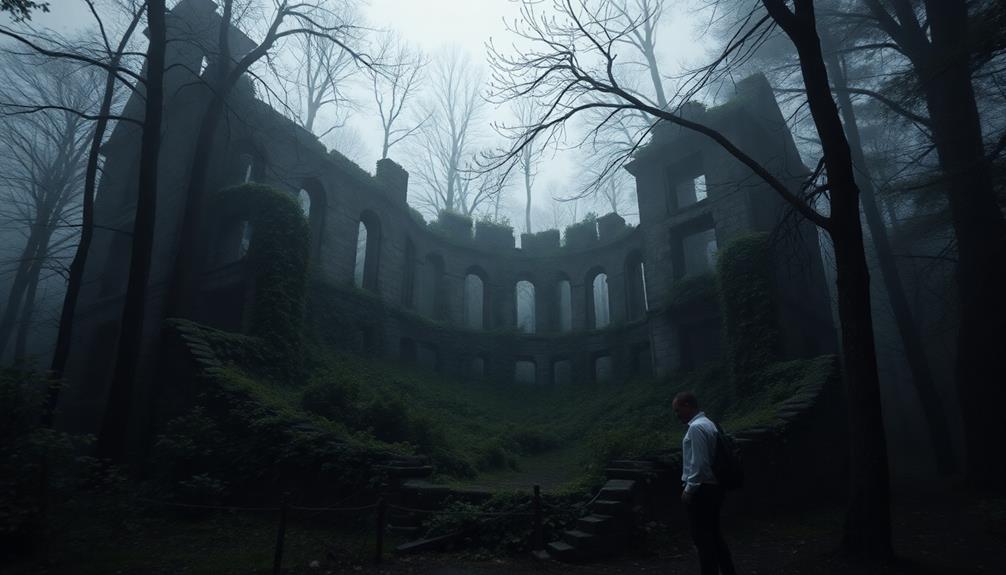
The Leipzig Werl Wolf legend stems from medieval fears and local folklore, where sightings of a monstrous wolf-like creature fueled suspicion and paranoia. During those times, stories of werewolf trials led to accusations of lycanthropy, witchcraft, and heresy, often resulting in persecution and executions. These events reflect societal anxieties about the supernatural and chaos. If you explore further, you’ll uncover how these ancient fears shaped the region’s history and the enduring myth of the Werl Wolf.

Get school and study supplies delivered free — and shop member deals
- Fast, free delivery on millions of items
- Access to Prime Big Deal Days deals on October 6–7
- Prime Video, Amazon Music and more included
Key Takeaways
- The Leipzig Werl Wolf legend dates back to medieval times, symbolizing fears of werewolves and supernatural threats in the region.
- The creature’s sightings contributed to local fears, fueling accusations during the European werewolf trials.
- Werewolf trials in Germany, including Leipzig, involved accusations of lycanthropy leading to persecution and executions.
- The legend reflects broader medieval fears linked to witchcraft, heresy, and societal paranoia.
- The Werl Wolf remains a prominent symbol in European folklore, illustrating historical fears and the influence of myth on society.
Have you ever heard of the Leipzig Werl Wolf? If not, you’re missing out on a story that taps into the mysteries of cryptid sightings and medieval folklore. The Leipzig Werl Wolf is a fascinating legend rooted in centuries-old tales of a creature that haunted the region, sparking fear and intrigue among villagers. Back in medieval times, stories of monstrous beings like wolves or wolf-like creatures often appeared in local folklore. These tales served as warnings or explanations for strange occurrences, and the Werl Wolf was no exception. Sightings of this creature fueled rumors that it was either a cursed animal or a supernatural entity, blending reality with myth.
In medieval folklore, wolves were commonly associated with danger, chaos, and sometimes even witchcraft. When reports of a strange, wolf-like beast started circulating around Leipzig, it quickly became a cause for alarm. People claimed to have seen a large, feral creature prowling the outskirts of the city, often described as larger than any ordinary wolf, with glowing eyes and a menacing presence. These cryptid sightings weren’t just isolated stories; they became part of local legend, fueling fears of a beast that might be a werewolf or some cursed creature. The legend persisted for generations, with villagers telling tales of encounters and strange howls echoing through the night. Such stories persisted long enough that the creature became intertwined with the identity of the region.
The legend of the Leipzig Werl Wolf also played a role in the context of the infamous werewolf trials that swept through parts of Europe during the late Middle Ages and early modern period. Accusations of lycanthropy often led to brutal persecutions, with people accused of being wolves or wolf-people facing accusations of witchcraft and heresy. In some cases, these trials resulted in confessions, executions, or exile. The lore surrounding the Werl Wolf, consequently, isn’t just about a mysterious beast but is also embedded in a history of fear, superstition, and social paranoia. Interestingly, modern interpretations of such legends often consider the influence of emotional intelligence and societal fears in shaping these stories. Today, the story continues to fascinate, blending the allure of medieval folklore with the modern curiosity about cryptids. Whether the Werl Wolf was a real creature or merely a myth, it remains an enduring symbol of the fears and legends that shaped medieval European culture.
As an affiliate, we earn on qualifying purchases.
Frequently Asked Questions
What Was the Historical Context of the Leipzig Werl Wolf Trials?
You should understand that the Leipzig Werl Wolf trials occurred during a time when medieval superstition heavily influenced society. Accusations of witchcraft and werewolf sightings spread fear, leading authorities to conduct trials like these. People believed in supernatural threats, and those accused faced harsh punishments. The trials reflect the widespread paranoia and desire to eliminate perceived evil, rooted in the medieval mindset that linked werewolf behavior to witchcraft accusations.
How Did Local Communities Respond to the Accusations?
You find that local communities often reacted with fear and suspicion to the accusations, leading to a mix of panic and hysteria. Public opinion was largely sympathetic toward the victims, but some residents believed in the existence of werewolves, fueling further hysteria. Community reactions ranged from support for harsh punishments to attempts at understanding or dismissing the accusations. Overall, the trials intensified fears and shaped how people responded to the events.
Were Any Confessions Obtained Under Torture During the Trials?
Like a shadow lurking in the dark, torture methods were used to extract confessions, and yes, some were obtained under these grim techniques. You learn that the confession validity often came into question, as fear and pain clouded the truth. Torture methods ranged from physical torment to psychological pressure, making it hard to trust the authenticity of the confessions. These methods cast doubt over the entire trial process, leaving many to question what was real.
What Was the Legal Process for Prosecuting Alleged Werewolves?
You’d find that the legal procedures for prosecuting alleged werewolves resembled witch hunts, often relying on accusations rather than concrete evidence. Authorities conducted trials where confessions might be coerced through torture, and suspects were subjected to interrogations based on superstition. The process lacked fairness, emphasizing spectral evidence and hysteria, leading to executions or punishments. This pattern reflects how fear and legal procedures intertwined during these notorious werewolf prosecutions.
Are There Modern Interpretations or Recoveries of the Evidence?
Today, modern skepticism and forensic advancements have led to new interpretations of alleged werewolf evidence. You see, experts now analyze historical reports with scientific rigor, often debunking claims as misunderstandings or superstitions. Modern techniques like DNA testing and forensic analysis help recover more accurate evidence, showing that many supposed werewolf sightings were actually medical conditions or animal attacks, not supernatural phenomena.
As an affiliate, we earn on qualifying purchases.
Conclusion
As you close this chapter, remember the Leipzig Werl Wolf as a symbol of fears lurking beneath society’s surface—an elusive shadow that whispers of darkness and misunderstanding. Like the wolf’s silent gaze in the moonlight, the trials remind you that true monsters often dwell in our fears and ignorance. Embrace curiosity over suspicion, and let the myth inspire you to seek truth beyond the shadows, where light can finally cast out the darkness.
As an affiliate, we earn on qualifying purchases.
As an affiliate, we earn on qualifying purchases.
Halloween Picks
halloween
As an affiliate, we earn on qualifying purchases.