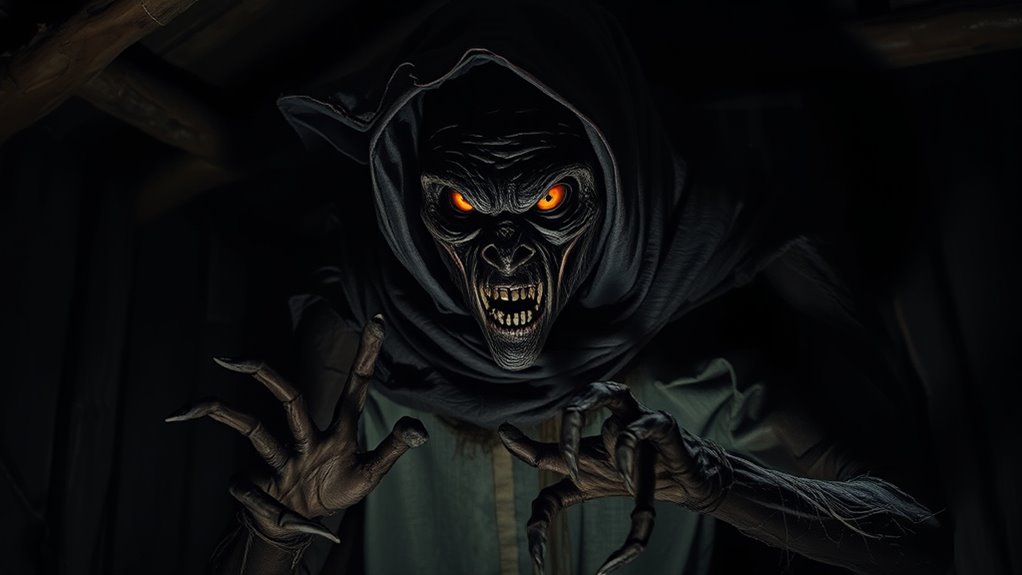

The Batibat is an Ilocano nightmare spirit believed to haunt abandoned, decaying trees. It appears as a large, grotesque woman and is known to cause terrifying dreams, sleep paralysis, and sudden death for those near its domain. Legend warns that disturbing its resting place invites its wrath, which manifests through nightmares and physical discomfort. To understand more about this vengeful spirit and how to protect yourself, exploring its origins and cultural significance can provide deeper insights.
Key Takeaways
- The Batibat is a vengeful, shape-shifting spirit from Ilocano folklore, inhabiting old, abandoned trees.
- It manifests as a large, grotesque woman, often associated with decaying or hollowed trees.
- Legends warn that disturbing its resting place can provoke nightmares, sleep paralysis, or sudden death.
- The spirit symbolizes the importance of respecting nature and traditional boundaries, serving as a moral lesson.
- Rituals and prayers are used to ward off the Batibat’s wrath and honor spiritual and natural respect.
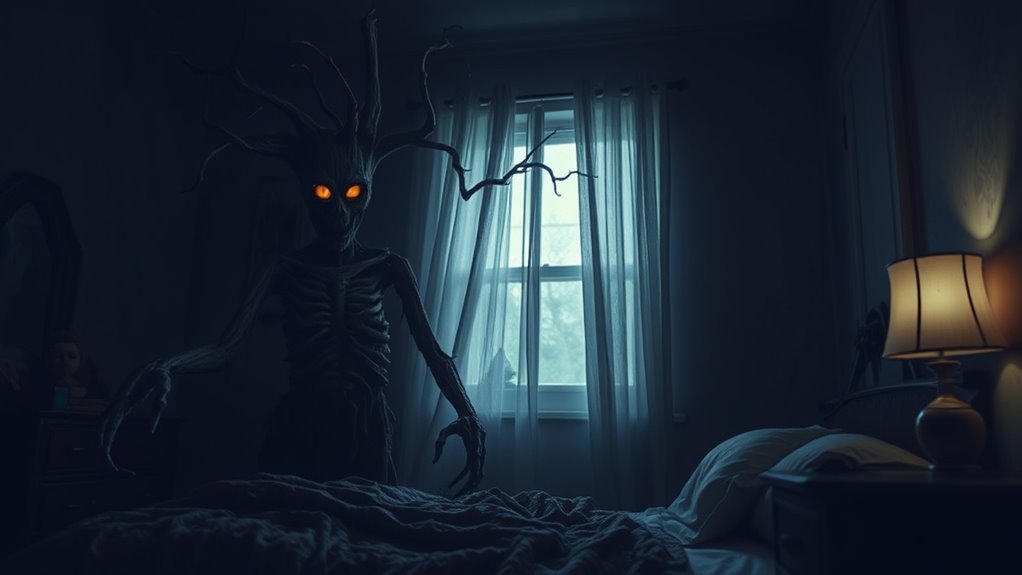
The Batibat Nightmare Spirit is a terrifying entity rooted in Filipino folklore that preys on sleep and peace. Its legend origins trace back to the Ilocano people, where it’s believed to be a vengeful, shape-shifting spirit that inhabits old, abandoned trees or rests in secluded places. According to local stories, the Batibat manifests as a large, grotesque woman with a menacing presence. The legend warns that if you sleep near a decaying or hollowed tree, you risk awakening this restless spirit. Its story has been passed down through generations, serving as a cautionary tale to respect the natural environment and avoid unnecessary risks in remote areas. This folklore underscores the importance of respecting natural environments and understanding the spiritual significance attributed to them.
Culturally, the Batibat holds a significant place in Ilocano tradition as both a supernatural threat and a moral lesson. It symbolizes the consequences of neglecting respect for nature, reminding people to be mindful of their surroundings. In many stories, the Batibat is associated with wrath and punishment, punishing those who disrespect or disturb its resting place. Its presence in folklore underscores the importance of reverence for ancestral lands and the natural world, emphasizing that spirits are closely linked to the environment. Over time, the legend has evolved to serve as a warning against greed, careless behavior, or venturing into forbidden areas, especially at night.
You should understand that the fear surrounding the Batibat isn’t just about the supernatural; it’s intertwined with cultural values. The spirit is believed to cause nightmares, sleep paralysis, or even sudden death when disturbed. People have shared stories of waking up unable to move, feeling an overwhelming weight pressing down on them—an experience attributed to the Batibat’s wrath. These tales are often reinforced by rituals and traditional practices to ward off evil spirits, like placing protective objects near beds or offering prayers before sleep.
In essence, the legend origins and cultural significance of the Batibat reinforce its role as a cautionary figure in Ilocano folklore. It embodies the community’s respect for nature and the spiritual sphere, warning against arrogance or carelessness. Its stories serve as a reminder that unseen forces can influence everyday life, especially when you ignore the boundaries set by tradition and the environment. By understanding the Batibat’s roots and its cultural meaning, you gain insight into how folklore shapes values and behaviors, helping preserve respect for the natural and spiritual worlds in Filipino culture.
Frequently Asked Questions
How Do You Ward off a Batibat Attack?
To ward off a Batibat attack, you should perform incantation rituals and spiritual cleansing. Start by reciting protective spells or prayers to invoke positive energy and banish negative spirits. Use sacred herbs or holy water during your spiritual cleansing to purify your space and mind. Maintain a calm, focused mindset, and avoid fear, as it can attract the spirit. Consistently practicing these rituals helps keep the Batibat away.
Are There Any Cultural Rituals to Prevent Batibat Possession?
You can prevent batibat possession through traditional cleansing rituals and ritual offerings. For example, a community might perform a cleansing ceremony using sacred herbs and offer food or incense to appease spirits. These practices help purify the space and ward off malevolent entities. By actively engaging in such rituals, you reinforce spiritual protection and demonstrate respect for local traditions, reducing the likelihood of a batibat attack during vulnerable times.
Can Batibat Spirits Be Considered Protectors?
You might see batibat spirits as protectors, especially when considering batibat symbolism, which can represent both danger and guardianship. In spirit interactions, some believe these spirits can offer protection if approached with respect, acting as guardians rather than threats. However, it’s essential to understand cultural nuances, as batibat can also symbolize warnings or cautionary tales, reminding you to honor traditions and avoid provoking these powerful spirits.
What Are the Signs of a Batibat Haunting?
You might notice a Batibat haunting through sudden, intense nightmares and a feeling of overwhelming dread, especially upon waking. These signs align with Batibat symbolism rooted in Ilocano folklore origins, where the spirit embodies sleep paralysis and terror. You could also experience unexplained noises or sensations of being held down, which are common indicators that a Batibat spirit is present and influencing your dreams and sleep.
Are Batibat Stories Unique to Ilocano Folklore?
Yes, batibat stories are unique to Ilocano folklore, though variations of similar spirits appear in other Southeast Asian cultures. You’ll find that the batibat origins are deeply rooted in local beliefs about spirits inhabiting trees and causing nightmares. These folklore variations often emphasize the spirit’s connection to sleep paralysis and night terrors, making the batibat a distinctive part of Ilocano cultural identity and mythology.
Conclusion
As you gently drift into sleep, remember the Batibat’s quiet presence reminds us to cherish peaceful nights. Though she’s a whisper of old stories, she encourages you to nurture restful dreams and embrace the calm that comes with each new dawn. By honoring these gentle tales, you invite harmony into your nights, turning shadows into soft whispers of tradition. Rest easy, knowing that every night holds the promise of serenity and sweet slumber.