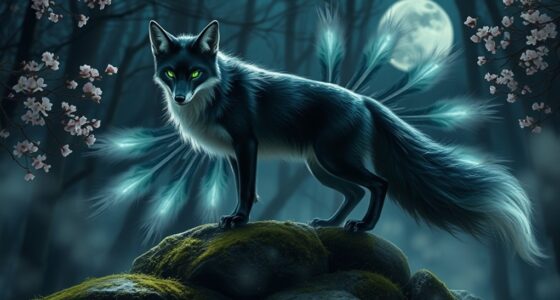
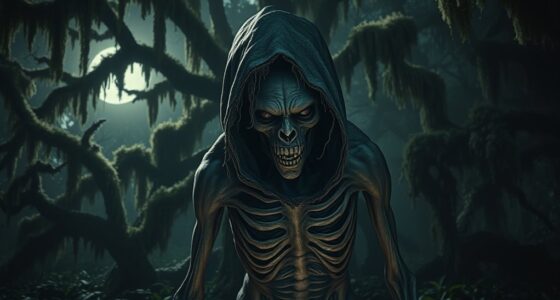
In Scandinavian folklore, Hedgehog Boys and Huldra are enchanting forest creatures embodying nature’s magic. You’ll find them as playful, mischievous spirits or alluring women with cow tails, representing resilience, curiosity, and natural harmony. These beings serve as protectors and tricksters, symbolizing the importance of respecting and preserving the woods. Exploring their stories reveals a deep connection to the land’s spiritual energy—stay curious to uncover the secrets behind these mythical guardians.
Key Takeaways
- Hedgehog Boys are playful, mischievous forest spirits symbolizing resilience and ecological balance in Scandinavian folklore.
- Huldra appears as an alluring woman with a cow’s tail, embodying lure, caution, and respect for woodland mysteries.
- Both creatures serve as mythic messengers, connecting humans with nature and emphasizing the importance of forest preservation.
- They symbolize the vitality and resilience of forests, highlighting small beings’ roles in maintaining ecological harmony.
- These stories promote reverence for forests, fostering cultural respect and spiritual connection to Scandinavia’s natural landscapes.

Have you ever wondered what mysterious creatures roam the dense Scandinavian forests? Among these enigmatic beings, the Hedgehog Boys and the Huldra stand out, each with deep roots in local legends and cultural tales. Their origins are steeped in myth, blending folklore with the natural world, which gives them a mythical significance that’s hard to ignore. These stories have been passed down through generations, shaping how people understand and respect the forests they inhabit. The Hedgehog Boys, often depicted as playful, mischievous spirits, are believed to be forest guardians or tricksters. Their mythical origins link them to ancient stories where they serve as messengers between humans and nature, embodying qualities like cunning and curiosity. The Huldra, on the other hand, is a more mysterious figure—an alluring forest spirit often portrayed as a beautiful woman with a cow’s tail. Her mythological background is rich with themes of seduction and caution, warning travelers to remain respectful of the woodland domain. Despite their mythic roots, these creatures hold ecological significance, representing the importance of preserving natural harmony in Scandinavian forests. The stories of the Huldra and Hedgehog Boys serve as cultural reminders of nature’s delicate balance, emphasizing that humans should coexist peacefully with their environment. The Hedgehog Boys, for example, symbolize the resilience and adaptability of forest creatures, reminding us that even the smallest beings play vital roles in the ecosystem. They are thought to protect the forest’s secrets and encourage children and adults alike to appreciate the wilderness’ hidden magic. Meanwhile, the Huldra embodies the forest’s mystery and vitality, acting as a symbol of nature’s resilience and the importance of respecting the land. Her presence in folklore highlights the ecological significance of the forests as living, breathing entities, not just resources. These stories serve a dual purpose: to entertain and to educate about the environment’s importance. The mythical origins of these creatures link them to ancient beliefs that the forest itself is alive, deserving of reverence and care. Additionally, the connection between cultural stories and spiritual energy emphasizes the deep-rooted reverence humans have for nature and its unseen forces. Today, they continue to inspire respect for Scandinavian forests, reminding us that these woods are more than just trees and wildlife—they are habitats filled with stories, spirits, and ecological treasures that deserve protection. Whether viewed through the lens of myth or ecology, the Hedgehog Boys and Huldra symbolize the deep connection between cultural heritage and the natural world, urging us to cherish and safeguard these mysterious, vital landscapes.
Frequently Asked Questions
Are Hedgehog Boys Based on Real Scandinavian Folklore?
Yes, hedgehog boys are based on Scandinavian folklore adaptations, blending mythical symbolism with local legends. You’ll find these characters inspired by stories where animals embody human traits, representing nature’s mysterious and protective qualities. They serve as folklore symbols of resilience and innocence. These adaptations bring traditional myths to life, allowing you to explore Scandinavian cultural heritage through imaginative, folkloric storytelling that highlights the enchanting connection between humans and mythical forest creatures.
What Is the Origin of the Huldra Legend?
You might think the Huldra legend is purely mythical, but its roots trace back to ancient Scandinavian folklore. The myth likely evolved from early beliefs about forest spirits and nature’s power, blending pagan traditions with local stories. Over time, the folklore evolved into the mysterious Huldra, a forest creature symbolizing nature’s allure and danger. Its origins reveal how mythic tales adapt, reflecting cultural values and environmental connections.
Do These Creatures Have Any Connection to Modern Scandinavian Culture?
You’ll find that these creatures influence modern Scandinavian culture through festival traditions and pop culture. People celebrate folklore by incorporating Huldra and hedgehog imagery into festivals, costumes, and art. Contemporary pop culture also keeps these legends alive through movies, books, and TV shows. So, these mythical beings continue to inspire, shape, and add a mystical touch to everyday life and cultural events in Scandinavia today.
Are There Any Similar Creatures in Other Nordic Countries?
You’ll find similar mythical hybrids and forest spirits across Nordic countries. In Finland, the haltija watches over nature, much like Scandinavian forest spirits, with stories whispering through pine forests. Icelandic elves, or huldufólk, blend into rocky landscapes as secretive guardians. These beings paint a vivid picture of Nordic folklore, blending human and magical traits, reminding you of the enchanting, mysterious creatures that inhabit the wild, ancient forests of the North.
How Do Scandinavian Forest Creatures Influence Local Traditions?
You’ll find that Scandinavian forest creatures deeply influence local traditions through mythical symbolism and folklore festivals. These beings, like the Huldra or Hedgehog Boys, embody nature’s mysteries, inspiring stories and rituals that honor the forest’s magic. During festivals, communities celebrate these creatures, reinforcing cultural identity and respect for nature. Their presence in folklore keeps traditions alive, fostering a sense of wonder and connection to the natural world.
Conclusion
So next time you wander through a Scandinavian forest, keep your eyes peeled—you might just catch a glimpse of a hedgehog boy or a huldra hiding behind the trees. These enchanting creatures remind us there’s magic lurking in the woods, if you’re willing to believe. Isn’t it exciting to think that stories like these aren’t just fairy tales but hints of the mysteries waiting in nature’s shadows? Who knows what secrets the forest still holds?