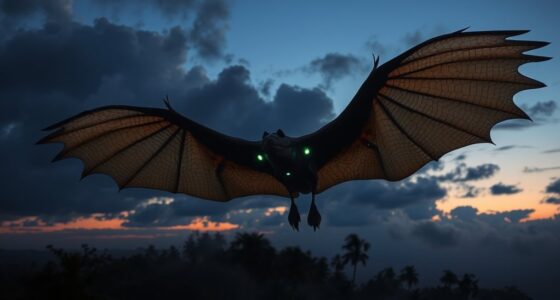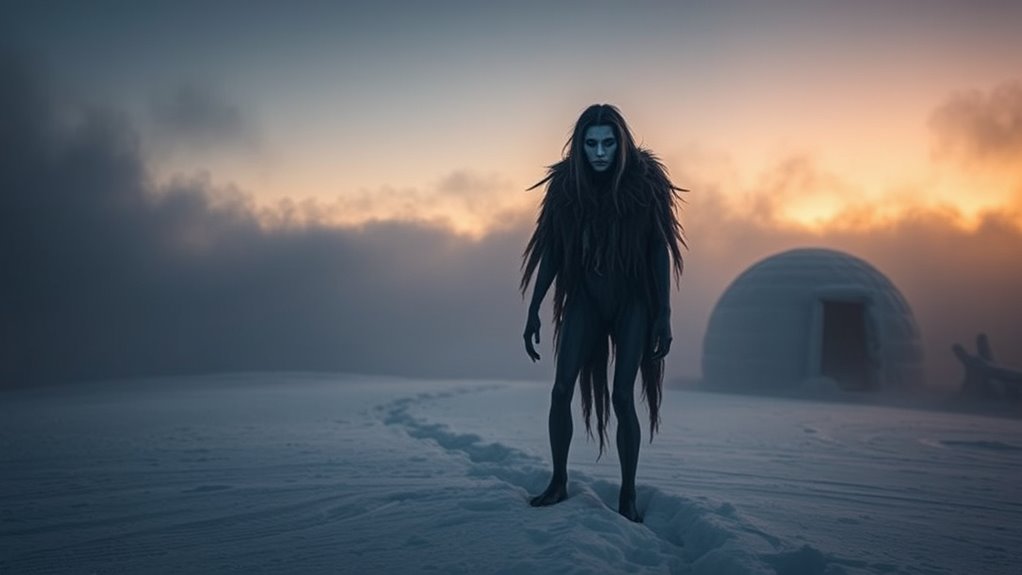

The Ijiraq is a mystical shape-shifter from Inuit folklore that secretly lives in the Arctic snow. It often appears as a human, animal, or even an environment, making it hard to spot. Its main purpose is to abduct children and keep them lost in the wilderness, feeding on their innocence and fear. These stories warn communities of unseen dangers in the icy landscape. If you want to understand this creature’s true significance, there’s more to uncover.
Key Takeaways
- The Ijiraq is a shape-shifting creature from Inuit folklore that abducts children in Arctic regions.
- It can transform into humans, animals, or environmental forms, making it elusive and difficult to identify.
- Its primary motive is to keep children lost in the wilderness, feeding on their fear and innocence.
- The legend serves as a warning to children and communities about the dangers of the Arctic environment.
- The Ijiraq symbolizes unseen threats, embodying fear and caution in Inuit cultural traditions.

Have you ever heard of the Ijiraq, a mysterious shape-shifter from Inuit folklore known for stealing children? This creature is one of the most intriguing mythical creatures in folklore legends, embodying both fear and fascination. The Ijiraq is said to be a cunning, elusive being that can shift forms, blending seamlessly into the snowy Arctic landscape. Its primary purpose, according to legends, is to abduct children, luring them away into the wilderness where they can never be found again. This chilling tale serves as a cautionary story for parents and communities, warning children to stay close to home and avoid wandering off alone.
In Inuit stories, the Ijiraq is often described as a shape-shifter that can imitate humans, animals, or even the natural environment itself. Its ability to change form makes it incredibly difficult to identify, which adds to its terrifying reputation. The creature’s motives are not entirely malicious; some folklore legends portray it as a guardian of certain sacred sites or a creature that tests humans’ wisdom and vigilance. However, the common theme remains that the Ijiraq preys on children, stealing them away to keep them forever lost in the icy wilderness. This act of kidnapping is often seen as a way for the creature to preserve its own existence, feeding off the fear and innocence of its victims.
The stories surrounding the Ijiraq serve as a reflection of the harsh realities faced by Arctic communities, where dangers lurk in the unforgiving environment. These legends act as warnings to children, urging them to stay close to their families and respect the natural world. The creature’s ability to disguise itself makes it a perfect symbol of the unknown and the unseen threats lurking in the wilderness. For those who believe in these folklore legends, the Ijiraq is not just a myth but a reminder of the importance of caution and awareness in a land where danger can take many forms. Additionally, some stories suggest that the Ijiraq’s presence is linked to cultural preservation and the need to pass down traditional knowledge to younger generations. Its story has persisted through generations, reminding everyone that sometimes, the most frightening threats are those we cannot see or easily understand. Ultimately, the Ijiraq embodies the mysterious power of folklore legends and the enduring human need to make sense of the dangers encountered in the wild, icy landscapes of the Arctic.
Frequently Asked Questions
Are There Modern Sightings or Encounters With the Ijiraq?
You might hear whispers of recent urban legends or modern folklore about encounters with the Ijiraq, but there’s no concrete evidence. Some say locals still tell stories of mysterious figures lurking near the Arctic, especially when children go missing. These tales persist in communities, fueling fears and curiosity. While no verified sightings exist, the legend continues to haunt the imagination, blending ancient myth with contemporary storytelling, keeping the legend alive today.
How Do Inuit Communities Traditionally Protect Children From the Ijiraq?
You protect children by using protective talismans, which serve as spiritual shields against the Ijiraq, and by participating in community rituals that reinforce collective safety. While the threat is mythic, these traditions foster unity and vigilance, blending superstition with cultural bonds. These practices, rooted in Inuit belief, help keep children safe by reminding everyone of shared responsibility and spiritual safeguards against unseen dangers.
What Are the Origins and History of the Ijiraq Legend?
You should know that the legend of the ijiraq has mythical origins rooted in Inuit storytelling, symbolizing fears and dangers in the harsh Arctic environment. This myth holds cultural significance, serving as a cautionary tale to protect children and reinforce community values. Over generations, the ijiraq story evolved, blending spiritual beliefs with practical lessons, making it a crucial part of Inuit cultural heritage and storytelling traditions.
Are There Similar Shape-Shifting Legends in Other Indigenous Cultures?
Yes, you’ll find similar mythical creatures across many indigenous cultures, embodying powerful cultural symbolism. For instance, Native American legends include shape-shifters like skinwalkers, while Australian Aboriginal stories speak of mimic spirits. These beings often represent lessons, fears, or spiritual truths, revealing deep cultural values. By exploring these stories, you gain insight into how different societies use mythical creatures to explain the unknown and preserve their cultural identity.
How Has the Ijiraq Myth Influenced Inuit Art and Storytelling?
You see the Ijiraq myth deeply influencing Inuit art and storytelling through spiritual symbolism and artistic representations. For example, artists create carvings and paintings depicting the Ijiraq as a mysterious figure, emphasizing themes of caution and respect for nature. These works help pass down stories, reminding communities of cultural values while inspiring modern interpretations. This myth fosters a rich connection between spiritual beliefs and visual storytelling in Inuit culture.
Conclusion
As you close this story, remember the ijiraq as a shadow lurking behind the veil of innocence. It symbolized the fragile boundary between safety and danger, truth and illusion. When children disappear, it’s like the light inside them is stolen, leaving only echoes of what once was. Be vigilant, for sometimes the greatest threats hide behind familiar faces, reminding us that even hope can be masked by darkness. Stay watchful, and trust your instincts.