The Jiangshi, known as the Chinese hopping vampire, is a spooky creature from Chinese folklore that moves by hopping with outstretched arms. It looks stiff, jerky, and unnatural, creating a chilling sight that signals danger. Rooted in beliefs about spirits and reanimation, it symbolizes death and disrespect for the dead. Typically portrayed with talismans and traditional costumes, the Jiangshi has become a fascinating cultural icon—if you keep exploring, you’ll uncover more about its eerie origins and significance.
Key Takeaways
- The Jiangshi is a reanimated corpse from Chinese folklore that moves by hopping with stiff, jerky motions.
- It is often depicted with greenish skin, Taoist talismans, and traditional clothing, symbolizing death and spiritual beliefs.
- Rooted in Chinese mythology, it represents consequences of disrespecting the dead or improper burial practices.
- In popular culture, the Jiangshi appears in stories, films, and folklore as both a villain and a cultural icon.
- Modern adaptations often portray it with humorous or heroic traits, blending ancient myths with contemporary entertainment.
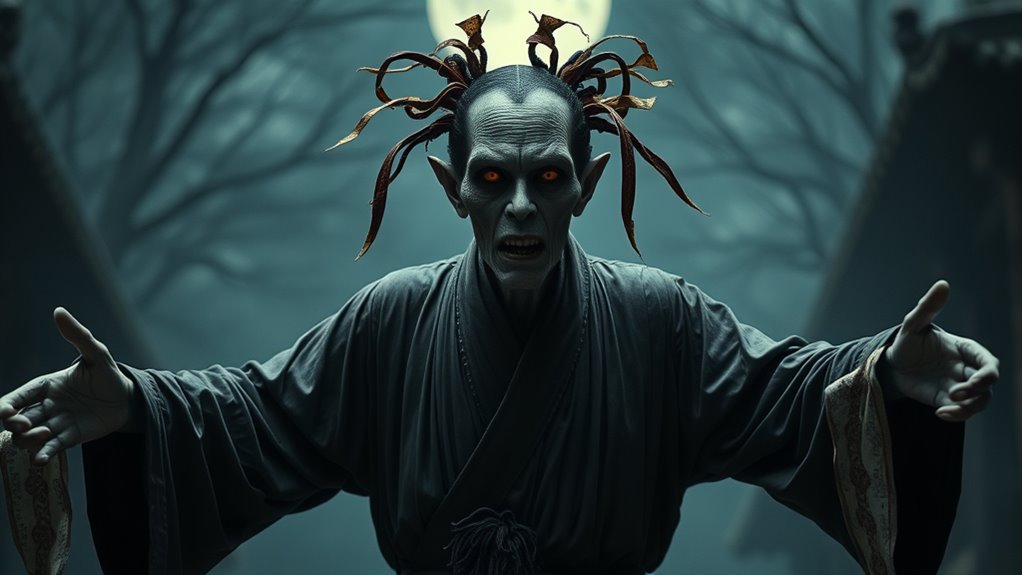
The Jiangshi, often called the Chinese hopping vampire, is a terrifying creature from Chinese folklore that traps the imagination with its eerie, stiff movements. Unlike Western vampires, which often glide silently and seductively, the Jiangshi moves by hopping with outstretched arms, creating a chilling visual that instantly signals danger. This creature’s origins are rooted deeply in vampire mythology, where the undead are portrayed as revenants that drain life force rather than just blood. However, the Jiangshi’s unique physical traits and behaviors set it apart, making it a distinct figure within the broader vampire mythos. Its stiff, jerky motions and stiff posture evoke a sense of unnaturalness, reinforcing its status as a creature of death and reanimation. You might find it unsettling to think about an undead being that is so different from its Western counterparts, yet it shares the common theme of the undead rising from the grave to disturb the living. Additionally, cultural symbolism such as Taoist talismans and traditional costumes are often incorporated into its depiction, emphasizing its connection to Chinese spiritual beliefs.
Cultural representations of the Jiangshi are abundant in Chinese literature, movies, and folklore, where it often appears as both a villain and a symbol of death’s inevitability. In traditional stories, it’s depicted as a reanimated corpse that has no control over its actions, often driven by a desire to feed on the life essence of the living. These stories serve as cautionary tales, warning people about improper burial practices or disrespecting the dead. Over time, however, the Jiangshi has been adapted into popular culture, transforming from a frightening myth into a creature of entertainment. Films and television shows portray it with exaggerated features—flashing greenish skin, talisman charms on its forehead, and sometimes humorous or even heroic qualities. These cultural representations have helped embed the Jiangshi into the collective consciousness, making it a symbol of Chinese supernatural folklore that resonates beyond traditional storytelling.
You might notice that, in modern depictions, the Jiangshi often appears alongside elements of Chinese cultural symbolism, such as Taoist talismans and traditional costumes. These details highlight the creature’s roots in Chinese beliefs about spirits and the afterlife. By integrating these cultural elements, creators reinforce the myth’s significance within Chinese society, while also making it accessible to global audiences. The Jiangshi’s enduring presence in popular culture underscores its role as a bridge between ancient beliefs and contemporary storytelling. Whether as a terrifying villain or a humorous character, the Jiangshi continues to capture the imagination, representing a fascinating blend of vampire mythology and rich cultural representations that reflect China’s unique approach to death, spirits, and the supernatural.
Top picks for "jiangshi chinese hopp"
Open Amazon search results for this keyword.
As an affiliate, we earn on qualifying purchases.
Frequently Asked Questions
What Is the Origin of the Jiangshi Myth?
You should know that the Jiangshi myth originates from Chinese folklore, with vampiric origins dating back centuries. It was believed that restless or improperly buried spirits could become these creatures, hopping to seek out life force. The myth likely developed to explain death and supernatural fears, blending Taoist rituals and cultural beliefs. Today, it remains a fascinating symbol of Chinese supernatural folklore, embodying fears of the afterlife and spiritual unrest.
Are There Real-Life Jiangshi Sightings?
Imagine chasing shadows in a moonlit alley—that’s how urban legends like jiangshi sightings feel. While many believe these tales stem from folklore origins, there’s no solid proof of real-life sightings. People have reported strange figures, but skeptics see them as stories passed down through generations. So, you can enjoy the eerie thrill, knowing the jiangshi remains a haunting legend rather than a creature seen in the flesh.
How Do Jiangshi Differ From Western Vampires?
You’ll notice that jiangshi differ from western vampires mainly in cultural symbolism and folklore origins. Jiangshi are rooted in Chinese folklore, symbolizing death and spiritual fears, while western vampires often embody themes of immortality and seduction. Unlike vampires, jiangshi hop around stiffly, are usually reanimated corpses, and feed on life force or qi. Their unique characteristics reflect cultural beliefs about death, spirits, and morality, setting them apart from western vampire legends.
Can Jiangshi Be Defeated or Repelled?
Yes, you can defeat or repel a jiangshi by exploiting its vulnerabilities rooted in folklore defenses. Using talismans, especially with Chinese characters, can ward it off. Placing mirrors nearby can also reflect its spirit, while garlic or other strong odors may deter it. Additionally, sunlight weakens the jiangshi, so exposing it to daylight can neutralize it. These methods align with traditional vampire vulnerabilities and folklore defenses.
Are Jiangshi Featured in Modern Media or Pop Culture?
You’ll find Jiangshi featured quite often in modern media and pop culture references. Movies, TV shows, and video games incorporate them for their spooky appeal, blending traditional legends with contemporary storytelling. You might see them in horror films or animated series, where they’re often depicted with unique traits and abilities. These modern adaptations keep the myth alive, making Jiangshi a fascinating part of pop culture worldwide.
Conclusion
You can’t help but feel the eerie dance of the jiangshi, a creature caught between life and death like a puppet on invisible strings. Its stiff, hopping steps echo through the shadows, a haunting melody of ancient fears. As you ponder its silent vigil, remember—this vampire isn’t just a myth, but a mirror reflecting our deepest anxieties. The jiangshi reminds us that sometimes, what lurks in darkness is a story waiting to be awakened.