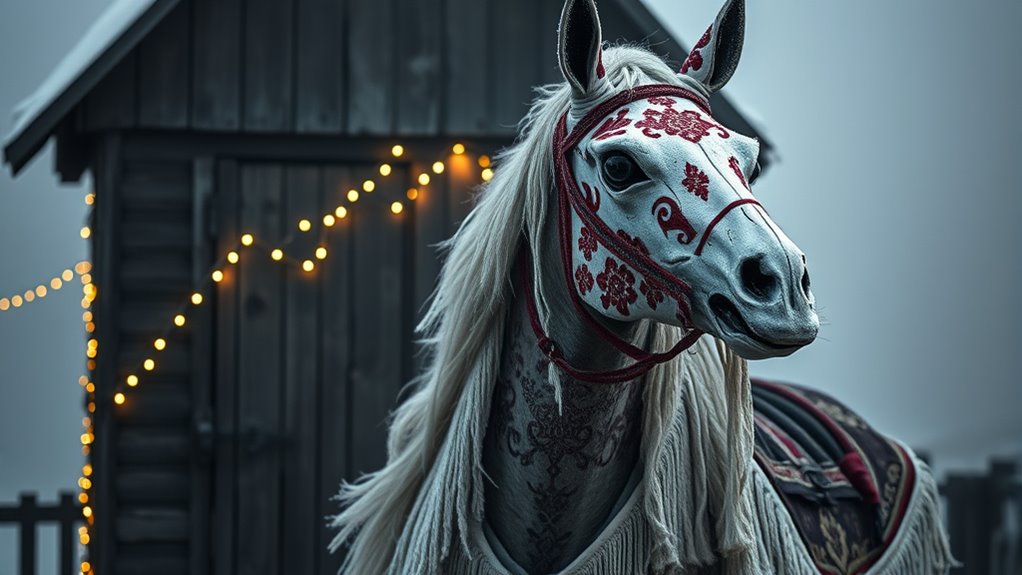

The Mari Lwyd is a lively Welsh wassailing tradition where a decorated horse’s skull is paraded through villages during Christmas and New Year. You’ll see bright ribbons, bells, and eerie eye sockets as community members sing, chant, and tell stories, all in good fun. The custom aims to ward off evil spirits, strengthen community bonds, and celebrate Welsh folklore. Keeping this tradition alive reveals the rich cultural heritage if you continue exploring further.

Prime made for students and young adults
- Fast, free delivery for dorm and study essentials
- Prime Video and Amazon Music included
- Member-only deals
Key Takeaways
- The Mari Lwyd is a traditional Welsh wassailing custom featuring a decorated horse’s skull used in festive processions.
- It symbolizes community spirit, protection, and good fortune, dating back to pre-Christian and seasonal fertility rituals.
- Participants, called the “crew,” perform singing and chanting to engage locals and challenge them in playful rhymes.
- The Mari Lwyd’s vivid decorations and haunting appearance make it a striking cultural symbol during Christmas and New Year celebrations.
- It preserves Welsh folklore, enhances community bonding, and highlights poetic improvisation and cultural heritage.
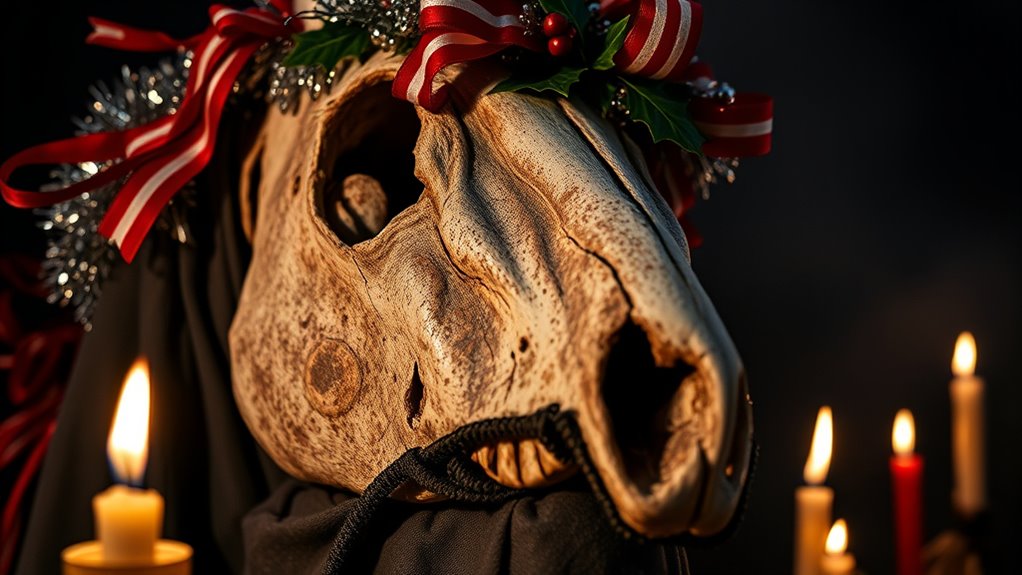
The Mari Lwyd is a traditional Welsh folk custom that involves a decorated horse’s skull mounted on a pole, often paraded through villages during the Christmas and New Year season. This striking tradition is deeply rooted in folk traditions and Welsh folklore, representing a unique blend of ritual, entertainment, and community bonding. When you witness a Mari Lwyd procession, you’re stepping into a centuries-old practice that has survived through generations, preserving the cultural identity of Welsh communities. The custom typically involves a group of people, known as the “crew,” who carry the Mari Lwyd and perform rhythmic singing and chanting as they approach homes or gatherings. Their goal is to engage with locals, often in a playful contest of wit and rhyme, challenging residents to respond with clever verses to gain entry or receive good luck for the coming year.
The decorated horse’s skull, usually a real or imitation horse’s head, is adorned with ribbons, bells, and other vibrant decorations, making it a vivid symbol of Welsh folklore. You can imagine how it commands attention, its haunting eye sockets and jaw adding an eerie yet festive atmosphere to the proceedings. The tradition’s origins are thought to date back to pre-Christian times, possibly linked to seasonal fertility rites or welcoming spirits during the winter solstice. Over time, the practice was integrated into Christmas festivities, aligning with folk traditions that celebrate the cycle of seasons and community resilience. The use of the horse’s skull symbolizes strength and protection, while the lively singing and dancing surrounding the Mari Lwyd serve to banish evil spirits and invite good fortune. Additionally, the communal participation and oral storytelling aspects help keep the tradition alive in modern times.
Participating in or observing the Mari Lwyd allows you to connect with a vibrant piece of Welsh folklore that has persisted despite modern influences. It’s more than just a spectacle; it’s a living expression of cultural identity and communal spirit. The custom also highlights the importance of oral storytelling and poetic skill, as the interactions often involve improvisation and quick wit. For many Welsh communities, the Mari Lwyd remains a cherished tradition, reinforcing bonds and passing down stories that resonate with folk beliefs and cultural values. When you see the Mari Lwyd in action, you’re witnessing a powerful reminder of how folk traditions continue to shape and celebrate Welsh heritage, keeping folklore alive through lively performances and communal participation.
As an affiliate, we earn on qualifying purchases.
Frequently Asked Questions
What Is the Origin of the Mari Lwyd Tradition?
You discover that the Mari Lwyd tradition originates from ancient Welsh legends and seasonal rituals, dating back centuries. During winter, communities would bring out the decorated horse skull, symbolizing protection and good fortune. You might participate by singing and engaging with the Mari Lwyd, keeping alive this lively custom that blends myth, community bonding, and seasonal celebration, reflecting Wales’s rich cultural history.
How Do Communities Celebrate Mari Lwyd Today?
You join lively processions as the Mari Lwyd’s skull grins beneath a white sheet, its eyes flickering with candlelight. Communities celebrate by singing, reciting poetic challenges, and engaging in playful banter, creating a festive atmosphere. Modern adaptations include incorporating music, costumes, and community events that blend tradition with contemporary flair. Your participation helps keep this vibrant custom alive, fostering connection and joy through shared history and lively, spirited gatherings.
Are There Specific Songs or Chants Associated With Mari Lwyd?
You’ll notice that during Mari Lwyd celebrations, communities often use traditional chants and festive songs. These chants typically involve witty rhymes and playful insults directed at participants, creating a lively atmosphere. The songs, often sung in unison, help build excitement and foster community spirit. As you join in, you’ll experience the rich oral tradition that keeps the Mari Lwyd tradition vibrant, blending humor, music, and cultural storytelling seamlessly.
What Materials Are Used to Create the Mari Lwyd?
You use a variety of craft materials to create the Mari Lwyd, including a horse skull, often from a donkey or similar animal. The skull is decorated with bright fabrics, ribbons, and paper. Construction techniques involve attaching the skull to a wooden or metal frame, which is then covered with cloth or other materials to form the horse’s body. These materials and techniques bring the Mari Lwyd to life for traditional wassailing celebrations.
Has the Mari Lwyd Tradition Faced Any Modern Controversies?
You might find that the Mari Lwyd tradition has faced modern controversies, especially around cultural preservation. Some argue that modern adaptations risk diluting its historical significance, while others embrace innovative changes to keep the tradition alive. As a participant, you can help balance respect for tradition with openness to new expressions, ensuring this Welsh wassailing custom remains vibrant and relevant in contemporary times.
folk festival costume accessories
As an affiliate, we earn on qualifying purchases.
As an affiliate, we earn on qualifying purchases.
Conclusion
As you step back from the Mari Lwyd, you realize she’s like a ghostly ship sailing through Welsh traditions, guiding you through centuries of folklore. Her haunting song and haunting gaze connect you to ancestors who celebrated and honored the cycle of the seasons. Just as the tide pulls the shore, her presence pulls at your curiosity, reminding you that these ancient customs are treasures buried deep beneath the sands of time—waiting for you to explore and cherish.
As an affiliate, we earn on qualifying purchases.
As an affiliate, we earn on qualifying purchases.
Halloween Picks
halloween
As an affiliate, we earn on qualifying purchases.